Metal3DPMETAL3DP
THERMAL SPRAY & HARDFACING POWDERSTECHNICAL PRODUCT DATA

Aluminum Bronze Thermal Spray Powder (Cu-9Al)

Cu-9Al

Cu-9Al and NiAl-bronze thermal spray powders for propeller shafts, pumps and marine rebuilds. Excellent machinability and seawater durability. Flame, arc, plasma cuts.

Standard grade
Cu-9Al (also Cu-10Al, NiAl-bronze variants)
Particle size
45-106 µm (flame/arc), 15-53 µm (plasma)
Coating hardness
120-180 HB (NiAl-bronze to 220 HB)
Corrosion service
Seawater, brackish water, mild acids
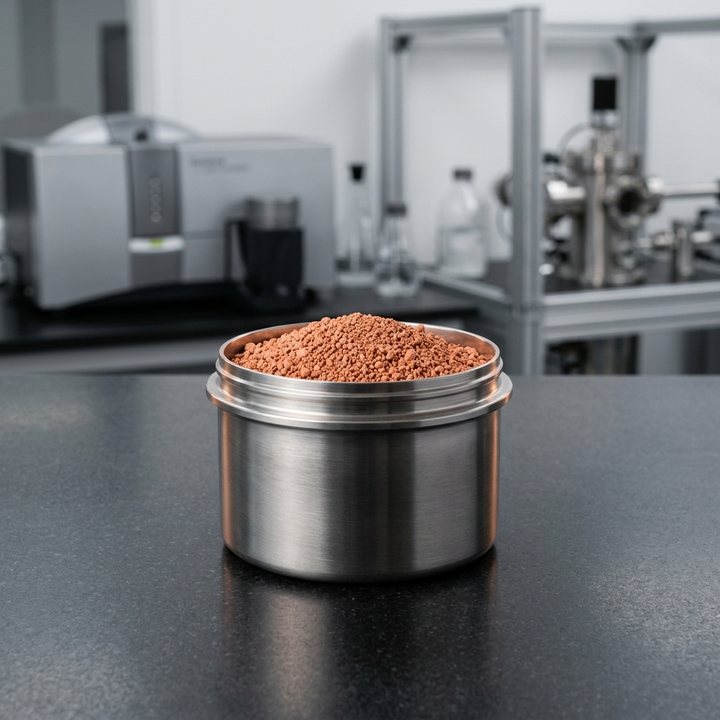
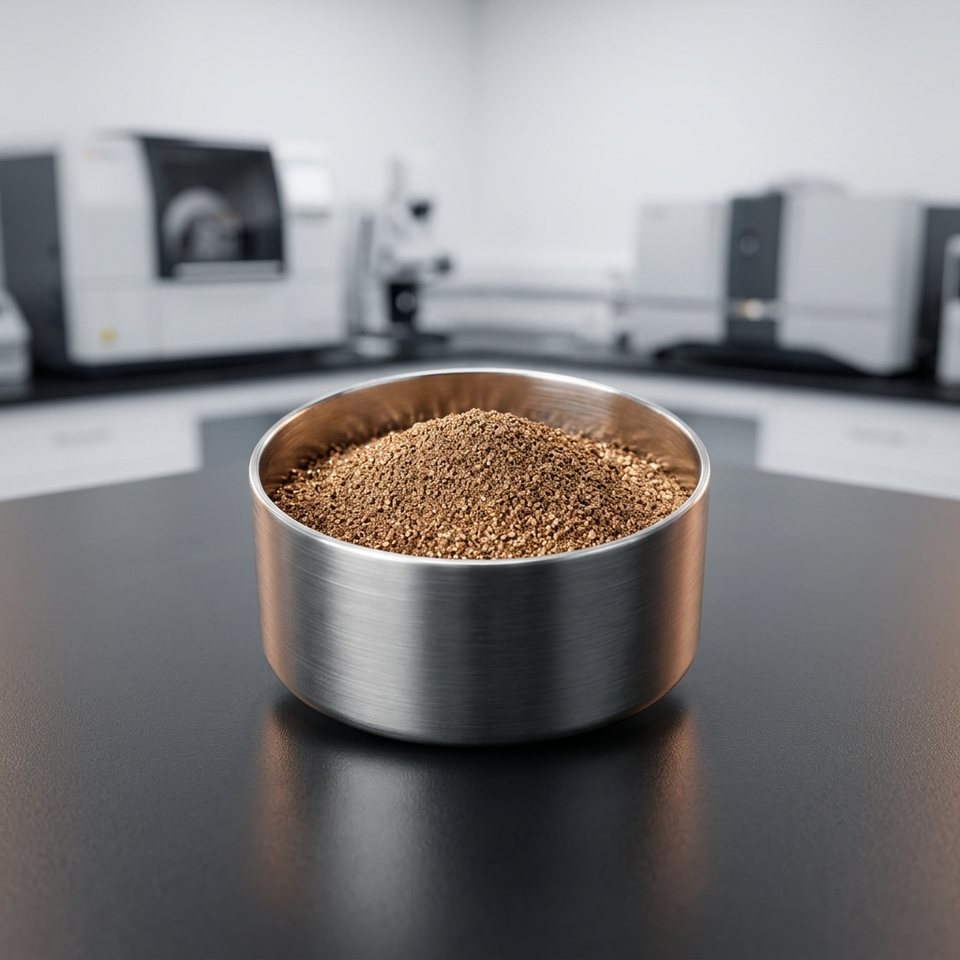
Aluminum Bronze Thermal Spray Powder (Cu-9Al) metal powder product sample

QUICK ANSWER

Performance Defined by Material and Process.

Aluminum bronze spray powder (typically Cu-9Al) is a copper-aluminum alloy powder sprayed by flame, arc, or plasma to deposit corrosion-resistant, anti-galling, and marine-durable coatings. It is the standard material for rebuilding bronze components, protecting steel against seawater and cavitation, and providing bearing-friendly surfaces on shafts, propeller hardware, pump components, and hydraulic pistons.

Aluminum bronze occupies a unique niche in the spray powder world: it is soft enough to machine beautifully, hard enough to resist cavitation and galling, and corrosion resistant in seawater where most sprayable metals fail. The 9-10 percent aluminum content forms a self-healing alumina surface film in marine environments. For spray shops serving ship repair, offshore, and pump overhaul markets, this is the powder that turns corroded or worn bronze and steel parts back into service-ready components at a fraction of replacement cost.

MATERIAL DATA

Chemistry and Technical Performance.

Lot-level controls focus on the chemistry, particle characteristics, and process values that influence manufacturing consistency and finished-part performance.

Chemical Composition

TYPICAL
ElementContentPerformance Role
Copper (Cu)Balance (~89-91 wt%)Corrosion-resistant, galling-resistant matrix with natural bearing properties
Aluminum (Al)8.5-10.5 wt%Forms the protective alumina film; raises hardness and cavitation resistance
Iron (Fe)0-4 wt% (grade dependent)Strengthens the matrix in higher-hardness variants
Nickel (Ni)0-5 wt% (NiAl-bronze grades)Improves corrosion resistance and toughness in premium marine grades
Manganese (Mn)0-1.5 wt%Deoxidizer and minor strengthener

Technical Specifications

BASE GRADE
Standard grade
Cu-9Al (also Cu-10Al, NiAl-bronze variants)
Particle size
45-106 µm (flame/arc), 15-53 µm (plasma)
Coating hardness
120-180 HB (NiAl-bronze to 220 HB)
Corrosion service
Seawater, brackish water, mild acids
Cavitation resistance
Excellent — superior to most steels
Machinability
Excellent — carbide tooling, fine finishes

Final limits can be aligned with the agreed purchase specification.

APPLICATIONS

Developed for Demanding Industrial Applications.

01

Marine and offshore repair is the core market

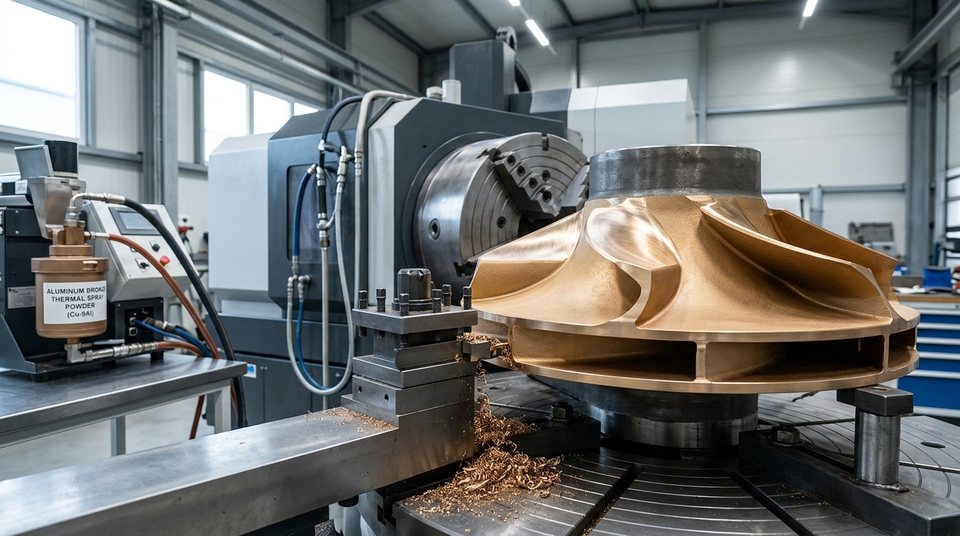
Marine and offshore repair is the core market: propeller shafts, stern tube liners, rudder stocks, sea valve bodies, and pump impellers are routinely rebuilt with sprayed aluminum bronze. Cavitation-eroded impellers — a perennial pump problem — get a sprayed and machined aluminum bronze surface that typically outlasts the original casting because the coating's fine, wrought-like structure resists bubble-collapse fatigue better than cast grain structures. Shipyards and pump shops buy this powder on consistent sprayability and machinability.

02

The second market

The second market is anti-galling and bearing surfaces in general machinery: hydraulic piston rods, gland areas, sliding ways, and press-fit surfaces where bronze-on-steel contact prevents the seizure that steel-on-steel contact invites. Aluminum bronze coatings also serve as the bond layer for subsequent polymer or Babbitt overlays in large bearing rebuilds, and as corrosion-protective coats on steel structures in splash zones where zinc would sacrifice itself too quickly.

Aluminum Bronze Thermal Spray Powder (Cu-9Al) industrial application detail

THERMAL SPRAY & HARDFACING POWDERS

CUSTOM SUPPLY

A Supply Specification Built Around Your Process.

We supply Cu-9Al and Cu-10Al in flame, arc, and plasma cuts, plus nickel-aluminum-bronze variants matching common marine casting alloys for galvanic compatibility with the component being repaired. Custom aluminum content, iron-bearing higher-hardness grades, and matched wire/powder programs for shops running both arc and flame processes are available. Not export-controlled.

01

We supply Cu-9Al and Cu-10Al in flame, arc, and plasma cuts, plus nickel-aluminum-bronze variants matching common marine casting alloys for galvanic compatibility with the component being repaired.

02

Custom aluminum content, iron-bearing higher-hardness grades, and matched wire/powder programs for shops running both arc and flame processes are available.

MATERIAL COMPARISON

Compare Materials Against the Production Requirement.

Aluminum Bronze vs Pure Copper Spray Powder

Comparison PointThis ProductPure Copper Powder
Hardness120-220 HB60-90 HB — much softer
Cavitation resistanceExcellentPoor
Seawater corrosionExcellent — alumina film protectedGood but biofouling-prone
Electrical conductivity~15% IACS~90% IACS
MachinabilityGoodDifficult — gummy, smears
Primary useMarine rebuild, anti-galling, wearElectrical, thermal, decorative

TECHNICAL FAQ

Technical Questions About This Grade.

Need a different chemistry, particle range, or processing route? Our material team can review the requirement and supply window.

Can sprayed aluminum bronze match a cast bronze part?

For repair purposes, yes — the coating restores dimension and typically matches or exceeds cast cavitation resistance. Choose the NiAl-bronze variant when repairing nickel-aluminum-bronze castings for galvanic compatibility.

Does it need a bond coat?

On steel, a NiAl bond coat is recommended for best adhesion, especially in immersion service. On bronze substrates with thorough blasting, aluminum bronze can bond directly.

How does it perform in seawater versus stainless coatings?

Aluminum bronze is the better marine choice: stainless spray coatings suffer crevice corrosion in chloride immersion, while aluminum bronze's alumina film and copper base give decades of proven shipboard service.

What finishing is needed?

Carbide tooling machines it readily to bearing fits and fine finishes (Ra 0.4 µm achievable). No grinding equipment is needed — a real advantage over hard coatings for shaft work.

Is aluminum bronze powder export-controlled?

No. Copper-aluminum alloy powders ship freely under standard documentation.

REQUEST THIS GRADE

Turn Your Production Requirement Into a Powder Specification.

Share your target chemistry, particle size, process, annual volume, and destination. Our powder specialists will confirm the closest production grade and documentation package.

Talk to a Powder Specialist
Send Inquiry