Metal3DPMETAL3DP
THERMAL SPRAY & HARDFACING POWDERSTECHNICAL PRODUCT DATA

Cr3C2-25NiCr Chromium Carbide Powder

Agglomerated & sintered Cr3C2-25NiCr HVOF powder for boiler tubes, valves and turbine parts. Cobalt-free, nuclear-suitable. Lot-certified deposit efficiency.

Composition
Cr3C2-25(80Ni-20Cr)
Powder manufacture
Agglomerated & sintered
Particle size
15-45 µm (HVOF standard), 5-30 µm (fine detail)
Coating hardness
750-950 HV0.3
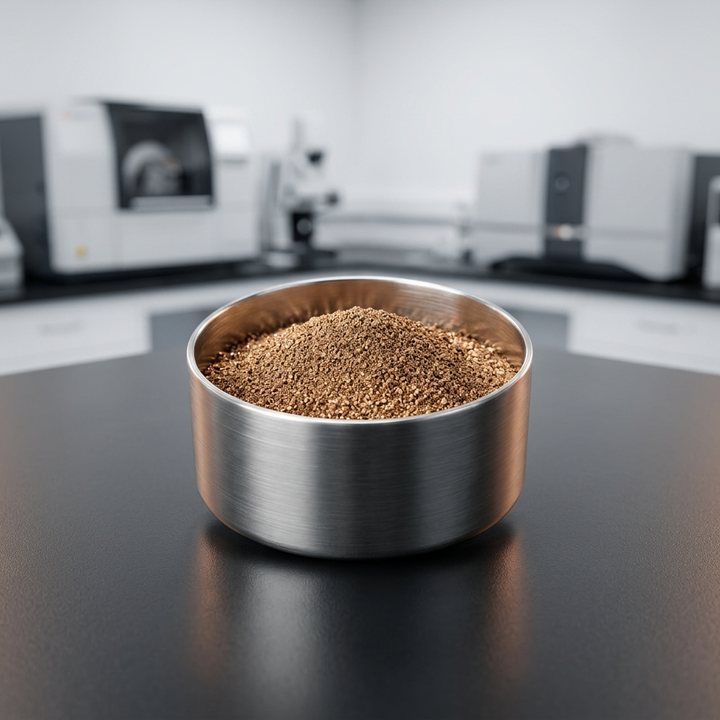
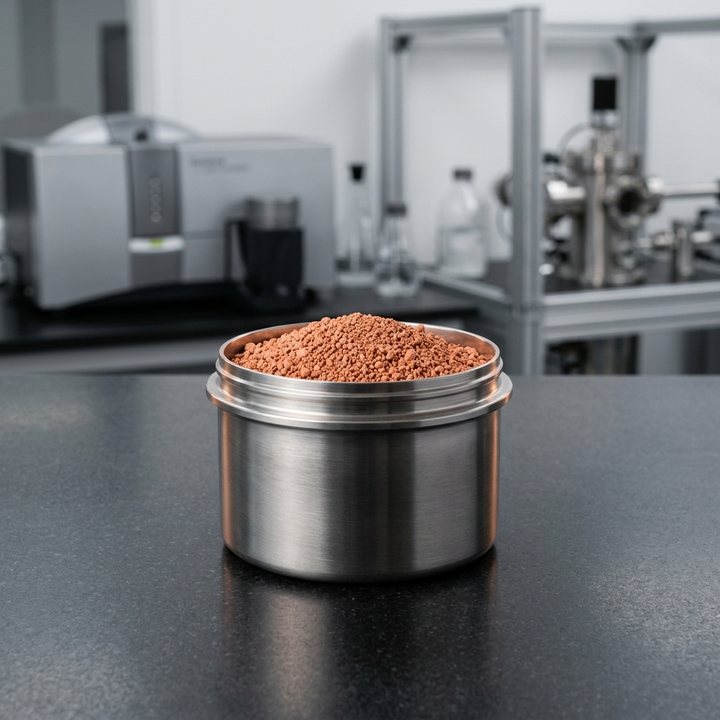
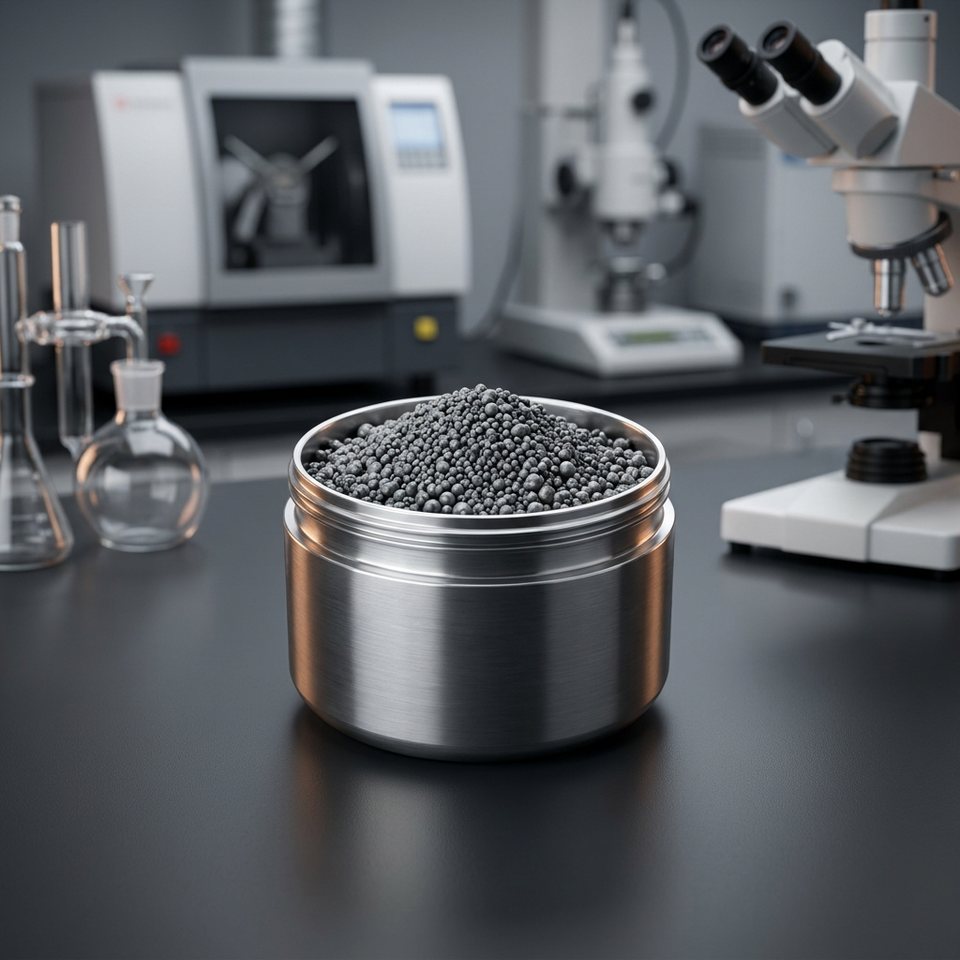
Cr3C2-25NiCr Chromium Carbide Powder metal powder product sample

QUICK ANSWER

Performance Defined by Material and Process.

Cr3C2-25NiCr is a composite thermal spray powder of 75 percent chromium carbide in a nickel-chromium binder, applied by HVOF to produce hard, wear- and corrosion-resistant coatings that retain performance at temperatures up to 900 °C — far beyond the 550 °C ceiling of WC-Co coatings. It is the standard carbide coating for high-temperature wear: boiler tubes, turbine components, hot forming tools, and petrochemical valve trim.

The nickel-chromium binder (80Ni-20Cr) does double duty: it toughens the brittle carbide enough to survive spraying and service, and its oxidation resistance protects the carbide phase at temperature. Where WC-Co coatings oxidize and degrade above 550 °C, Cr3C2-NiCr keeps working — which is why power generation and petrochemical plants specify it wherever heat and abrasion coincide. Buyers should look for agglomerated-and-sintered powder manufacture, which produces uniform carbide distribution and high deposit efficiency in HVOF guns.

MATERIAL DATA

Chemistry and Technical Performance.

Lot-level controls focus on the chemistry, particle characteristics, and process values that influence manufacturing consistency and finished-part performance.

Chemical Composition

TYPICAL
ElementContentPerformance Role
Chromium carbide (Cr3C2)75 wt%Hard phase (~1400 HV) providing abrasion and erosion resistance
Nickel (Ni)20 wt% (in binder)Tough metallic binder; corrosion and oxidation resistant matrix
Chromium (Cr)5 wt% (in binder)Binder alloying for high-temperature oxidation resistance
Free carbon (C)< 0.5 wt%Controlled to prevent decarburization losses during spraying
Iron + others< 1.0 wt% totalImpurity limits to preserve coating purity

Technical Specifications

BASE GRADE
Composition
Cr3C2-25(80Ni-20Cr)
Powder manufacture
Agglomerated & sintered
Particle size
15-45 µm (HVOF standard), 5-30 µm (fine detail)
Coating hardness
750-950 HV0.3
Max service temperature
~900 °C in oxidizing atmospheres
Typical coating thickness
150-500 µm

Final limits can be aligned with the agreed purchase specification.

APPLICATIONS

Developed for Demanding Industrial Applications.

01

Power generation is the anchor market

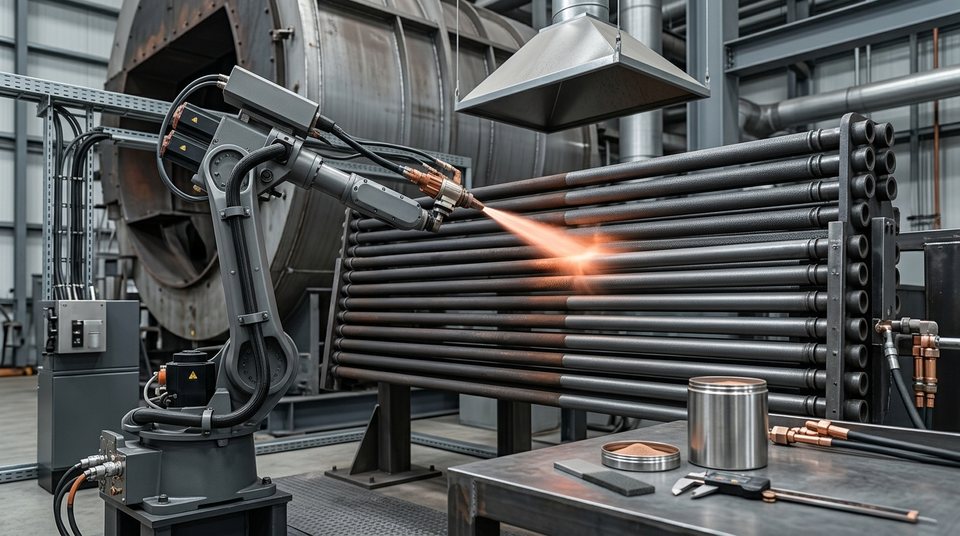
Power generation is the anchor market: HVOF Cr3C2-NiCr coats boiler waterwall tubes, superheater tubes, and sootblower elements against fly-ash erosion and fireside corrosion in coal and waste-to-energy plants, extending tube life by years per application. The same logic protects cyclone separators, fan blades, and ash-handling components. In these plants the coating is applied by specialist contractors during scheduled outages, and the powder is bought on guaranteed deposit efficiency and lot-to-lot repeatability — a failed coating means unplanned downtime at enormous daily cost.

02

Petrochemical and process industries form the second pillar

Petrochemical and process industries form the second pillar: valve seats, gates, and balls, pump components, and hot-section fittings in catalytic crackers and reformers where metal temperatures exceed what WC-based coatings tolerate. The nuclear industry also uses Cr3C2-NiCr as the standard replacement for WC-Co in primary-circuit applications, because cobalt activates under neutron flux — an important niche where the powder's cobalt-free chemistry is the entire selling point.

Cr3C2-25NiCr Chromium Carbide Powder industrial application detail

THERMAL SPRAY & HARDFACING POWDERS

CUSTOM SUPPLY

A Supply Specification Built Around Your Process.

Our Cr3C2-25NiCr is produced by the agglomerated-and-sintered route for uniform carbide dispersion and high HVOF deposit efficiency, in standard 15-45 µm and fine 5-30 µm cuts. Alternative ratios (Cr3C2-20NiCr, Cr3C2-37WC-18NiCo-free variants) and plasma-spray grades are available. Every lot includes chemistry, apparent density, flow, and microstructure certification. Not export-controlled.

01

Our Cr3C2-25NiCr is produced by the agglomerated-and-sintered route for uniform carbide dispersion and high HVOF deposit efficiency, in standard 15-45 µm and fine 5-30 µm cuts.

02

Alternative ratios (Cr3C2-20NiCr, Cr3C2-37WC-18NiCo-free variants) and plasma-spray grades are available.

03

Every lot includes chemistry, apparent density, flow, and microstructure certification.

MATERIAL COMPARISON

Compare Materials Against the Production Requirement.

Cr3C2-25NiCr vs WC-10Co-4Cr HVOF Powder

Comparison PointThis ProductWC-10Co-4Cr
Max service temperature~900 °C~550 °C — WC oxidizes above this
Coating hardness750-950 HV1100-1350 HV — harder
Corrosion resistanceExcellent (NiCr binder)Good (Cr addition helps Co binder)
Room-temperature abrasionVery goodSuperior
Nuclear suitabilityYes — cobalt-freeNo — cobalt activation issue
Price per kgModerateHigher (tungsten carbide content)

TECHNICAL FAQ

Technical Questions About This Grade.

Need a different chemistry, particle range, or processing route? Our material team can review the requirement and supply window.

Why choose Cr3C2-NiCr over WC-Co?

One reason dominates: temperature. Above 550 °C, WC-Co coatings oxidize rapidly and lose their wear protection, while Cr3C2-NiCr keeps its hardness and oxidation resistance to about 900 °C. If your application is below 500 °C and purely abrasive, WC-Co is harder and usually cheaper per unit of wear life.

What does 'agglomerated and sintered' mean for coating quality?

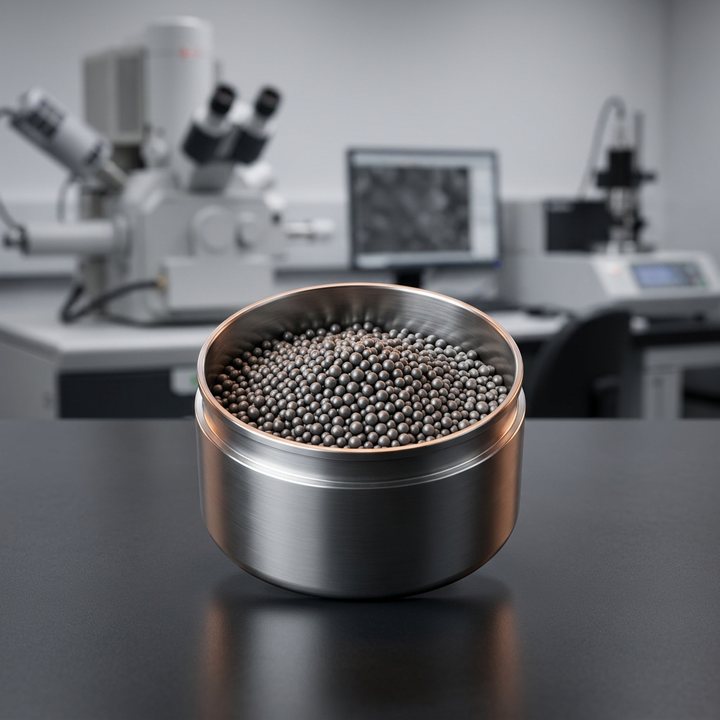
The fine carbide and binder particles are spray-dried into spherical agglomerates then sintered into solid composite particles. This prevents carbide-binder segregation in the feeder and gun, giving uniform coating chemistry and high deposit efficiency — versus simple blends that segregate and spray inconsistently.

Can Cr3C2-NiCr coatings be ground and finished?

Yes — diamond grinding produces finishes below Ra 0.2 µm for sealing surfaces. Plan for grinding; the coating is too hard for conventional machining.

Is this powder suitable for boiler tube field application?

Yes, it is the standard product for exactly that use. Portable HVOF systems apply it during outages; our 15-45 µm cut is optimized for the common field gun models.

Is Cr3C2-NiCr export-controlled?

No. Chromium carbide thermal spray powders ship without licensing requirements.

REQUEST THIS GRADE

Turn Your Production Requirement Into a Powder Specification.

Share your target chemistry, particle size, process, annual volume, and destination. Our powder specialists will confirm the closest production grade and documentation package.

Talk to a Powder Specialist
Send Inquiry