Metal3DPMETAL3DP
CHEMICAL & METALLURGICAL PROCESS POWDERSTECHNICAL PRODUCT DATA

Aluminum Powder for Steel Deoxidation

99%+ aluminum powder and granules, moisture-certified <0.05% for melt safety. Injection, wire-fill and tap addition forms. Aluminothermic grades available.

Forms
Powder 0.1-1 mm, granules 1-3 mm, shots
Purity
99%+ Al
Consumption
0.3-2 kg per tonne of steel
Addition routes
Injection, wire feeding, tap addition
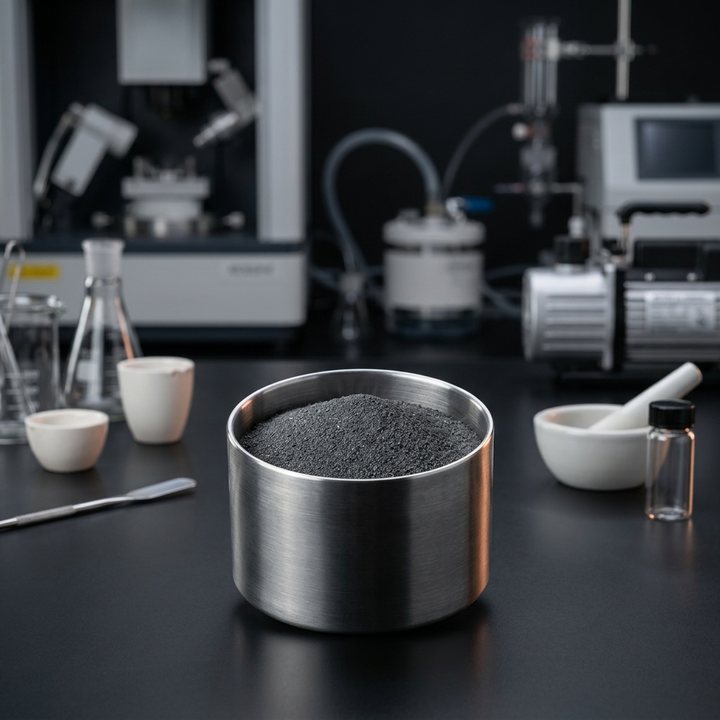
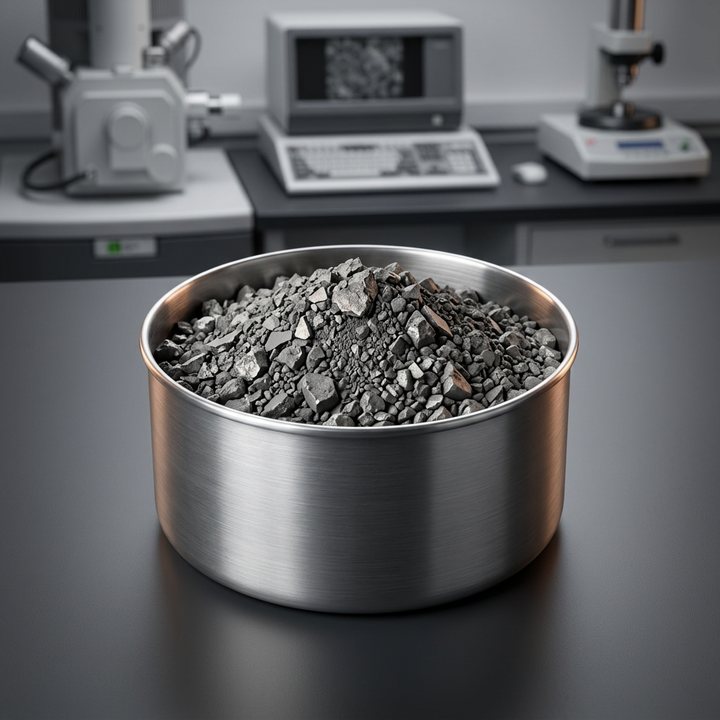
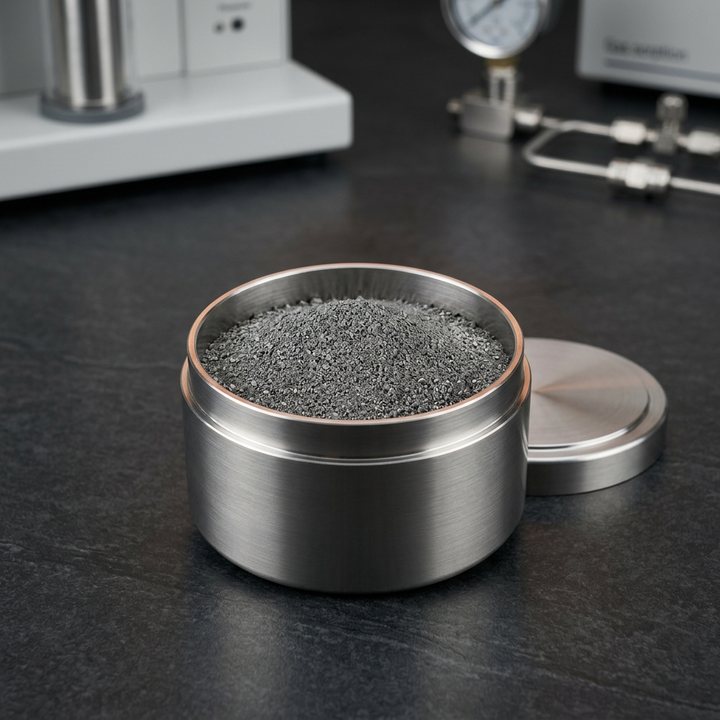
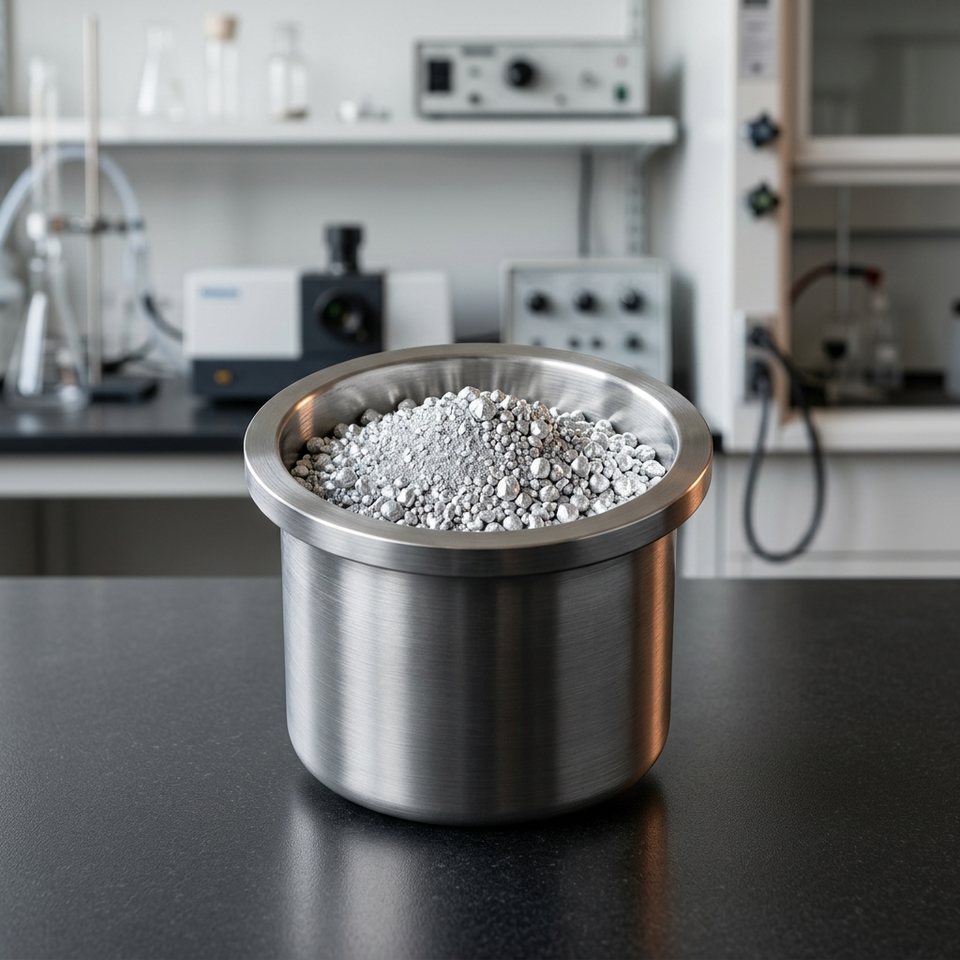
Aluminum Powder for Steel Deoxidation metal powder product sample

QUICK ANSWER

Performance Defined by Material and Process.

Deoxidation-grade aluminum powder and granules (99%+ Al, 0.1-3 mm) are added to molten steel to bind dissolved oxygen as alumina — the strongest practical deoxidizer in steelmaking — and to grain-refine the steel through aluminum nitride formation. It is essential for producing killed steels: the fully deoxidized, clean steels that automotive, structural, and pressure applications require.

Every tonne of killed steel carries a few hundred grams to two kilograms of aluminum added during tapping and ladle treatment: the aluminum reacts with dissolved oxygen almost instantly, forming alumina that floats to the slag (with inclusion control being the metallurgist's art), while residual aluminum fixes nitrogen as AlN to control grain size and aging. Powder and granule forms — versus ingot or wire — serve specific addition routes: injection, top-blowing, and cored-wire feeding, where size distribution and reactivity determine deoxidation yield.

MATERIAL DATA

Chemistry and Technical Performance.

Lot-level controls focus on the chemistry, particle characteristics, and process values that influence manufacturing consistency and finished-part performance.

Chemical Composition

TYPICAL
ElementContentPerformance Role
Aluminum (Al)> 99.0 wt%Deoxidizing agent — strongest common oxygen binder
Active aluminum> 95 wt%Metallic fraction available for reaction
Iron (Fe)< 0.5 wt%Impurity from production
Silicon (Si)< 0.3 wt%Residual limit
Moisture< 0.05 wt%Critical safety spec — wet aluminum in molten steel is an explosion hazard

Technical Specifications

BASE GRADE
Forms
Powder 0.1-1 mm, granules 1-3 mm, shots
Purity
99%+ Al
Consumption
0.3-2 kg per tonne of steel
Addition routes
Injection, wire feeding, tap addition
Reaction product
Al2O3 (floats to slag with CaO treatment)
Safety
Dry certified — molten-metal addition grade

Final limits can be aligned with the agreed purchase specification.

APPLICATIONS

Developed for Demanding Industrial Applications.

01

Steel mills are the sole major market

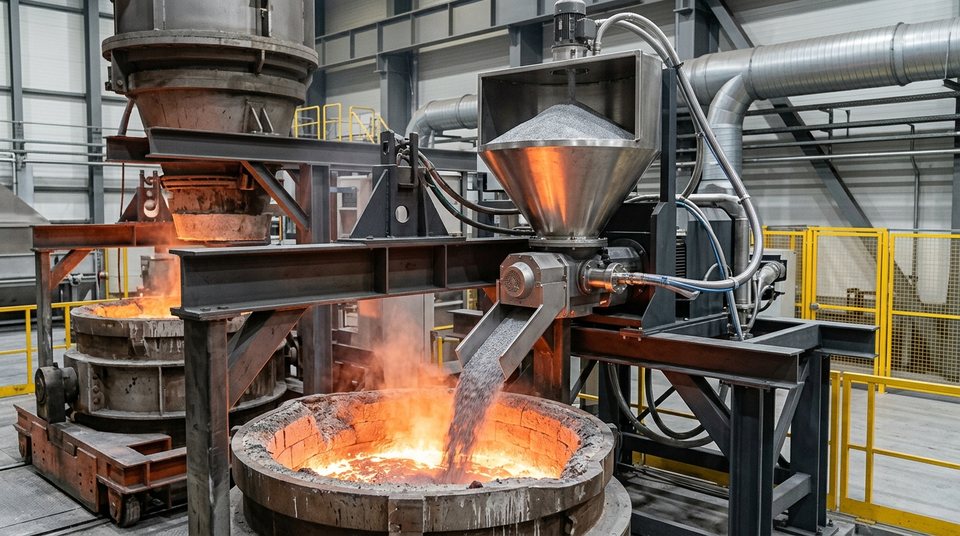
Steel mills are the sole major market: BOF and EAF shops add deoxidation aluminum during tapping to kill the steel, then trim aluminum in the ladle furnace to hit the acid-soluble aluminum specification that defines grain size and cleanliness. The product is bought on active-aluminum content, moisture certification (a safety-critical parameter for anything entering molten steel), and size consistency for the addition equipment. Mills buy under annual contracts with safety documentation that their melt shops audit.

02

Secondary uses follow the same chemistry elsewhere

Secondary uses follow the same chemistry elsewhere: aluminum deoxidation in copper and nickel alloy melting, thermite welding and metallurgy (aluminum as the reductant in aluminothermic reactions producing chromium, manganese, and vanadium master alloys), and exothermic addition compounds for ladle treatment. The aluminothermic market consumes aluminum powder as the fuel of the metal-producing reaction — a steady specialty tonnage.

Aluminum Powder for Steel Deoxidation industrial application detail

CHEMICAL & METALLURGICAL PROCESS POWDERS

CUSTOM SUPPLY

A Supply Specification Built Around Your Process.

We supply deoxidation aluminum in powder (0.1-1 mm), granule (1-3 mm), and shot forms, 99%+ purity with certified active aluminum and moisture per lot. Cored-wire fill grades, aluminothermic-grade fine powders, and packaging engineered for melt-shop safety (moisture-barrier sealed, batch-coded) are standard. Not export-controlled.

01

We supply deoxidation aluminum in powder (0.1-1 mm), granule (1-3 mm), and shot forms, 99%+ purity with certified active aluminum and moisture per lot.

02

Cored-wire fill grades, aluminothermic-grade fine powders, and packaging engineered for melt-shop safety (moisture-barrier sealed, batch-coded) are standard.

MATERIAL COMPARISON

Compare Materials Against the Production Requirement.

Aluminum vs FeSi/FeMn Deoxidation

Comparison PointThis ProductFeSi / FeMn
Deoxidation powerStrongest practicalModerate
Residual effectGrain refinement via AlNAlloying contribution only
Inclusion typeAl2O3 — needs Ca treatmentSiO2/MnO — more plastic
Cost per deoxidation unitLowModerate
Steel cleanliness potentialHighestStandard
Best useKilled, clean, Al-killed steelsSemi-killed, general steels

TECHNICAL FAQ

Technical Questions About This Grade.

Need a different chemistry, particle range, or processing route? Our material team can review the requirement and supply window.

Why is moisture certification safety-critical?

Any water entering molten steel flashes to steam with explosive force — hydrogen-steam explosions are the classic melt-shop accident. Our deoxidation grades are dried, sealed in moisture-barrier packaging, and certified below 0.05 percent moisture per lot.

What form suits our ladle injection system?

0.1-1 mm powder for pneumatic injection; 1-3 mm granules for top-blown additions; wire-fill grade for your cored-wire supplier. Share your equipment type and we match the size distribution with flow data.

How much aluminum does killing steel require?

Typically 0.3-2 kg per tonne depending on practice and grade — deep-deoxidation and fine-grain grades at the upper end. Yield data for our size cuts is available for your metallurgists' balance calculations.

Do you supply aluminothermic-grade aluminum?

Yes — fine atomized powders with certified active aluminum for thermite and aluminothermic master-alloy production, in the reactivity grades that process requires.

Is deoxidation aluminum export-controlled?

No. These are standard steelmaking consumables shipping without licensing requirements.

REQUEST THIS GRADE

Turn Your Production Requirement Into a Powder Specification.

Share your target chemistry, particle size, process, annual volume, and destination. Our powder specialists will confirm the closest production grade and documentation package.

Talk to a Powder Specialist
Send Inquiry