Metal3DPMETAL3DP
CHEMICAL & METALLURGICAL PROCESS POWDERSTECHNICAL PRODUCT DATA

Ferrotitanium & Ferroboron Powder (FeTi / FeB)

FeTi / FeB

FeTi 30/40/70 and FeB 15-20% powders, cored-wire fill grades, certified gas content. Stainless stabilization, IF steel, boron hardenability. Mill qualification support.

FeTi grades
FeTi30, FeTi40, FeTi70
FeB grades
FeB15-20% B
Size cuts
45-250 µm powder; cored-wire fill grades
Addition yield
Powder/wire: 60-90% vs lump 30-50%
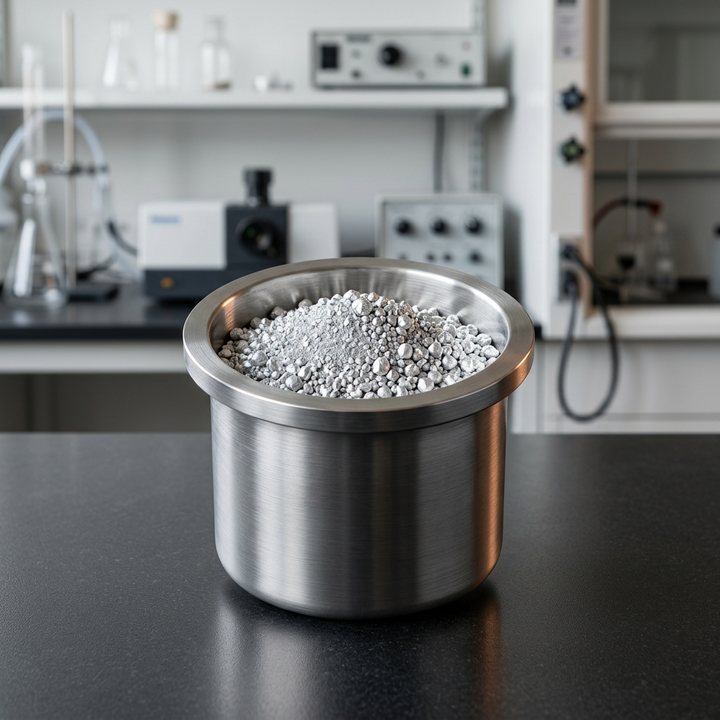
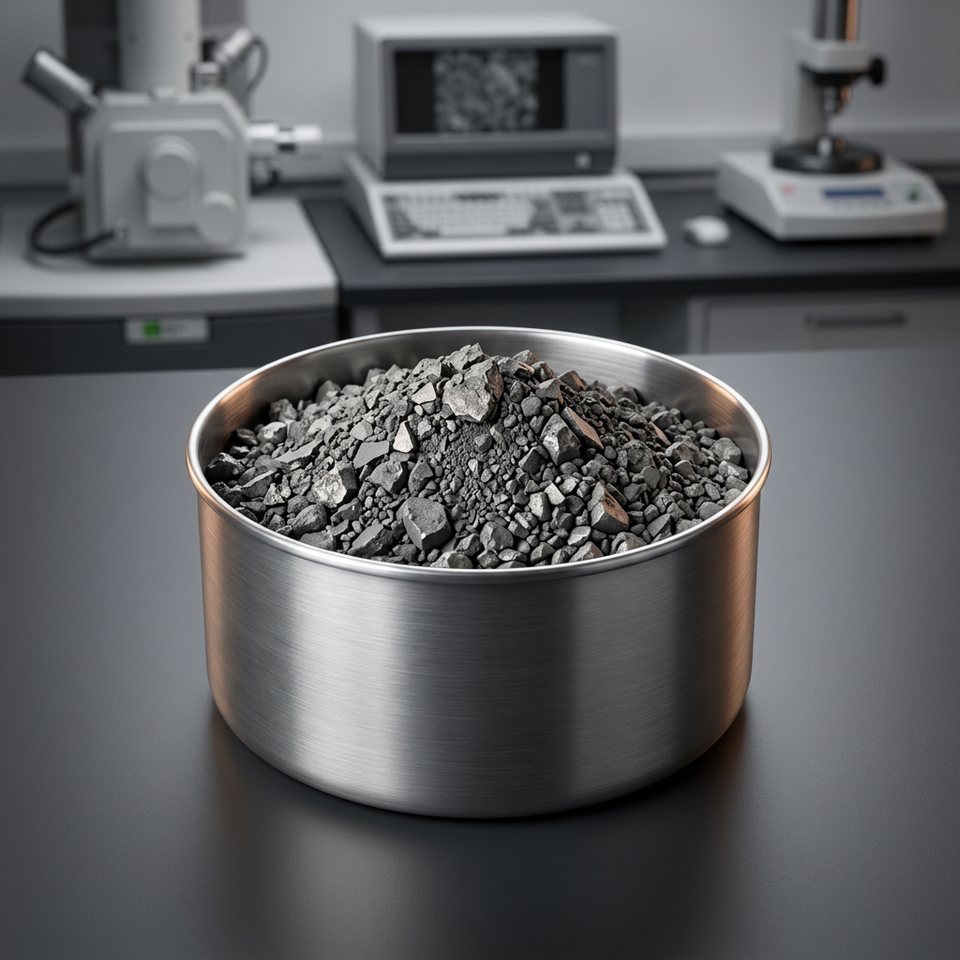
Ferrotitanium & Ferroboron Powder (FeTi / FeB) metal powder product sample

QUICK ANSWER

Performance Defined by Material and Process.

Ferrotitanium (FeTi 30-70% Ti) and ferroboron (FeB 15-20% B) powders are master-alloy additions milled to 45-250 µm for dosing titanium and boron into steel and cast iron. Titanium fixes nitrogen and carbon (stabilized stainless and IF steels, grain refinement), while boron at just 0.0005-0.003 percent dramatically increases steel hardenability — two of the most cost-effective alloying levers in steelmaking.

These master alloys exist because adding pure titanium or boron directly is impractical — titanium burns off, boron oxidizes — so they are delivered as iron alloys that dissolve controllably in the melt. FeTi serves stainless steel stabilization (preventing intergranular corrosion in 321/347 grades), interstitial-free automotive steel production, and weld-metal refinement. FeB serves the hardenability trick that lets plain-carbon steels replace expensive alloy steels in automotive and machinery parts. Powder and cored-wire-feedstock forms allow precise, high-yield additions that lump alloys cannot match.

MATERIAL DATA

Chemistry and Technical Performance.

Lot-level controls focus on the chemistry, particle characteristics, and process values that influence manufacturing consistency and finished-part performance.

Chemical Composition

TYPICAL
ElementContentPerformance Role
Titanium (FeTi) / Boron (FeB)30-70% Ti / 15-20% BThe active alloying elements in iron carrier matrix
Aluminum (Al)< 5% (FeTi grade dependent)Residual from aluminothermic production
Silicon (Si)< 4 wt%Impurity limit for steel cleanliness
Carbon (C)< 0.1-0.5 wt%Grade-dependent limits
Nitrogen + OxygenCertifiedGas content affects addition yield

Technical Specifications

BASE GRADE
FeTi grades
FeTi30, FeTi40, FeTi70
FeB grades
FeB15-20% B
Size cuts
45-250 µm powder; cored-wire fill grades
Addition yield
Powder/wire: 60-90% vs lump 30-50%
Ti recovery application
Stainless stabilization, IF steel, welding
B recovery application
Hardenability boosting at ppm levels

Final limits can be aligned with the agreed purchase specification.

APPLICATIONS

Developed for Demanding Industrial Applications.

01

Steel mills are the core market

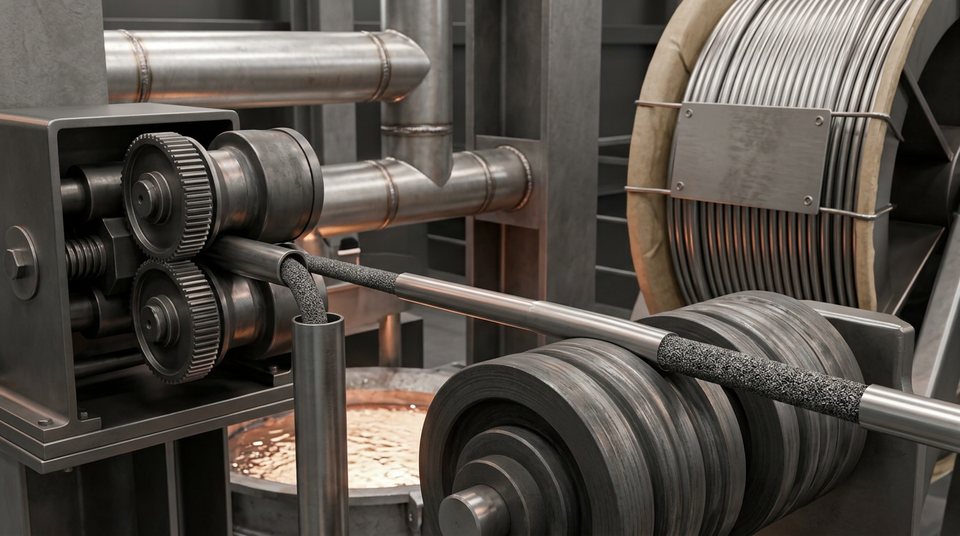
Steel mills are the core market: FeTi additions stabilize stainless steel (tying up carbon and nitrogen as TiC/TiN to prevent sensitization), produce interstitial-free steels for deep-drawn automotive panels, and refine weld metal microstructure in high-strength steels. The trend to cored-wire injection — where FeTi or FeB powder fills steel sheath wire injected deep into the ladle — has shifted demand toward powder form because wire feeding achieves titanium yields of 60-90 percent versus 30-50 percent for lump additions, directly cutting alloy cost per tonne of steel.

02

Foundries and welding form the second market

Foundries and welding form the second market: cast iron producers use FeTi for carbide control and FeB for wear-resistant alloy irons; hardfacing and welding consumable manufacturers dose titanium and boron through powder additions to electrode coatings and flux formulations. The welding market in particular buys fine, certified-chemistry powders where batch consistency directly determines weld deposit chemistry and mechanical properties.

Ferrotitanium & Ferroboron Powder (FeTi / FeB) industrial application detail

CHEMICAL & METALLURGICAL PROCESS POWDERS

CUSTOM SUPPLY

A Supply Specification Built Around Your Process.

We supply FeTi (30/40/70 grades) and FeB (15-20% B) powders in standard and cored-wire-feedstock size cuts, with certified chemistry and gas content per lot. Low-aluminum FeTi for clean-steel applications, custom size distributions for wire-filling lines, and combined FeTiN (nitride-bearing) variants are available. Not export-controlled.

01

We supply FeTi (30/40/70 grades) and FeB (15-20% B) powders in standard and cored-wire-feedstock size cuts, with certified chemistry and gas content per lot.

02

Low-aluminum FeTi for clean-steel applications, custom size distributions for wire-filling lines, and combined FeTiN (nitride-bearing) variants are available.

MATERIAL COMPARISON

Compare Materials Against the Production Requirement.

FeTi Powder vs Lump Additions

Comparison PointThis ProductFeTi Lump
Addition yield60-90% (wire/powder injection)30-50% — most burns off
Composition controlPrecise per tonneVariable
Alloy cost per effective kg TiLower despite processingHigher effective cost
Equipment neededWire feeder or injectionSimple ladle addition
Reaction controlDeep, controlledSurface slag reactions
Best useIF steel, stainless, precision gradesNon-critical bulk additions

TECHNICAL FAQ

Technical Questions About This Grade.

Need a different chemistry, particle range, or processing route? Our material team can review the requirement and supply window.

Why does boron steel need titanium protection?

Boron only boosts hardenability as free boron — it binds to nitrogen as useless BN. A titanium addition first fixes the nitrogen as TiN, freeing the boron to work. Mills therefore add FeTi before FeB; we supply matched FeTiN products that combine both functions.

What FeTi grade for stainless stabilization?

FeTi70 with low aluminum for premium stainless; FeTi40 for cost-driven grades. The key certified values are Ti content, Al level (cleanliness), and nitrogen — all provided per lot with addition-yield reference data.

Do you supply cored-wire-ready powder?

Yes — our wire-fill grades are sized and flowed for filling lines, with chemistry certified to the wire producer's specification. We supply several wire manufacturers on annual contracts.

What documentation supports steel mill qualification?

Full chemistry per lot (including gases), size distribution, and retained samples. For IATF-audited mills we provide SPC data and change-control agreements.

Are FeTi and FeB export-controlled?

No. Both are standard ferroalloy products shipping without licensing requirements.

REQUEST THIS GRADE

Turn Your Production Requirement Into a Powder Specification.

Share your target chemistry, particle size, process, annual volume, and destination. Our powder specialists will confirm the closest production grade and documentation package.

Talk to a Powder Specialist
Send Inquiry