Metal3DPMETAL3DP
CHEMICAL & METALLURGICAL PROCESS POWDERSTECHNICAL PRODUCT DATA

Hydrogen Storage Alloy Powder (AB5 / AB2)

AB5 / AB2

LaNi5-type AB5 and AB2 alloys with certified capacity, cycle life and PCT curves. Light-rare-earth composition — outside export controls. Battery and tank grades.

Types
AB5 (LaNi5-family), AB2 (Laves-phase)
Hydrogen capacity
1.2-1.8 wt% (system dependent)
Particle size
45-150 µm (battery), custom for tanks
Cycle life
> 1000 charge cycles (battery grades)
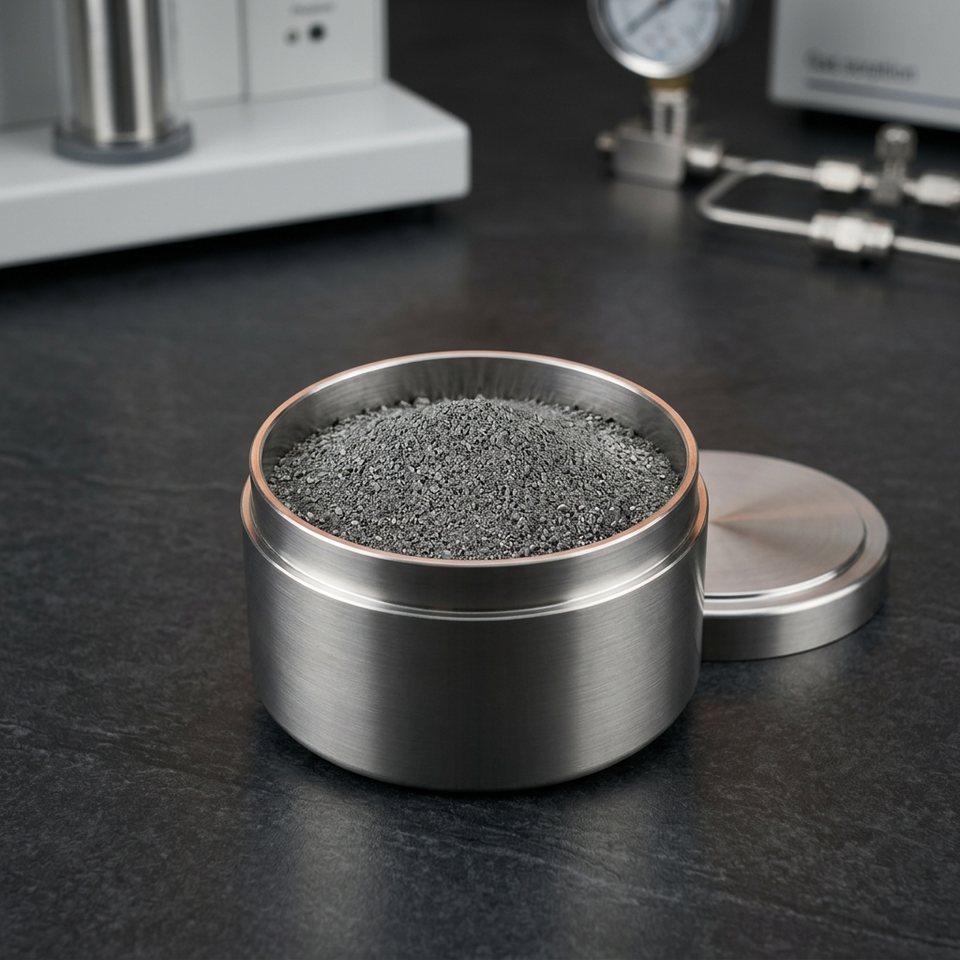
Hydrogen Storage Alloy Powder (AB5 / AB2) metal powder product sample

QUICK ANSWER

Performance Defined by Material and Process.

Hydrogen storage alloy powder is a rare-earth or zirconium-titanium intermetallic (AB5 LaNi5-type, AB2 TiZrVNi-type) that absorbs and releases hydrogen reversibly at practical temperatures and pressures — the active material in NiMH battery negative electrodes, stationary hydrogen storage tanks, and hydrogen purification/compression systems.

Metal hydrides store hydrogen more densely than liquid hydrogen — the alloy lattice packs hydrogen atoms interstitially at densities no tank can match — and release it on warming at safe, low pressures. The dominant tonnage application is the NiMH battery: every hybrid vehicle and rechargeable AA battery contains AB5 alloy whose La-Ce-Ni-Co-Mn-Al composition is tuned for charge-discharge cycle life. The emerging application is solid-state hydrogen storage for fuel-cell vehicles, forklifts, and renewable energy buffering, where hydride tanks trade weight for absolute safety. Note: the lanthanum and cerium in AB5 alloys are light rare earths outside China's export control scope — these products ship normally.

MATERIAL DATA

Chemistry and Technical Performance.

Lot-level controls focus on the chemistry, particle characteristics, and process values that influence manufacturing consistency and finished-part performance.

Chemical Composition

TYPICAL
ElementContentPerformance Role
Rare earths (La, Ce, Pr, Nd)30-34 wt% (AB5)Hydrogen-absorbing A-site elements — light RE only, outside export controls
Nickel (Ni)50-60 wt% (AB5)Catalytic B-site element enabling fast reversible absorption
Cobalt + Manganese + Aluminum5-12 wt% combinedCycle-life and plateau-pressure tuning elements
Zirconium + Titanium (AB2)A-site in AB2 typeHigher capacity, different pressure-temperature window
Vanadium (AB2)B-site modifierAbsorption kinetics and capacity enhancement

Technical Specifications

BASE GRADE
Types
AB5 (LaNi5-family), AB2 (Laves-phase)
Hydrogen capacity
1.2-1.8 wt% (system dependent)
Particle size
45-150 µm (battery), custom for tanks
Cycle life
> 1000 charge cycles (battery grades)
Operating pressure
1-10 bar (application tuned)
Purity
Certified RE and Ni content per lot

Final limits can be aligned with the agreed purchase specification.

APPLICATIONS

Developed for Demanding Industrial Applications.

01

NiMH battery manufacturing is the anchor market

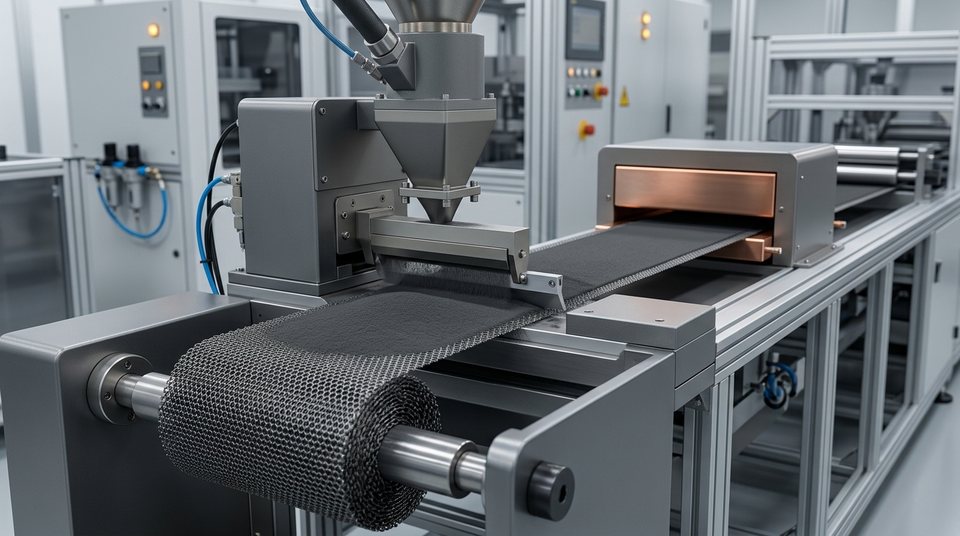
NiMH battery manufacturing is the anchor market: hydrogen storage alloy powder is pressed or pasted onto nickel foam or perforated strip to form the battery's negative electrode, where it stores hydrogen electrochemically through millions of shallow cycles. Hybrid vehicle batteries (the technology in most HEVs on the road) and consumer rechargeable batteries consume this powder in thousand-tonne annual volumes, bought on electrochemical capacity certification, cycle-life data, and composition consistency — a qualification-locked market where battery makers audit alloy suppliers for years.

02

Hydrogen energy is the emerging market

Hydrogen energy is the emerging market: solid-state hydride tanks for fuel-cell forklifts and utility vehicles (where eliminating high-pressure cylinders changes the safety case), hydrogen purification systems (hydrides absorb H2 selectively, rejecting impurities), and thermal compression systems that move hydrogen between pressures using waste heat. Renewable energy storage research programs and defense applications add development-stage demand — all buying on pressure-composition-temperature (PCT) certification per lot.

Hydrogen Storage Alloy Powder (AB5 / AB2) industrial application detail

CHEMICAL & METALLURGICAL PROCESS POWDERS

CUSTOM SUPPLY

A Supply Specification Built Around Your Process.

We supply AB5 battery-grade hydrogen storage alloy with certified electrochemical capacity and cycle data, and AB2-type alloys for storage tank applications with full PCT curves per lot. Custom compositions for specific plateau pressures, surface-treated activation-optimized grades, and development quantities alongside production volumes are available. Export note: our AB5 alloys contain only light rare earths (La, Ce, Pr, Nd) which are outside China's rare-earth export control scope; shipments follow standard commercial documentation with composition declarations.

01

We supply AB5 battery-grade hydrogen storage alloy with certified electrochemical capacity and cycle data, and AB2-type alloys for storage tank applications with full PCT curves per lot.

02

Custom compositions for specific plateau pressures, surface-treated activation-optimized grades, and development quantities alongside production volumes are available.

03

Export note: our AB5 alloys contain only light rare earths (La, Ce, Pr, Nd) which are outside China's rare-earth export control scope; shipments follow standard commercial documentation with composition declarations.

MATERIAL COMPARISON

Compare Materials Against the Production Requirement.

AB5 vs AB2 Hydrogen Storage Alloys

Comparison PointThis ProductAB2 (TiZrVNi-type)
Hydrogen capacity~1.4 wt%1.6-1.8 wt% — higher
Cycle stabilityExcellent — battery provenGood, improving
Activation easeEasyHarder — needs treatment
Raw material costModerate (RE + Ni)Higher (V content)
Battery qualificationThe NiMH standardLimited battery use
Best useNiMH electrodes, proven storageHigh-capacity tank systems

TECHNICAL FAQ

Technical Questions About This Grade.

Need a different chemistry, particle range, or processing route? Our material team can review the requirement and supply window.

Are the rare earths in AB5 subject to China's export controls?

No — the April 2025 controls cover samarium, gadolinium, terbium, dysprosium, lutetium, scandium, and yttrium. AB5 alloys use lanthanum and cerium (light rare earths) which are outside the controlled scope, and our shipments include composition declarations confirming this.

What certification comes with battery-grade alloy?

Electrochemical capacity (mAh/g), cycle-life test data, composition certificate, and particle size distribution per lot — the four values battery makers qualify on. We also provide PCT data for storage applications.

Can you tune the plateau pressure for our tank design?

Yes — plateau pressure is set by composition (the Co/Mn/Al ratio in AB5, V content in AB2). Tell us your target pressure-temperature window and we produce the matched composition with PCT verification.

What activation does the alloy need before use?

Battery grades are pre-activated or activate in the first charge cycles; tank grades need initial high-pressure hydrogen cycles — our surface-treated grades reduce activation time substantially, with procedures documented per lot.

Is hydrogen storage alloy powder pyrophoric?

Fully hydrided alloy is stable; activated fine powder in the dehydrogenated state can be air-sensitive. We ship in inert-sealed packaging with handling guidance appropriate to the product state.

REQUEST THIS GRADE

Turn Your Production Requirement Into a Powder Specification.

Share your target chemistry, particle size, process, annual volume, and destination. Our powder specialists will confirm the closest production grade and documentation package.

Talk to a Powder Specialist
Send Inquiry