Metal3DPMETAL3DP
CARBIDE & DIAMOND TOOL MATRIX POWDERSTECHNICAL PRODUCT DATA

Cr3C2 Chromium Carbide Powder

Cr3C2 powder, 2200 HV, oxidation-resistant to 900°C. Spray-blend grade for Cr3C2-25NiCr HVOF coatings, CCO wire fill and cermet additive cuts. XRD phase certified.

Hardness
~2200 HV
Max service temperature
900 °C in oxidizing service
Particle sizes
1-5 µm (spray blend grade), submicron available
Standard blend
Cr3C2-25NiCr for HVOF
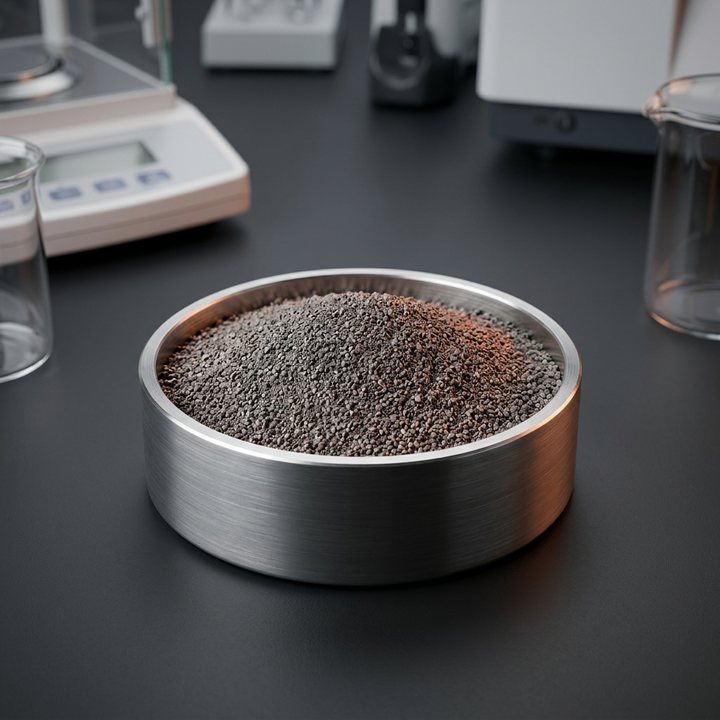
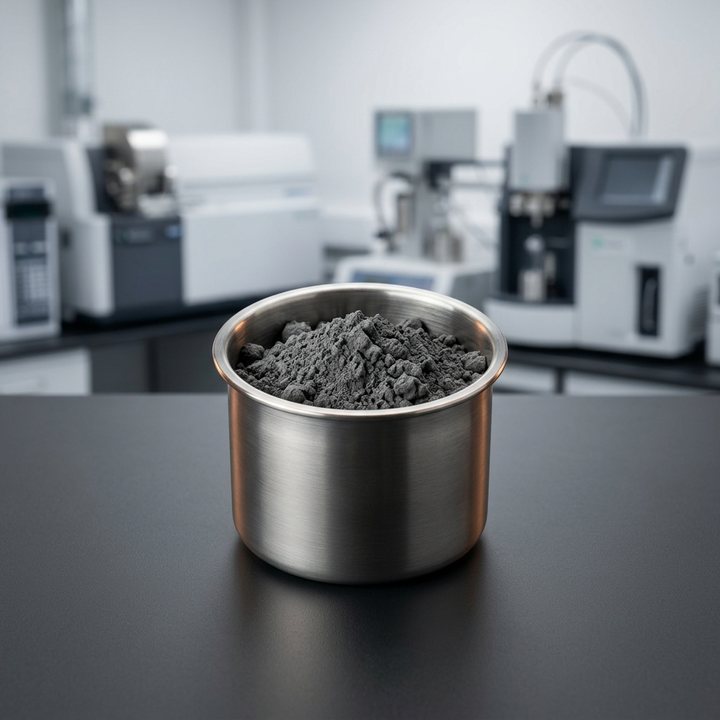
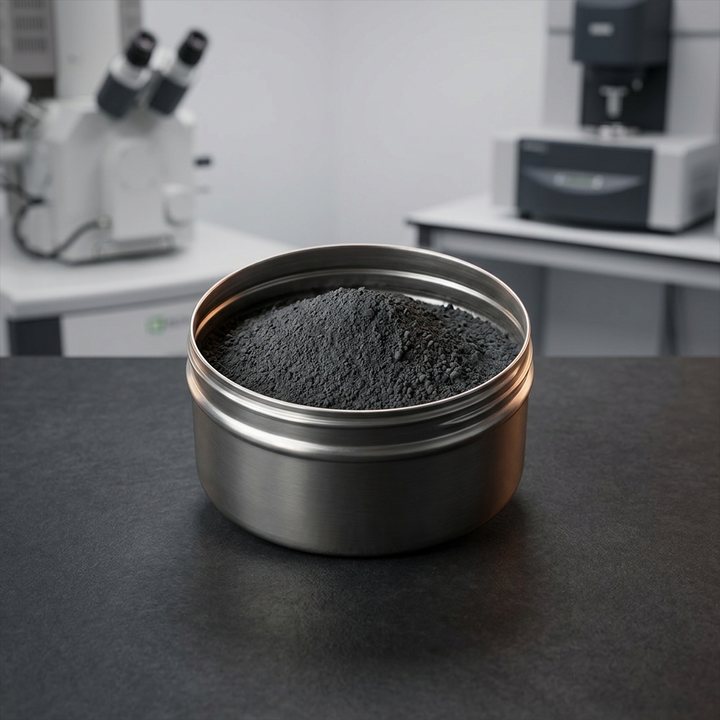
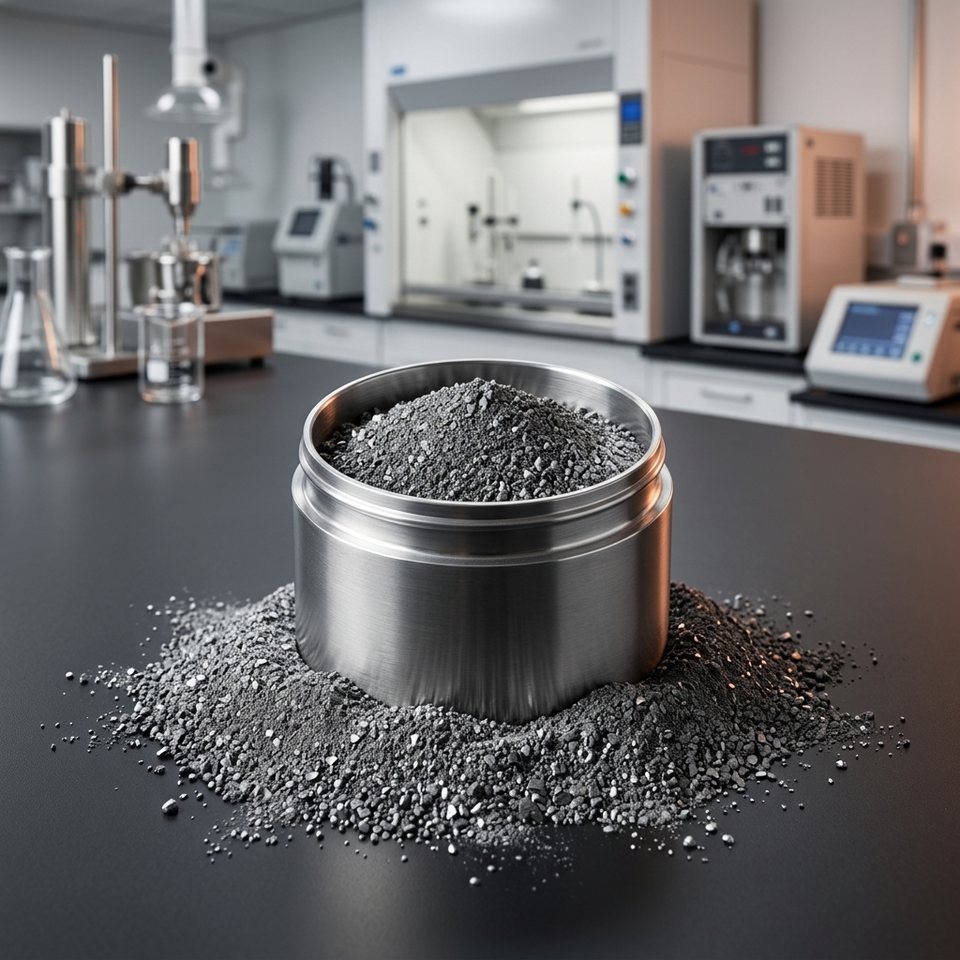
Cr3C2 Chromium Carbide Powder metal powder product sample

QUICK ANSWER

Performance Defined by Material and Process.

Cr₃C₂ powder is chromium carbide — hardness ~2200 HV with outstanding oxidation and corrosion resistance to 900 °C — used in thermal spray powders (Cr₃C₂-25NiCr, the industry-standard high-temperature wear coating), hardfacing blends, and as a grain-growth inhibitor and carbide additive in cermets and specialty alloys. It is the go-to carbide wherever wear meets heat or corrosion.

Chromium carbide occupies the niche WC cannot serve: above about 500 °C WC coatings oxidize and degrade, while Cr₃C₂'s chromium content forms a protective oxide that survives to 900 °C — which is why Cr₃C₂-NiCr is the standard coating on boiler tubes, turbine components, and hot forming tools. The carbide alone is too brittle to spray; it is always blended or clad with NiCr matrix, so powder buyers are spray powder manufacturers and hardfacing formulators purchasing on carbide particle size (fine for dense coatings), carbon stoichiometry (Cr₃C₂ vs Cr₇C₃ mix), and flowability.

MATERIAL DATA

Chemistry and Technical Performance.

Lot-level controls focus on the chemistry, particle characteristics, and process values that influence manufacturing consistency and finished-part performance.

Chemical Composition

TYPICAL
ElementContentPerformance Role
Chromium (Cr)~86-87 wt%Carbide former providing oxidation resistance
Combined carbon (C)12.8-13.3 wt%Stoichiometric carbon for the Cr3C2 phase
Free carbon< 0.3 wt%Excess degrades coating cohesion
Oxygen (O)< 0.8 wt%Oxide affects spraying and sintering behavior
Iron (Fe)< 0.5 wt%Impurity limit for corrosion-critical coatings

Technical Specifications

BASE GRADE
Hardness
~2200 HV
Max service temperature
900 °C in oxidizing service
Particle sizes
1-5 µm (spray blend grade), submicron available
Standard blend
Cr3C2-25NiCr for HVOF
Density
6.68 g/cm³
Corrosion resistance
Excellent — chromium oxide film

Final limits can be aligned with the agreed purchase specification.

APPLICATIONS

Developed for Demanding Industrial Applications.

01

Thermal spray powder manufacture is the dominant market

Thermal spray powder manufacture is the dominant market: Cr₃C₂-25NiCr applied by HVOF protects power boiler tubes against fly-ash erosion and high-temperature corrosion, coats turbine mid-spans and valve stems, and arms hot forging and extrusion dies. Spray powder producers blend or sinter-crush the carbide with NiCr and sell finished powders to coating shops — they buy carbide powder on particle size consistency and phase purity, since uncombined chromium or Cr₇C₃ excess shifts coating wear behavior. The energy sector's boiler maintenance cycles make this a steady, specification-driven demand.

02

Hardfacing and metallurgical additives form the second market

Hardfacing and metallurgical additives form the second market: Cr₃C₂ additions to nickel and iron hardfacing blends boost high-temperature abrasion resistance; in cermets and carbide grades it serves as a grain-growth inhibitor; and chromium carbide additions carburize-specialize stainless powder metallurgy and diamond tool matrices. Welding consumable makers use it in chromium carbide overlay (CCO) wire and electrode formulations — the hardfacing of cement mill rolls and mining crushers.

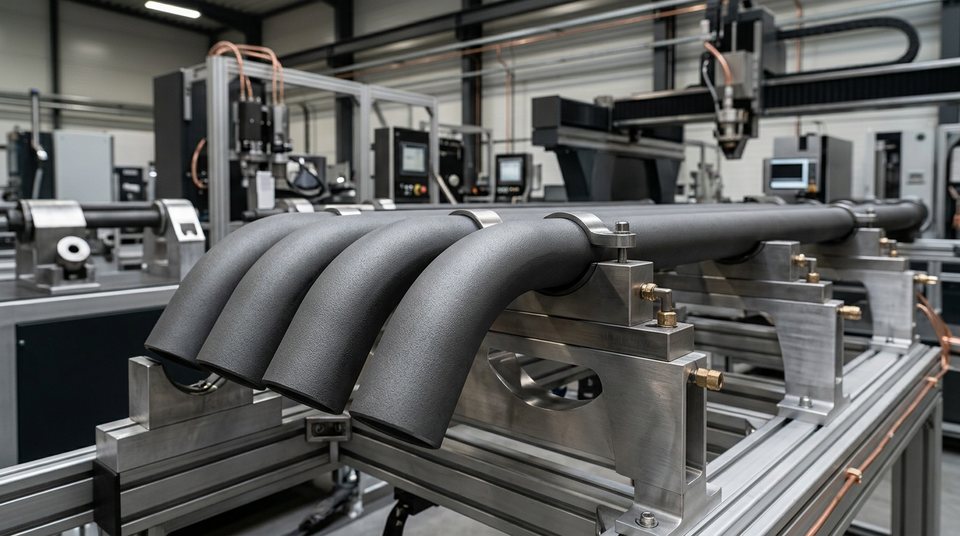
Cr3C2 Chromium Carbide Powder industrial application detail

CARBIDE & DIAMOND TOOL MATRIX POWDERS

CUSTOM SUPPLY

A Supply Specification Built Around Your Process.

We supply Cr₃C₂ in spray-blend grade (1-5 µm, certified phase content), submicron grades for cermet additives, and custom cuts for CCO wire fill. NiCr-blended ready-to-spray Cr₃C₂-25NiCr (sintered-crushed or agglomerated) available on request with full spray-parameter data. Not export-controlled.

01

We supply Cr₃C₂ in spray-blend grade (1-5 µm, certified phase content), submicron grades for cermet additives, and custom cuts for CCO wire fill.

02

NiCr-blended ready-to-spray Cr₃C₂-25NiCr (sintered-crushed or agglomerated) available on request with full spray-parameter data.

MATERIAL COMPARISON

Compare Materials Against the Production Requirement.

Cr3C2-NiCr vs WC-Co Coatings

Comparison PointThis ProductWC-Co Coating
Max service temperature900 °C~500 °C — oxidizes above
Room-temperature wearGoodSuperior — harder carbide
Corrosion resistanceExcellent (Cr oxide film)Poor — Co binder corrodes
Coating hardness900-1100 HV1100-1400 HV
Export exposureNoneWC licensed since Feb 2025
Best useHot wear: boilers, turbines, hot toolsCold abrasion: pumps, plungers

TECHNICAL FAQ

Technical Questions About This Grade.

Need a different chemistry, particle range, or processing route? Our material team can review the requirement and supply window.

Why blend Cr3C2 with NiCr instead of spraying it pure?

Pure chromium carbide is too brittle to form a cohesive coating — particles shatter on impact. The 25% NiCr matrix binds the carbide into a dense, adherent HVOF coating; the blend ratio and carbide particle size are the two levers on final wear performance.

What particle size for HVOF blend production?

1-5 µm carbide gives the best balance — fine enough for uniform distribution in the blend, coarse enough to survive spraying without decarburization. We certify the distribution per lot.

Does phase purity (Cr3C2 vs Cr7C3) matter?

Yes — Cr₃C₂ is the hardest chromium carbide phase; excess Cr₇C₃ or Cr₂₃C₆ lowers coating hardness. Our powder is certified for phase content by XRD.

Can you supply ready-to-spray Cr3C2-25NiCr?

Yes — agglomerated and sintered-crushed versions matched to HVOF and plasma systems, with particle size cuts (e.g., -45+15 µm) and spray-parameter starting points.

Is chromium carbide export-controlled?

No. Chromium and its carbides ship without licensing requirements.

REQUEST THIS GRADE

Turn Your Production Requirement Into a Powder Specification.

Share your target chemistry, particle size, process, annual volume, and destination. Our powder specialists will confirm the closest production grade and documentation package.

Talk to a Powder Specialist
Send Inquiry