Metal3DPMETAL3DP
CARBIDE & DIAMOND TOOL MATRIX POWDERSTECHNICAL PRODUCT DATA

TiC Titanium Carbide Powder

TiC powder 0.8-10µm, 3000+ HV, half the density of WC, tungsten-free. Cermet cutting tool grade (low O, certified carbon) and PTA/laser cladding wear grades.

Hardness
3000-3200 HV
Density
4.93 g/cm³ — half of WC
Particle sizes
0.8-1.5 µm (cermet grade), 1-10 µm (hardfacing), -325 mesh (spray)
Melting point
3067 °C
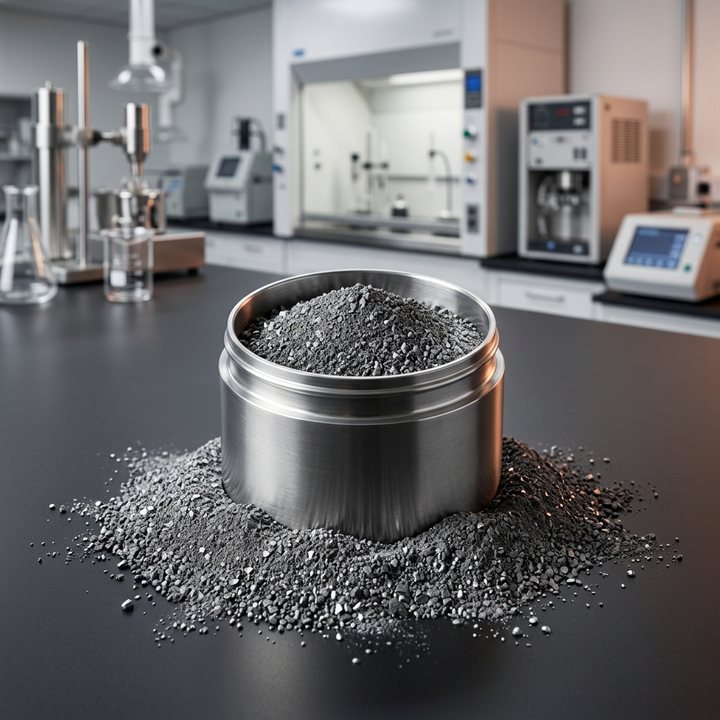
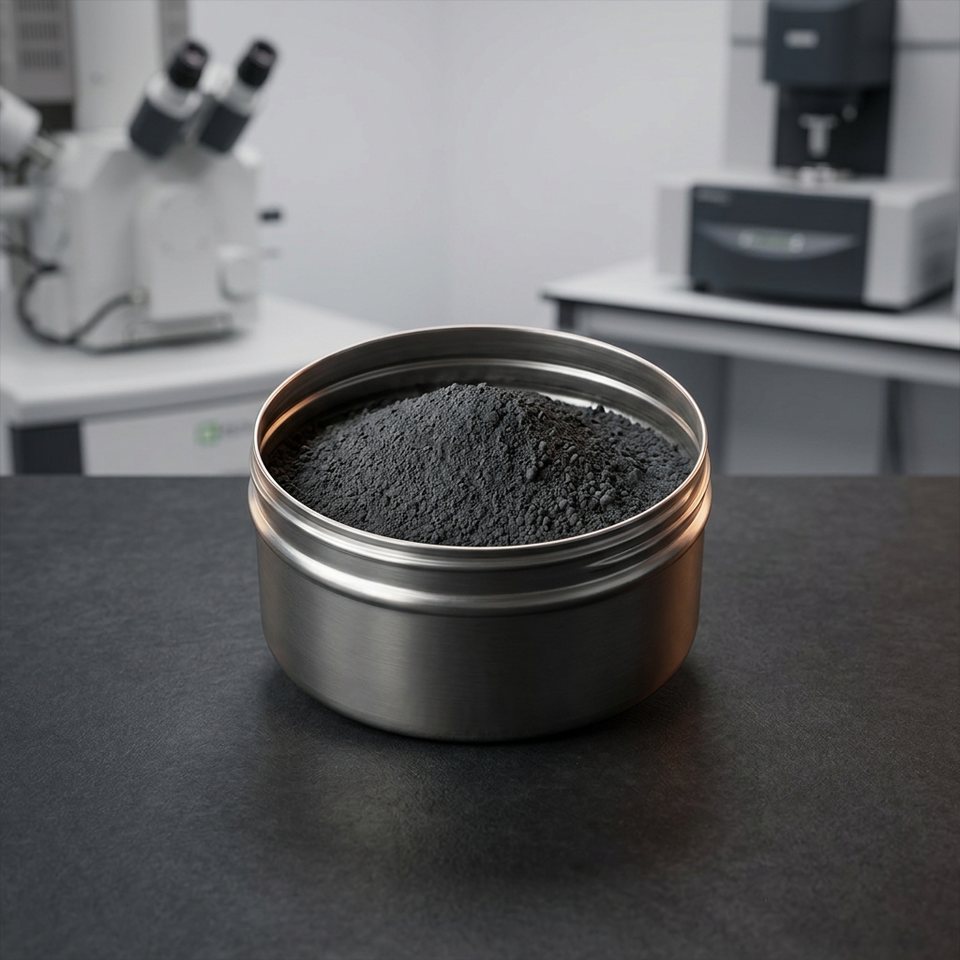
TiC Titanium Carbide Powder metal powder product sample

QUICK ANSWER

Performance Defined by Material and Process.

TiC powder is titanium carbide — hardness 3000+ HV, second only to diamond and WC among engineering carbides — supplied in submicron to micron grades for cermet cutting tools, wear-resistant hardfacing, steel-bonded carbides, and ceramic reinforcement. It delivers WC-class hardness at half the density (4.93 vs 15.6 g/cm³), with better high-temperature oxidation resistance and no tungsten — making it both a performance and a supply-security choice.

TiC's role in modern tooling is structural: in cermet cutting inserts it is the primary hard phase (TiC-TiN-Mo₂C in Ni binder), giving finishing tools their wear resistance and surface-finish quality on steels; in hardfacing it is blended into nickel and iron matrices for PTA and laser-clad wear layers; in steel-bonded carbides (Ferro-TiC type) it provides machinable-then-hardenable tool steels with carbide-class wear life. Powder buyers choose on particle size (submicron for cermets, micron for hardfacing), oxygen and free carbon control, and lot consistency — because carbide quality propagates directly into insert grade performance.

MATERIAL DATA

Chemistry and Technical Performance.

Lot-level controls focus on the chemistry, particle characteristics, and process values that influence manufacturing consistency and finished-part performance.

Chemical Composition

TYPICAL
ElementContentPerformance Role
Titanium (Ti)~79-80 wt%Metallic constituent of the carbide lattice
Combined carbon (C)19.0-20.0 wt%Stoichiometric carbon defining hardness and lattice integrity
Free carbon (C)< 0.3 wt%Excess free carbon degrades sintering and toughness
Oxygen (O)< 0.5 wt% (submicron grades)Oxide films hinder densification in cermets
Nitrogen + iron< 0.5 wt% combinedImpurity control per cermet industry standards

Technical Specifications

BASE GRADE
Hardness
3000-3200 HV
Density
4.93 g/cm³ — half of WC
Particle sizes
0.8-1.5 µm (cermet grade), 1-10 µm (hardfacing), -325 mesh (spray)
Melting point
3067 °C
Oxidation resistance
Better than WC above 600 °C
Forms
Straight TiC, Ti(C,N) carbonitride, Ni-pre-coated for spraying

Final limits can be aligned with the agreed purchase specification.

APPLICATIONS

Developed for Demanding Industrial Applications.

01

Cermet cutting tool production is the premium market

Cermet cutting tool production is the premium market: TiC-based cermet inserts finish-turn and finish-mill steels at high speed with superior surface finish and tool life between carbide and ceramic — standard in automotive and bearing manufacturing. Insert producers mill TiC with TiN, Mo₂C, and nickel binder, press and sinter, and their grade performance depends directly on powder particle size distribution and oxygen content. Submicron, low-oxygen TiC commands premium pricing because finer, cleaner powder sinters to finer, tougher microstructures.

02

Hardfacing and wear applications form the volume market

Hardfacing and wear applications form the volume market: TiC-reinforced PTA powders and laser cladding blends protect crusher rolls, agricultural tillage tools, and mining wear parts — the angular carbide particles embedded in a tough metallic matrix resist abrasive wear at a fraction of WC-system cost and weight. Steel-bonded carbide producers add a third stream, making cold-work dies and wear components that machine like tool steel then harden with embedded TiC. Thermal spray (TiC-NiCr blends) rounds out the demand for erosion-resistant coatings.

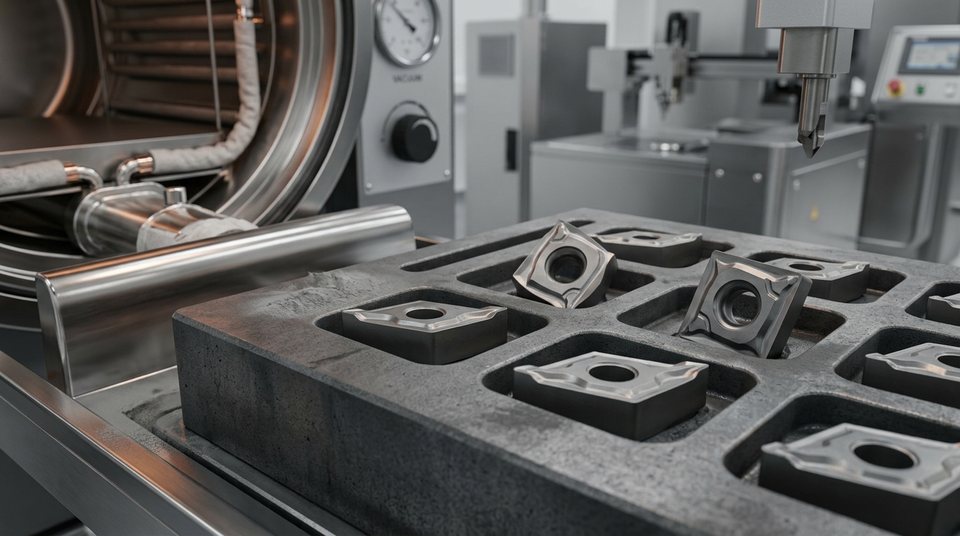
TiC Titanium Carbide Powder industrial application detail

CARBIDE & DIAMOND TOOL MATRIX POWDERS

CUSTOM SUPPLY

A Supply Specification Built Around Your Process.

We supply TiC in submicron cermet grade (0.8-1.5 µm, O < 0.5%), micron hardfacing grades, and -325 mesh spray cuts, with certified combined/free carbon and particle size per lot. Custom size distributions, Ti(C,N) carbonitride variants, and nickel-pre-coated powders for spray and PTA systems are available. Not export-controlled — and structurally attractive as a tungsten-free hard phase while WC sits under licensing.

01

We supply TiC in submicron cermet grade (0.8-1.5 µm, O < 0.5%), micron hardfacing grades, and -325 mesh spray cuts, with certified combined/free carbon and particle size per lot.

02

Custom size distributions, Ti(C,N) carbonitride variants, and nickel-pre-coated powders for spray and PTA systems are available.

MATERIAL COMPARISON

Compare Materials Against the Production Requirement.

TiC vs WC (Tungsten Carbide)

Comparison PointThis ProductWC
Density4.93 g/cm³15.6 g/cm³ — 3x heavier
Hardness3000-3200 HV2400-2800 HV — slightly lower
Toughness (in tools)Lower — brittlerHigher — the toughness benchmark
Oxidation resistanceBetter above 600 °CDegrades faster hot
Export status (China)Not controlledLicensed since Feb 2025
Best useCermets, lightweight wear, hot wearGeneral carbide tooling, mining bits

TECHNICAL FAQ

Technical Questions About This Grade.

Need a different chemistry, particle range, or processing route? Our material team can review the requirement and supply window.

What particle size do I need for cermet insert production?

Submicron, 0.8-1.5 µm FSSS with low oxygen — this sinters to the fine microstructures that give cermets their finishing performance. Coarser powder forces higher sintering temperatures and grain growth.

Can TiC fully replace WC in carbide tools?

In finishing cermets and specific wear systems, yes — and many users are qualifying exactly that transition given tungsten supply and licensing friction. For heavy interrupted cutting and mining tools, WC-Co toughness remains unmatched; TiC serves best as a complement and strategic hedge.

What does free carbon content do to sintering?

Excess free carbon reacts during sintering to form brittle eta-type phases and porosity, destroying toughness. Cermet buyers specify < 0.3% free carbon; we certify combined and free carbon separately per lot.

Do you supply TiC for laser cladding feedstock blends?

Yes — micron-grade angular and spherical-coated TiC blends into nickel and iron matrix powders for laser-clad wear layers. We co-develop blend ratios for your dilution and cracking window.

Is TiC export-controlled?

No. Titanium carbide ships without licensing — unlike tungsten carbide, which has required export licenses in China since February 2025.

REQUEST THIS GRADE

Turn Your Production Requirement Into a Powder Specification.

Share your target chemistry, particle size, process, annual volume, and destination. Our powder specialists will confirm the closest production grade and documentation package.

Talk to a Powder Specialist
Send Inquiry