Metal3DPMETAL3DP
THERMAL SPRAY & HARDFACING POWDERSTECHNICAL PRODUCT DATA

NiCrBSi Self-Fluxing Alloy Powder (Ni45 / Ni55 / Ni60)

Ni45 / Ni55 / Ni60

Self-fluxing NiCrBSi hardfacing powder in 45/55/60 HRC grades. HVOF and spray-fuse cuts, custom WC blends, lot-certified hardness. Pump shafts, valve seats, agri wear parts.

Available hardness grades
Ni45 (45 HRC), Ni55 (55 HRC), Ni60 (60 HRC)
Melting range
1000-1080 °C
Particle size cuts
15-45 µm (HVOF), 45-106 µm (flame/plasma spray + fuse)
Coating porosity (fused)
< 1%
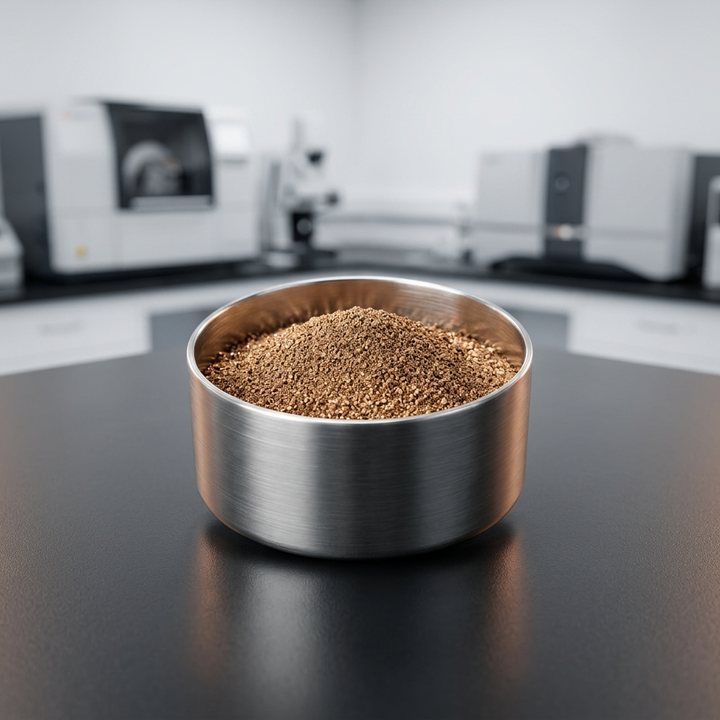
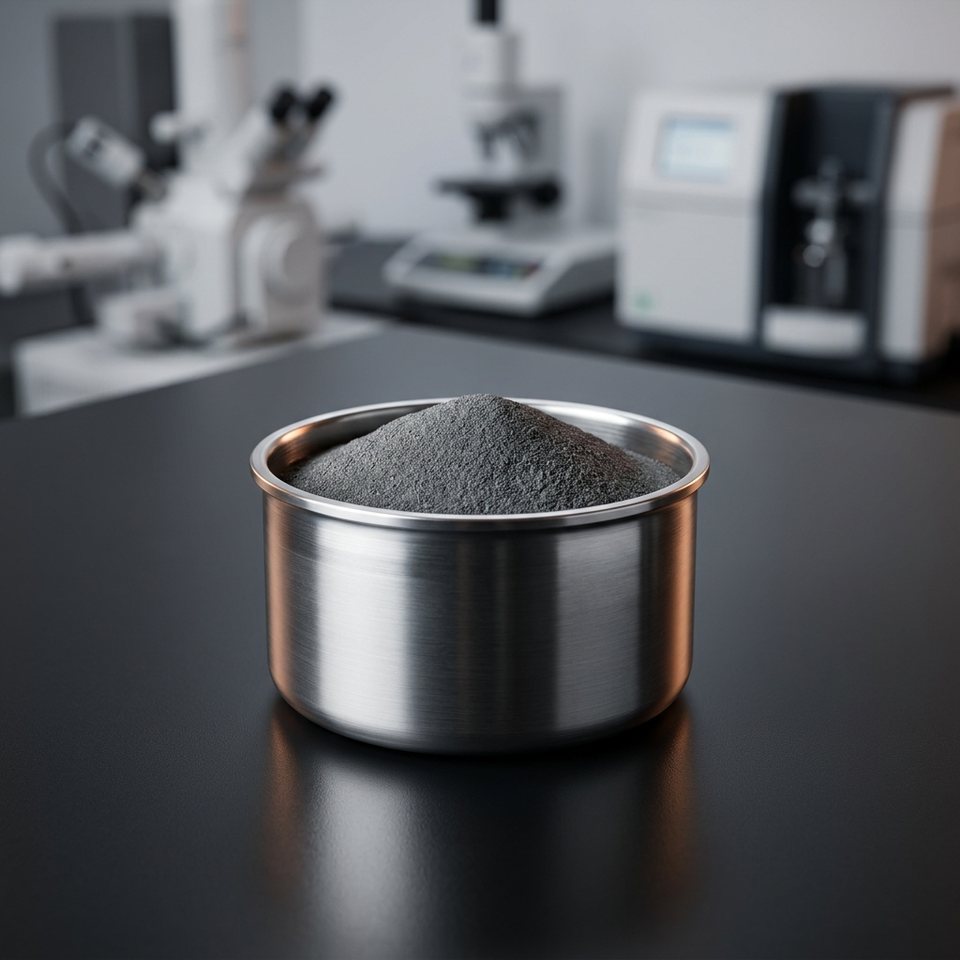
NiCrBSi Self-Fluxing Alloy Powder (Ni45 / Ni55 / Ni60) metal powder product sample

QUICK ANSWER

Performance Defined by Material and Process.

NiCrBSi self-fluxing powder is a nickel-based hardfacing alloy containing chromium, boron, and silicon, sprayed by flame spray, plasma spray, or HVOF and optionally fused at 1000-1050 °C to produce dense, metallurgically bonded coatings with hardness from 45 to 60 HRC. The number in the grade name (Ni45, Ni55, Ni60) indicates the approximate Rockwell C hardness of the fused deposit, letting buyers select the exact wear resistance level their application demands.

The 'self-fluxing' name describes the alloy's key trick: boron and silicon lower the melting point to around 1050 °C and act as fluxing agents, dissolving surface oxides during the fusing step so the coating wets and bonds to the steel substrate like a braze. The result is a pore-free coating that no purely mechanical spray bond can match. It is the single most widely used hardfacing powder family in the world, protecting everything from pump shafts and valve seats to agricultural wear parts and screw conveyor flights.

MATERIAL DATA

Chemistry and Technical Performance.

Lot-level controls focus on the chemistry, particle characteristics, and process values that influence manufacturing consistency and finished-part performance.

Chemical Composition

TYPICAL
ElementContentPerformance Role
Nickel (Ni)Balance (typically > 70 wt%)Tough, corrosion-resistant matrix that carries the hard phases
Chromium (Cr)8-17 wt% (grade dependent)Forms hard chromium borides and carbides; raises corrosion and oxidation resistance
Boron (B)2.0-4.5 wt%Melting point depressant and fluxing agent; forms wear-resistant boride phases
Silicon (Si)3.0-5.0 wt%Works with boron to lower melting point and deoxidize the melt during fusing
Iron (Fe)< 5-17 wt% (grade dependent)Cost-balancing addition; higher Fe slightly reduces corrosion resistance

Technical Specifications

BASE GRADE
Available hardness grades
Ni45 (45 HRC), Ni55 (55 HRC), Ni60 (60 HRC)
Melting range
1000-1080 °C
Particle size cuts
15-45 µm (HVOF), 45-106 µm (flame/plasma spray + fuse)
Coating porosity (fused)
< 1%
Bond strength (fused)
Metallurgical bond, > 350 MPa
Max service temperature
~600 °C (oxidizing)

Final limits can be aligned with the agreed purchase specification.

APPLICATIONS

Developed for Demanding Industrial Applications.

01

The classic application set

The classic application set is rotating and sliding equipment in aggressive service: pump shafts and sleeves, mechanical seal faces, valve seats and plugs, piston rods, and extrusion screw flights. A shaft worn undersize gets rebuilt with a spray-and-fuse NiCrBSi layer and ground back to dimension — often at a third of replacement cost, with better wear life than the original. The hardness grade selection follows the wear mechanism: Ni45 for galling and metal-to-metal contact, Ni55 for mixed abrasion, Ni60 for severe abrasion and erosion where some toughness can be sacrificed.

02

Additional Applications

In agriculture and earthmoving, NiCrBSi protects ploughshares, cultivator points, harvester blades, and feed mixer augers against soil abrasion — an enormous tonnage market where cost per protected part is the driving metric. Here flame spray-and-fuse dominates because the equipment is simple and the parts are large. Oil and gas adds another premium segment: ball valve seats and downhole tool hardfacing, where the coating must survive both abrasion and corrosive brines, making the nickel matrix's corrosion resistance as important as its hardness.

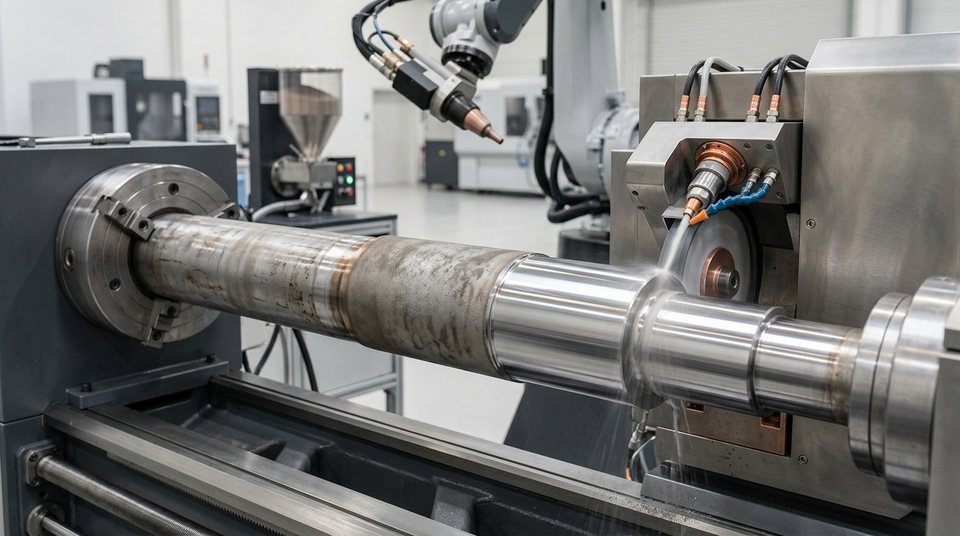
NiCrBSi Self-Fluxing Alloy Powder (Ni45 / Ni55 / Ni60) industrial application detail

THERMAL SPRAY & HARDFACING POWDERS

CUSTOM SUPPLY

A Supply Specification Built Around Your Process.

We produce the full Ni45/Ni55/Ni60 range in both HVOF cuts (15-45 µm, spherical gas-atomized for maximum flow) and spray-and-fuse cuts (45-106 µm or 106-212 µm for torch application). Custom boron/silicon ratios for specific fusing behavior, iron-free premium grades for corrosive service, and blended variants with added WC for extreme abrasion are standard options. Each lot ships with chemistry, size distribution, Hall flow, and a fused-button hardness certificate. Not export-controlled.

01

We produce the full Ni45/Ni55/Ni60 range in both HVOF cuts (15-45 µm, spherical gas-atomized for maximum flow) and spray-and-fuse cuts (45-106 µm or 106-212 µm for torch application).

02

Custom boron/silicon ratios for specific fusing behavior, iron-free premium grades for corrosive service, and blended variants with added WC for extreme abrasion are standard options.

03

Each lot ships with chemistry, size distribution, Hall flow, and a fused-button hardness certificate.

MATERIAL COMPARISON

Compare Materials Against the Production Requirement.

NiCrBSi vs WC-Based HVOF Powders (WC-Co / WC-CrC-Ni)

Comparison PointThis ProductWC-Co HVOF Powder
Hardness45-60 HRC (650-750 HV)1000-1400 HV — much harder
Toughness / impactGood — survives mechanical shockBrittle — chips under impact
Corrosion resistanceGood (Ni matrix, Cr alloying)WC-Co poor; WC-CrC-Ni good
Application processSpray + optional fuse for pore-free bondHVOF as-sprayed; cannot be fused
Coating thicknessUp to several mm (fused)Typically < 0.5 mm
CostLower per kg and per mm of coating2-4x higher

TECHNICAL FAQ

Technical Questions About This Grade.

Need a different chemistry, particle range, or processing route? Our material team can review the requirement and supply window.

How do I choose between Ni45, Ni55, and Ni60?

Match hardness to the wear mechanism: metal-to-metal galling and sliding — Ni45; mixed wear with moderate abrasion — Ni55; severe abrasion, erosion, and sand contact — Ni60. Higher hardness trades away machinability, so if the coating must be finish-machined rather than ground, stay at Ni45 or Ni50.

Can NiCrBSi coatings be machined?

Ni45 machines with carbide tooling; Ni55 is grindable with difficulty; Ni60 effectively requires grinding. Plan the finishing route before selecting the grade.

What is the difference between spray-fuse and HVOF application?

Spray-fuse (flame spray then fuse at ~1040 °C) gives a pore-free, metallurgically bonded coating but heats the whole part — unsuitable for heat-treatment-sensitive substrates. HVOF applies the same powder cold and dense without fusing, preserving substrate properties but leaving a mechanical bond.

Can you blend WC into NiCrBSi?

Yes — NiCrBSi + 20-35% WC blends are a standard extreme-abrasion product for agricultural and mining wear parts. We blend to your specification or supply premixed grades.

Is NiCrBSi powder export-controlled from China?

No. Nickel-chromium-boron-silicon hardfacing powders are standard commercial products with no licensing requirement.

REQUEST THIS GRADE

Turn Your Production Requirement Into a Powder Specification.

Share your target chemistry, particle size, process, annual volume, and destination. Our powder specialists will confirm the closest production grade and documentation package.

Talk to a Powder Specialist
Send Inquiry