Metal3DPMETAL3DP
SPECIALTY & COMPOSITE POWDERSTECHNICAL PRODUCT DATA

Spherical Bronze Powder for Sintered Filters

45-630µm spherical bronze in five certified cuts for porous elements. 5-200µm filtration ratings, lead-free compliant, sintering support included.

Size cuts
45-90, 90-160, 160-250, 250-450, 450-630 µm
Sphericity
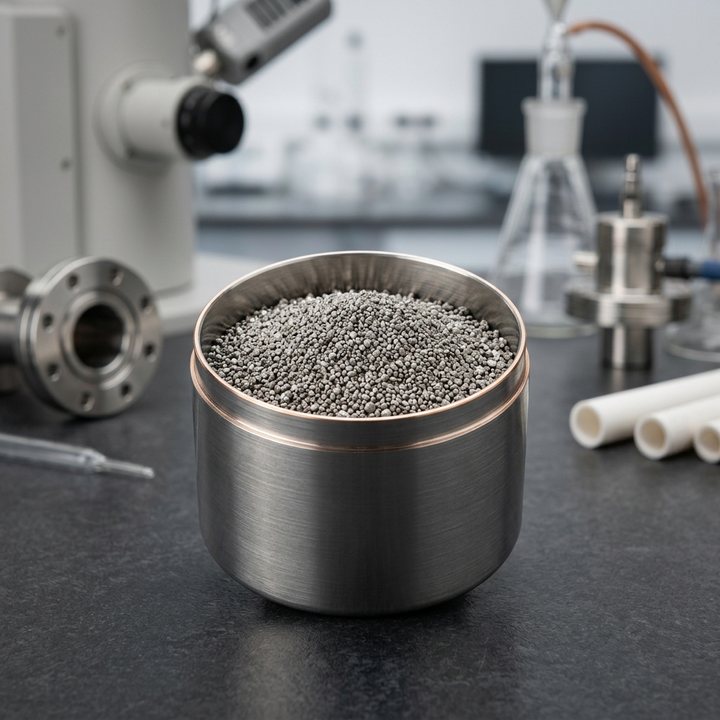
> 95% spherical
Sintered porosity
30-50% (cut dependent)
Filtration rating
5-200 µm nominal
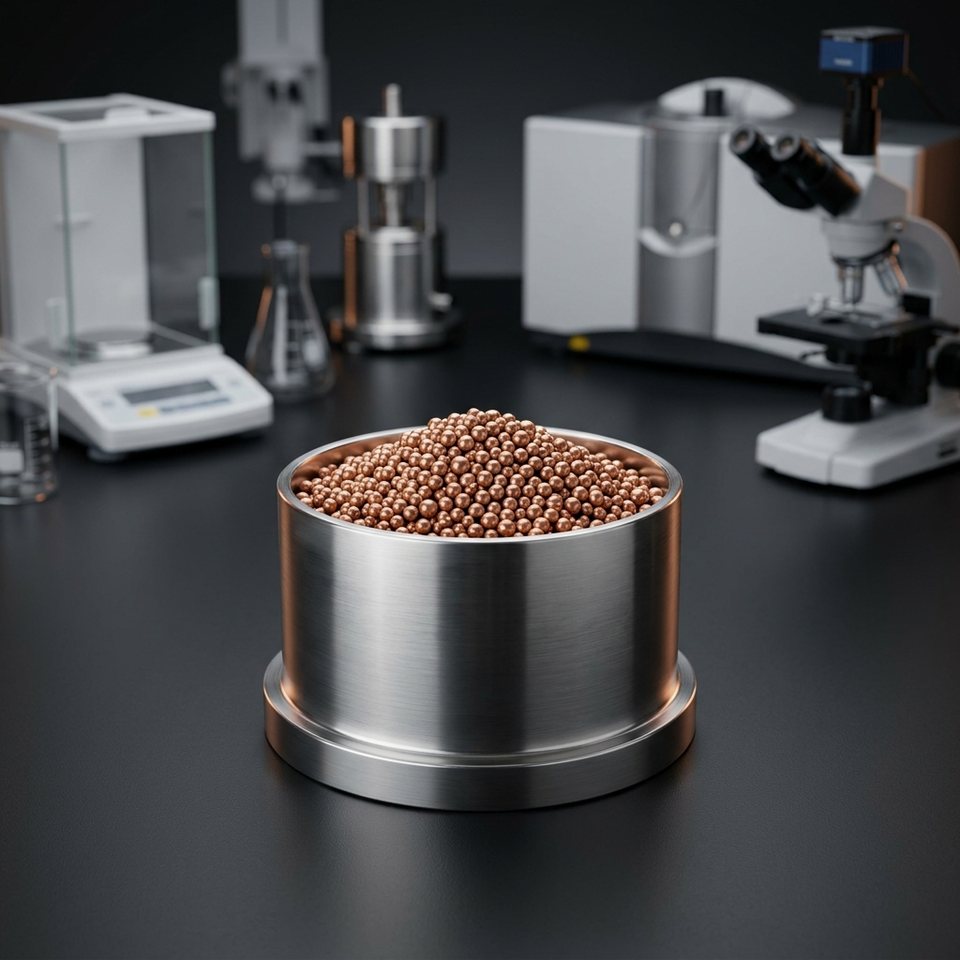
Spherical Bronze Powder for Sintered Filters metal powder product sample

QUICK ANSWER

Performance Defined by Material and Process.

Spherical bronze powder (CuSn10, 45-630 µm graded cuts) is gas-atomized tin bronze in true spherical form, designed for sintering into porous bronze filters, silencers, and fluidizing elements. The spherical shape sinters into controlled, uniform porosity (30-50 percent) that filters, diffuses, and silences — the standard porous metal medium for pneumatic, hydraulic, and process industries.

Filter bronze is a shape story: only spherical powder sinters into the smooth, interconnected pore network that gives predictable filtration ratings and cleanable performance — irregular powders make erratic pores. The powder is loose-sintered in molds (no compaction pressure), bonding at particle contact points into rigid porous elements with filtration ratings from 5 to 200 microns set by the powder's size cut. Filter manufacturers buy on size-distribution tightness (the rating depends on it), sphericity, and chemistry per CuSn10 or CuSn8 specifications — a mature, specification-stable market with steady recurring demand.

MATERIAL DATA

Chemistry and Technical Performance.

Lot-level controls focus on the chemistry, particle characteristics, and process values that influence manufacturing consistency and finished-part performance.

Chemical Composition

TYPICAL
ElementContentPerformance Role
Copper (Cu)88-91 wt%Bronze matrix — corrosion-resistant, thermally conductive
Tin (Sn)9-11 wt%Bronze former — strength and sintering behavior
Phosphorus (P)0-0.3 wt% (some grades)Sintering aid improving particle bonding
Oxygen (O)< 0.15 wt%Low oxide for clean sintering bonds
Impurities< 0.5 wt% totalChemistry per CuSn10/CuSn8 specification

Technical Specifications

BASE GRADE
Size cuts
45-90, 90-160, 160-250, 250-450, 450-630 µm
Sphericity
> 95% spherical
Sintered porosity
30-50% (cut dependent)
Filtration rating
5-200 µm nominal
Sintering
800-860 °C, reducing atmosphere, loose-sinter
Element forms
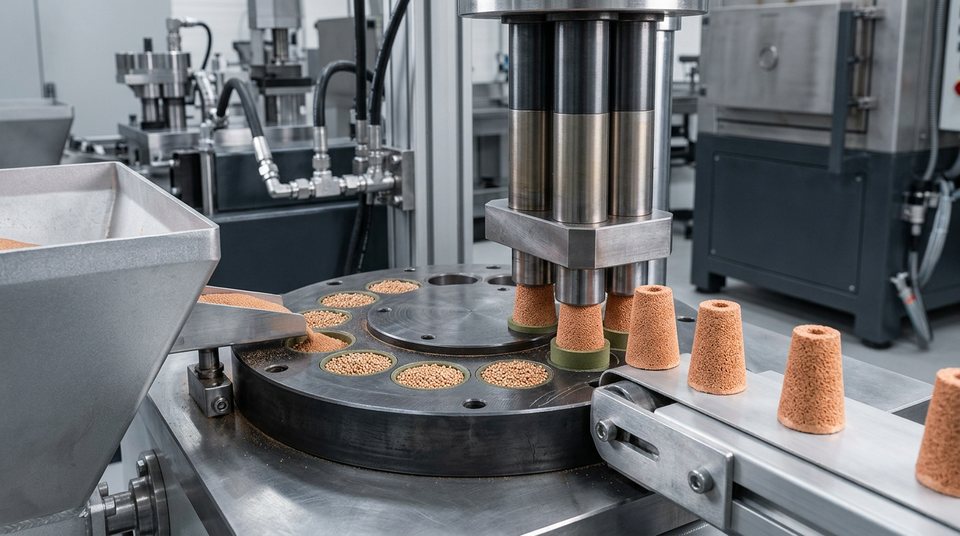
Discs, tubes, cones, silencers

Final limits can be aligned with the agreed purchase specification.

APPLICATIONS

Developed for Demanding Industrial Applications.

01

Pneumatic silencers and filters are the volume market

Pneumatic silencers and filters are the volume market: every pneumatic system vents through sintered bronze silencers that muffle exhaust noise and trap contaminants, and pneumatic filter-regulators use bronze elements for air cleaning — products made by the millions for industrial automation. The powder's size cut sets the element's flow-versus-rating balance, and manufacturers buy graded cuts on certified distribution, because a wide distribution blurs the filtration rating their products are sold on.

02

Process and fluid applications form the engineered market

Process and fluid applications form the engineered market: hydraulic and fuel filters, chemical process filters (bronze tolerates many media), fluidizing pads for powder silos (air diffuses through the bronze to aerate cement and powders), sparging elements, flame arrestors (the porous metal quenches flame propagation), and flow restrictors. Each application maps to a size cut and porosity target, and element producers value the bronze's cleanability — backflushed and reused for years.

Spherical Bronze Powder for Sintered Filters industrial application detail

SPECIALTY & COMPOSITE POWDERS

CUSTOM SUPPLY

A Supply Specification Built Around Your Process.

We supply spherical bronze in five standard size cuts (45-630 µm) with certified distribution and sphericity, CuSn10 and CuSn8 chemistries, and phosphorus-bearing sintering-aid variants. Custom cuts for specific filtration ratings, pre-alloyed low-lead and lead-free compliant grades, and sintering parameter support for element producers are available. Not export-controlled.

01

We supply spherical bronze in five standard size cuts (45-630 µm) with certified distribution and sphericity, CuSn10 and CuSn8 chemistries, and phosphorus-bearing sintering-aid variants.

02

Custom cuts for specific filtration ratings, pre-alloyed low-lead and lead-free compliant grades, and sintering parameter support for element producers are available.

MATERIAL COMPARISON

Compare Materials Against the Production Requirement.

Spherical Bronze vs Irregular Bronze for Filters

Comparison PointThis ProductIrregular Bronze Powder
Pore structureUniform, predictable ratingErratic — wide effective rating
Permeability at ratingHigh — open smooth poresLower — tortuous paths
CleanabilityExcellent — backflushablePoor — traps particles
Sintering behaviorLoose-sinter, shape-holdingNeeds compaction
Element strengthGoodVariable
Best useRated filters, silencers, fluidizingStructural PM parts (see Cat 1)

TECHNICAL FAQ

Technical Questions About This Grade.

Need a different chemistry, particle range, or processing route? Our material team can review the requirement and supply window.

How do I select the size cut for a target filtration rating?

Roughly, the nominal rating runs at one-fifth to one-tenth of the powder cut's lower bound — a 90-160 µm cut gives about a 20-30 µm rated element. We publish rating-per-cut reference data and verify with your prototype elements.

What sintering cycle does spherical bronze need?

Loose-sinter in molds at 800-860 °C under reducing atmosphere (dissociated ammonia or hydrogen), 20-60 minutes. Our lots include recommended cycles; over-sintering collapses porosity, under-sintering leaves weak bonds.

Is your bronze lead-free compliant?

Yes — our standard CuSn10 contains no lead additions and meets RoHS and drinking-water-relevant requirements. Certificates accompany each lot.

Can bronze elements be machined after sintering?

Yes — sintered bronze machines well with sharp tooling; keep cutting fluids compatible with the porous structure and clean before service. Many silencers are sintered net-shape with machined threads.

Is spherical bronze filter powder export-controlled?

No. Bronze powders ship without licensing requirements.

REQUEST THIS GRADE

Turn Your Production Requirement Into a Powder Specification.

Share your target chemistry, particle size, process, annual volume, and destination. Our powder specialists will confirm the closest production grade and documentation package.

Talk to a Powder Specialist
Send Inquiry