Metal3DPMETAL3DP
METAL INJECTION MOLDING (MIM) POWDERSTECHNICAL PRODUCT DATA

17-4PH (17-4 Precipitation Hardening) Stainless MIM Powder

Gas-atomized 17-4PH MIM powder reaching 900-1100 MPa after H900 aging. Lot-certified chemistry and aging response for lock, firearm, medical and energy parts.

Particle size (D90)
< 22 µm
Particle morphology
Spherical, gas atomized
Tap density
> 4.5 g/cm³
Sintered density
> 7.5 g/cm³
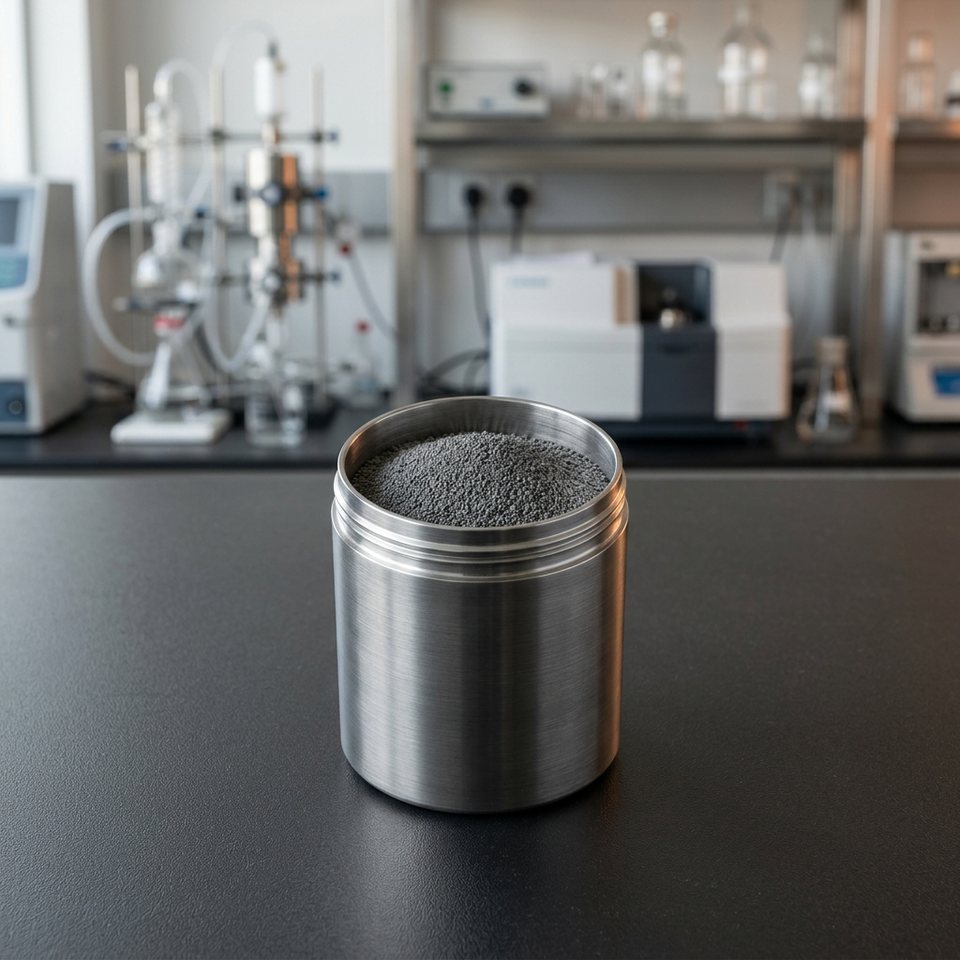
17-4PH (17-4 Precipitation Hardening) Stainless MIM Powder metal powder product sample

QUICK ANSWER

Performance Defined by Material and Process.

17-4PH MIM powder is a gas-atomized martensitic precipitation-hardening stainless powder used to mold high-strength small parts that reach 900-1100 MPa tensile strength and up to 40 HRC after a simple low-temperature aging treatment. It is the default choice when a MIM part needs steel-like strength with moderate corrosion resistance — lock components, firearm parts, turbine hardware, and industrial tools.

Where 316L wins on corrosion, 17-4PH wins on strength-per-dollar. After sintering and a one-hour H900 aging cycle, the copper precipitates in the martensitic matrix deliver yield strengths that austenitic grades cannot reach without cold work. The powder's chromium-nickel-copper chemistry is mature, its sintering window is forgiving (1330-1380 °C in hydrogen or vacuum), and it responds predictably to aging — which is why it dominates the structural end of the MIM stainless market.

MATERIAL DATA

Chemistry and Technical Performance.

Lot-level controls focus on the chemistry, particle characteristics, and process values that influence manufacturing consistency and finished-part performance.

Chemical Composition

TYPICAL
ElementContentPerformance Role
Chromium (Cr)15.0-17.5 wt%Provides baseline corrosion and oxidation resistance
Nickel (Ni)3.0-5.0 wt%Balances the martensitic transformation temperature for full hardening on cooling
Copper (Cu)3.0-5.0 wt%Forms the nanoscale precipitates during aging that generate the grade's high strength
Niobium + Tantalum (Nb+Ta)0.15-0.45 wt%Ties up carbon as stable carbides, improving toughness and corrosion stability
Carbon (C)< 0.07 wt%Limited to prevent excessive carbide formation that would reduce toughness

Technical Specifications

BASE GRADE
Particle size (D90)
< 22 µm
Particle morphology
Spherical, gas atomized
Tap density
> 4.5 g/cm³
Sintered density
> 7.5 g/cm³
Tensile strength (H900)
900-1100 MPa
Hardness (H900)
30-40 HRC
Typical sintering
1330-1380 °C, hydrogen or vacuum

Final limits can be aligned with the agreed purchase specification.

APPLICATIONS

Developed for Demanding Industrial Applications.

01

The classic 17-4PH MIM applications

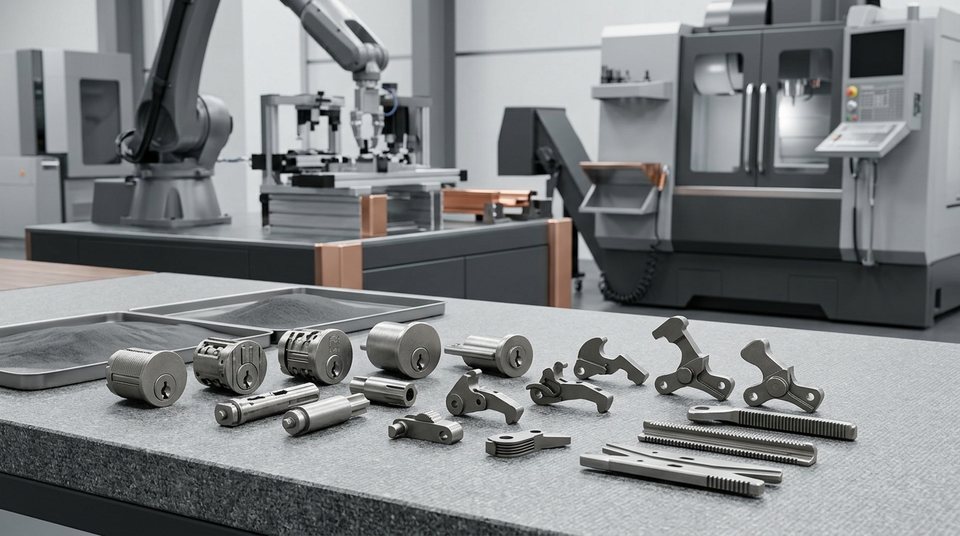
The classic 17-4PH MIM applications are security and safety-critical small parts where failure is not acceptable: lock cylinders and bolt mechanisms, firearm hammers, sears and safeties, seatbelt and airbag hardware, and surgical stapler anvils. These parts exploit the grade's unique combination — molded complexity that machining cannot economically produce, plus heat-treatable strength that approaches wrought alloy steel. Aging condition is selected by the end user: H900 for maximum strength, H1150 for better toughness and stress-corrosion resistance.

02

Beyond security hardware, 17-4PH MIM powder

Beyond security hardware, 17-4PH MIM powder serves industrial and energy applications such as downhole tool components, valve trim, pump impellers under 50 grams, and small turbine fittings. In these markets the purchasing logic is total cost: a MIM 17-4PH part replaces a five-axis-machined blank at a fraction of the cost once volumes pass roughly ten thousand pieces, and the powder supplier's consistency — especially oxygen and carbon control — determines whether heat treatment response stays within the narrow hardness windows these industries specify.

17-4PH (17-4 Precipitation Hardening) Stainless MIM Powder industrial application detail

METAL INJECTION MOLDING (MIM) POWDERS

CUSTOM SUPPLY

A Supply Specification Built Around Your Process.

Standard supply is the D90 < 22 µm gas-atomized cut, with 80 percent below 16 µm available for thin-wall or high-surface-finish feedstocks. We control copper and niobium tightly per lot because aging response shifts measurably with these elements, and we can certify mechanical test bars alongside every shipment. Custom oxygen limits, nitrogen-alloyed variants for improved toughness, and pre-compounded feedstock are all available on request.

01

Standard supply is the D90 < 22 µm gas-atomized cut, with 80 percent below 16 µm available for thin-wall or high-surface-finish feedstocks.

02

We control copper and niobium tightly per lot because aging response shifts measurably with these elements, and we can certify mechanical test bars alongside every shipment.

03

Custom oxygen limits, nitrogen-alloyed variants for improved toughness, and pre-compounded feedstock are all available on request.

MATERIAL COMPARISON

Compare Materials Against the Production Requirement.

17-4PH MIM Powder vs 316L MIM Powder

Comparison PointThis Product316L MIM Powder
Strength after processing900-1100 MPa with aging~500 MPa as-sintered
Corrosion resistanceGood for mild serviceSuperior, especially in chlorides and acids
Heat treatmentAging required (1-4 h at 480-620 °C)None
Dimensional stabilityAging adds a small predictable contractionNo post-sinter dimensional change
Magnetic propertiesMagneticNon-magnetic
Best forHigh-strength structural partsCorrosion-exposed cosmetic and fluid parts

TECHNICAL FAQ

Technical Questions About This Grade.

Need a different chemistry, particle range, or processing route? Our material team can review the requirement and supply window.

Which aging condition should I specify?

H900 (482 °C, 1 h) for maximum strength and hardness; H1075-H1150 when toughness and stress-corrosion cracking resistance matter more than peak strength. We supply aging-response data per lot so your heat treater can lock the cycle.

Does 17-4PH MIM sinter in the same furnace as 316L?

Yes, both run in hydrogen or vacuum, but 17-4PH sinters slightly cooler (1330-1380 °C). Many MIM houses run mixed loads; confirm your furnace's carbon potential because 17-4PH is more sensitive to carbon pickup than 316L.

What is the as-sintered hardness before aging?

Typically 25-33 HRC depending on cooling rate. Parts are usually machined or ground in this condition if secondary work is needed, then aged to final hardness.

Can you match a specific AMS or ASTM specification?

We supply to ASTM F2885 (MIM 17-4PH) chemistry and property requirements and can align test-bar certification with your end customer's specification.

Is 17-4PH powder export-controlled from China?

No. It is a standard commercial stainless grade with no export licensing requirement.

REQUEST THIS GRADE

Turn Your Production Requirement Into a Powder Specification.

Share your target chemistry, particle size, process, annual volume, and destination. Our powder specialists will confirm the closest production grade and documentation package.

Talk to a Powder Specialist
Send Inquiry