Metal3DPMETAL3DP
METAL INJECTION MOLDING (MIM) POWDERSTECHNICAL PRODUCT DATA

Fe-2Ni Low-Alloy Steel MIM Powder

Cost-optimized Fe-2Ni MIM powder, 700-900 MPa after carburize-quench. Gas atomized and hybrid grades for high-volume structural parts. Get pricing.

Particle size (D90)
< 22 µm (gas atomized) or < 25 µm (hybrid)
Morphology
Spherical to irregular, grade dependent
Sintered density
> 7.5 g/cm³
Heat-treated strength
700-900 MPa (carburized + quench-temper)
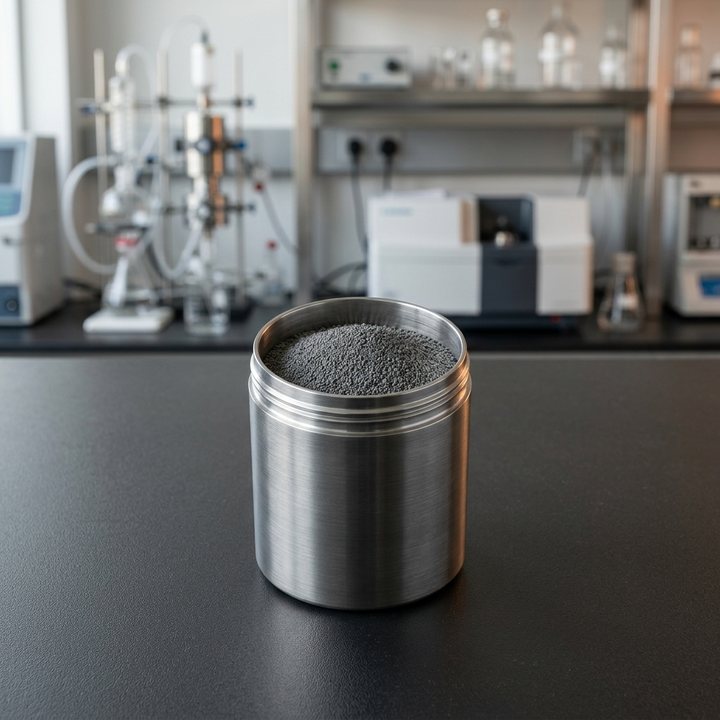
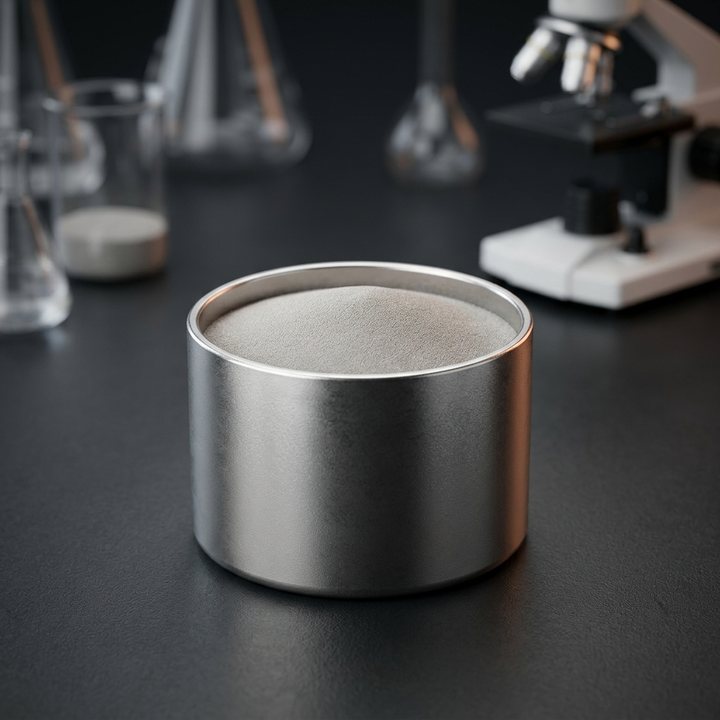
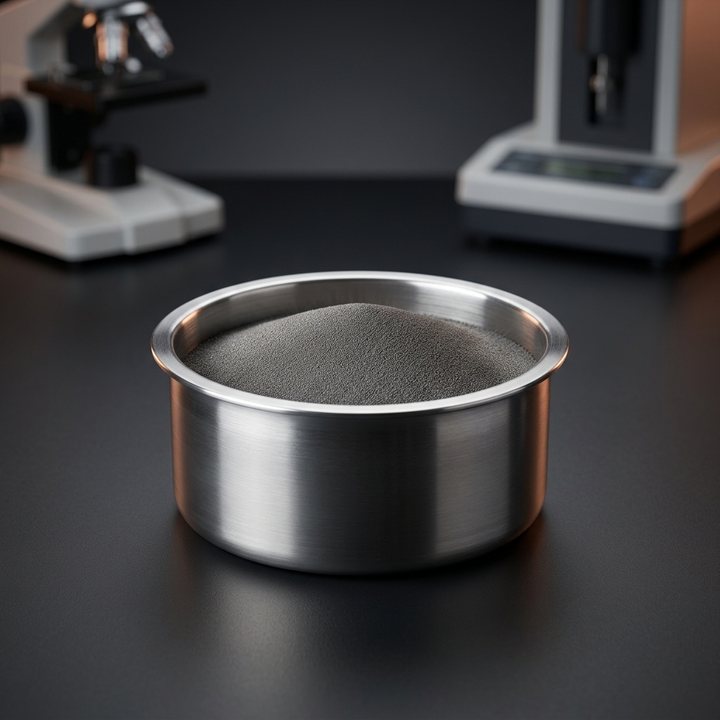
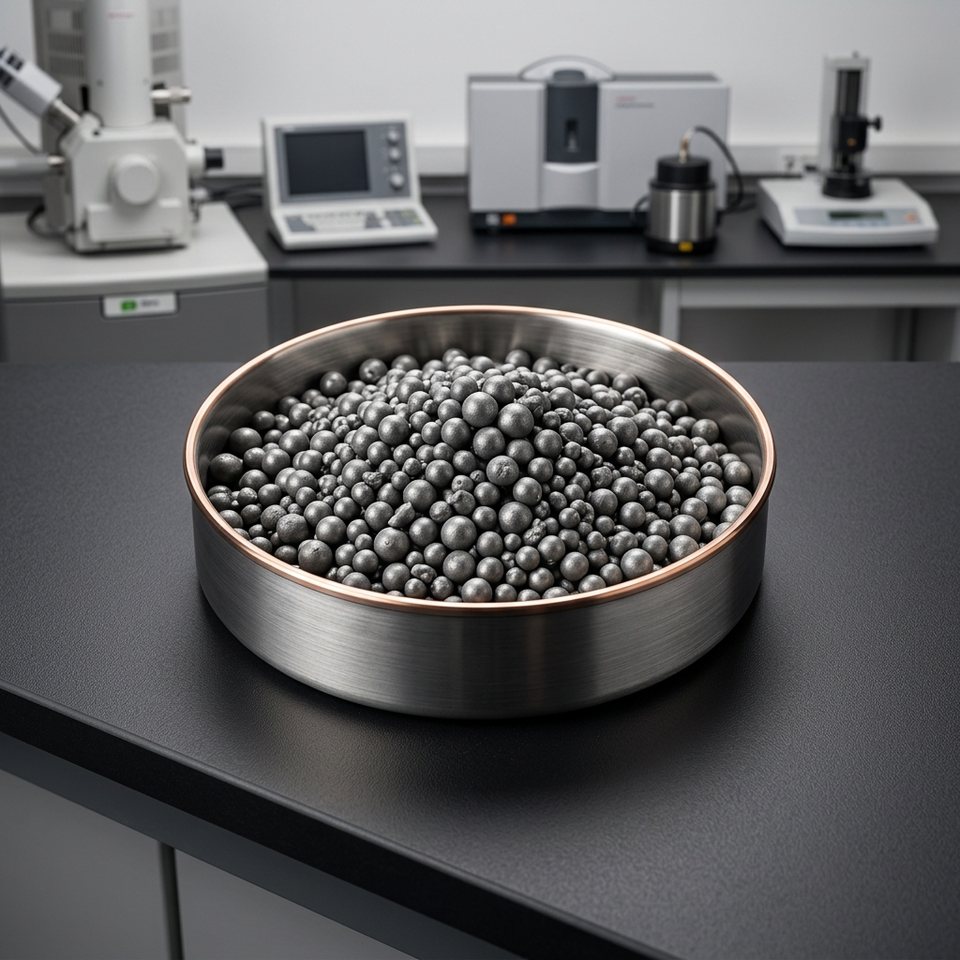
Fe-2Ni Low-Alloy Steel MIM Powder metal powder product sample

QUICK ANSWER

Performance Defined by Material and Process.

Fe-2Ni MIM powder is a water-gas-atomized or hybrid low-alloy steel powder containing roughly 2 percent nickel, designed for carburizing and quench-temper heat treatment after sintering. It is the cost-performance champion of structural MIM: half the raw material cost of stainless grades, with heat-treated strengths of 700-900 MPa, widely used in automotive, power tool, and industrial mechanism parts.

Low-alloy MIM steels win wherever corrosion resistance can be handled by plating, oil, or paint rather than by alloy chemistry. The nickel addition raises hardenability so that small sections through-harden during oil quench, and the fine powder size gives sintered densities above 7.5 g/cm³ — high enough that heat-treated MIM parts routinely meet property targets that once required machined wrought steel. For buyers, the key selection criteria are oxygen content, carbon consistency, and compressibility of the atomization grade.

MATERIAL DATA

Chemistry and Technical Performance.

Lot-level controls focus on the chemistry, particle characteristics, and process values that influence manufacturing consistency and finished-part performance.

Chemical Composition

TYPICAL
ElementContentPerformance Role
Nickel (Ni)1.5-2.5 wt%Raises hardenability and toughness; enables through-hardening of small MIM sections
Molybdenum (Mo)0-0.6 wt% (optional)Further improves hardenability and tempering resistance in heavy-duty grades
Carbon (C)0.1-0.3 wt% baseBase carbon controlled low; final surface carbon is set by carburizing during sintering or after
Iron (Fe)BalanceFerritic/martensitic matrix providing the structural backbone
Oxygen (O)< 0.15 wt%Water atomization pickup; kept low to protect sintered toughness

Technical Specifications

BASE GRADE
Particle size (D90)
< 22 µm (gas atomized) or < 25 µm (hybrid)
Morphology
Spherical to irregular, grade dependent
Sintered density
> 7.5 g/cm³
Heat-treated strength
700-900 MPa (carburized + quench-temper)
Surface hardness
55-62 HRC case after carburizing
Typical sintering
1260-1320 °C, N2-H2 or vacuum with carbon control

Final limits can be aligned with the agreed purchase specification.

APPLICATIONS

Developed for Demanding Industrial Applications.

01

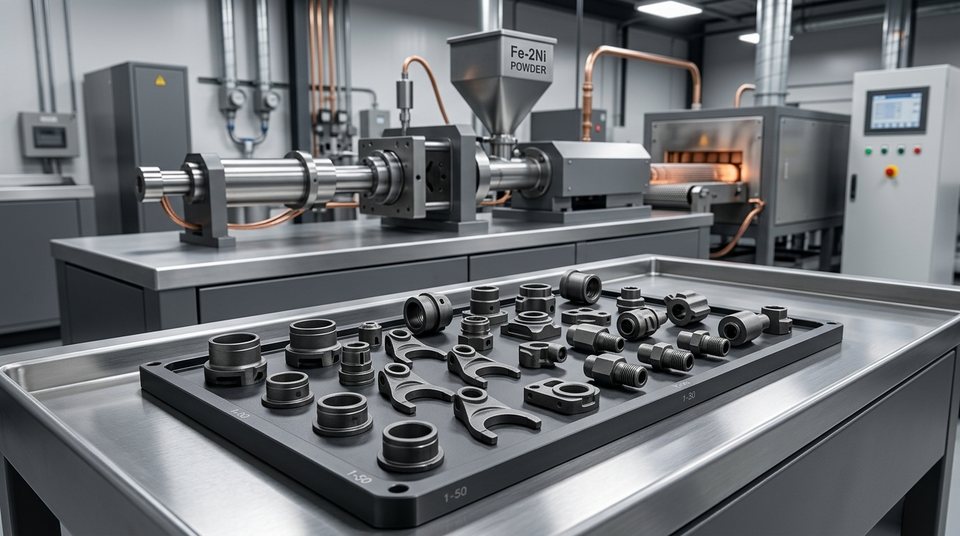
Automotive is the anchor market

Automotive is the anchor market: Fe-2Ni MIM parts appear as turbocharger wastegate bushings, transmission shift components, fuel system fittings, seat and door mechanism parts, and sensor housings. These are million-piece programs where the economics are brutal — the powder must be cheap enough to compete with cold-forged steel while delivering enough hardenability to survive carburize-quench cycles. The grade's forgiving sintering window (it runs in standard nitrogen-hydrogen mesh-belt or pusher furnaces) keeps furnace cost per part low.

02

Power tools and general industrial mechanisms

Power tools and general industrial mechanisms form the second major market: drill chuck jaws, gearbox components, locking plier mechanisms, and pneumatic tool parts. Here the buyer's concern is fatigue performance under impact loading, which traces directly back to powder oxygen content and sintered pore morphology. Specifying oxygen below 0.15 percent and verifying density above 7.5 g/cm³ on every lot is the practical way to keep field failure rates near zero.

Fe-2Ni Low-Alloy Steel MIM Powder industrial application detail

METAL INJECTION MOLDING (MIM) POWDERS

CUSTOM SUPPLY

A Supply Specification Built Around Your Process.

We offer Fe-2Ni MIM powder in both gas-atomized spherical form (best flowability, highest loading) and more economical hybrid atomization grades (higher green strength, slightly lower cost), plus pre-alloyed and master-alloy routes. Carburizing-ready surface condition, custom carbon levels for direct-hardening versus carburizing routes, and Mo-bearing variants for higher hardenability are standard options. Trial quantities from 20 kg with full chemistry and sintered test-bar data.

01

We offer Fe-2Ni MIM powder in both gas-atomized spherical form (best flowability, highest loading) and more economical hybrid atomization grades (higher green strength, slightly lower cost), plus pre-alloyed and master-alloy routes.

02

Carburizing-ready surface condition, custom carbon levels for direct-hardening versus carburizing routes, and Mo-bearing variants for higher hardenability are standard options.

03

Trial quantities from 20 kg with full chemistry and sintered test-bar data.

MATERIAL COMPARISON

Compare Materials Against the Production Requirement.

Fe-2Ni MIM vs 17-4PH MIM Powder

Comparison PointThis Product17-4PH MIM Powder
Material costLow — the budget structural optionRoughly 2x Fe-2Ni
Corrosion resistanceNone inherent — needs plating/coatingInherent stainless protection
Heat-treated strength700-900 MPa (carburized)900-1100 MPa (aged)
Surface hardness55-62 HRC case, tough core30-40 HRC through-hardened
Sintering atmosphereN2-H2 mesh belt compatibleHydrogen or vacuum required
Best forHigh-volume automotive and tool partsCorrosion-exposed structural parts

TECHNICAL FAQ

Technical Questions About This Grade.

Need a different chemistry, particle range, or processing route? Our material team can review the requirement and supply window.

Should I carburize or use a pre-carburized powder?

Most producers carburize during sintering or in a separate cycle — it gives better case-depth control. We supply low base carbon (0.1-0.2 percent) optimized for carburizing, or higher carbon for direct hardening; tell us your heat treatment route and we match the chemistry.

Can Fe-2Ni MIM parts be plated?

Yes, and they usually are — zinc, nickel, or black oxide. For plating adhesion, sintered density above 7.5 g/cm³ matters because interconnected porosity traps plating solution and causes bleed-out corrosion.

What furnace do I need?

A standard nitrogen-hydrogen mesh-belt or pusher furnace at 1260-1320 °C handles Fe-2Ni well — unlike stainless MIM, no pure hydrogen or high vacuum is required, which is a major operating cost advantage.

How does oxygen content affect my parts?

Oxygen above ~0.2 percent forms stable oxides that block neck growth during sintering, reducing density and impact toughness. Every lot we ship includes oxygen analysis, and we can hold tighter ceilings for fatigue-critical programs.

Is this powder export-controlled?

No. Low-alloy steel MIM powders ship freely under normal commercial terms.

REQUEST THIS GRADE

Turn Your Production Requirement Into a Powder Specification.

Share your target chemistry, particle size, process, annual volume, and destination. Our powder specialists will confirm the closest production grade and documentation package.

Talk to a Powder Specialist
Send Inquiry