Metal3DPMETAL3DP
METAL INJECTION MOLDING (MIM) POWDERSTECHNICAL PRODUCT DATA

Carbonyl Iron Powder (CIP) for MIM & Soft Magnetic Feedstock

99.5%+ pure carbonyl iron powder in graded 1-10 µm fractions. Low coercive force grades for soft magnetic MIM, matrices and absorbers. Stabilized for safe handling.

Particle size
1-10 µm, graded (D50 typically 3-6 µm)
Morphology
Perfect spheres, onion-layer internal structure
Apparent density
2.0-3.5 g/cm³ grade dependent
Purity
> 99.5% Fe
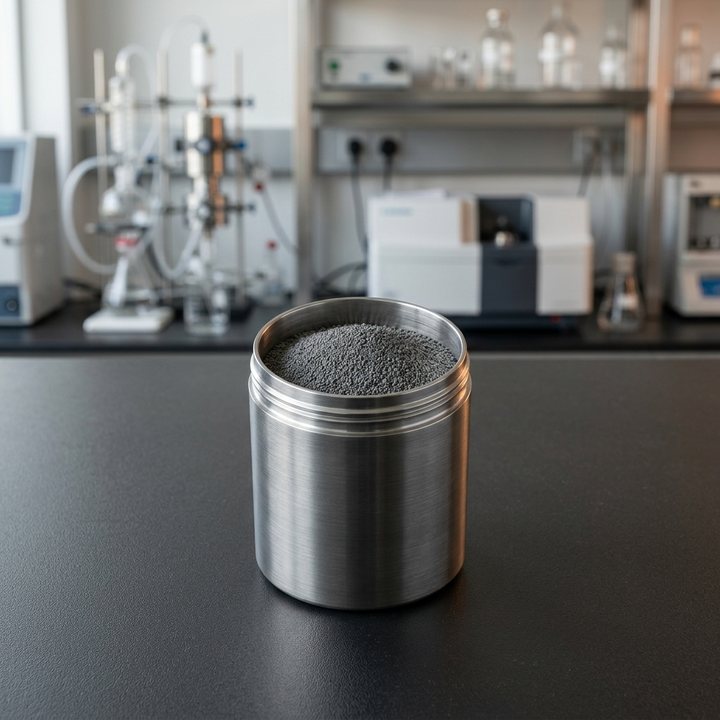
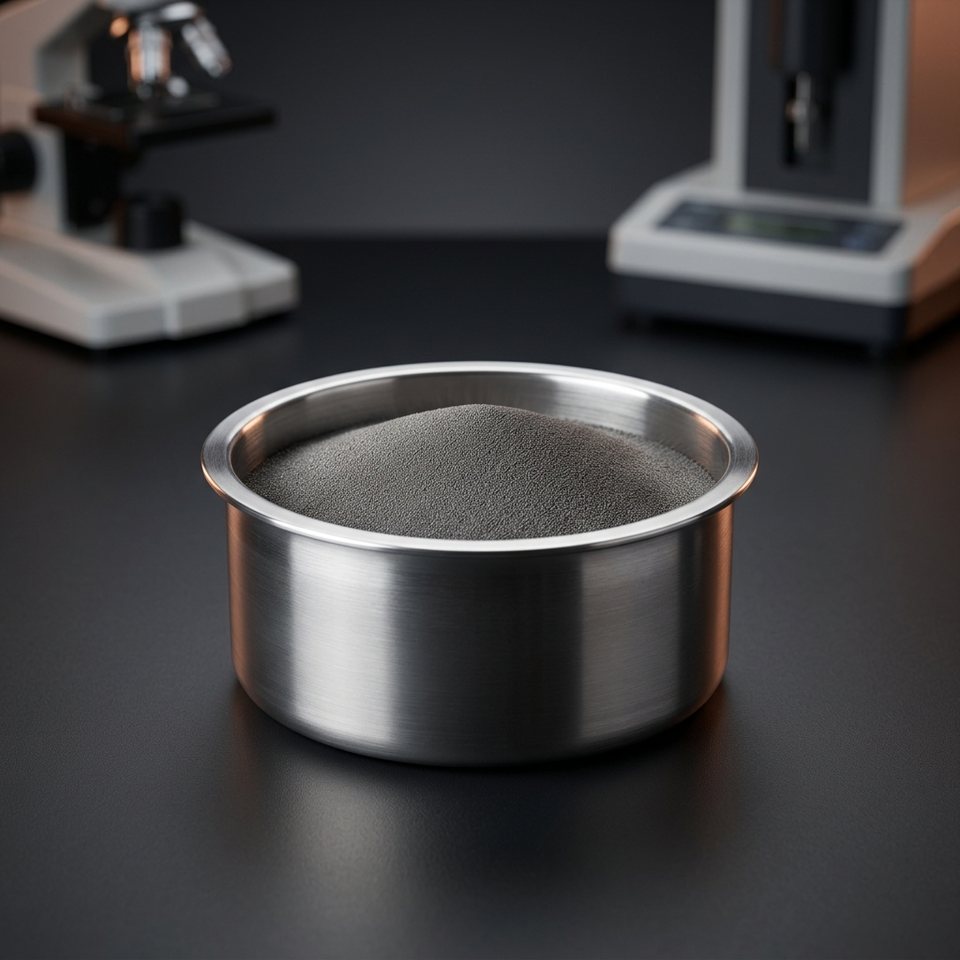
Carbonyl Iron Powder (CIP) for MIM & Soft Magnetic Feedstock metal powder product sample

QUICK ANSWER

Performance Defined by Material and Process.

Carbonyl iron powder is an ultra-pure (99.5%+ Fe), ultra-fine (1-10 µm) spherical iron powder produced by thermal decomposition of iron pentacarbonyl. Its extreme purity and sub-micron-to-few-micron particle size make it the premium feedstock for MIM of soft magnetic parts, diamond tool matrices, microwave absorbers, and pharmaceutical iron fortification — anywhere ordinary atomized iron is too impure or too coarse.

CIP is not a commodity powder — it is the reference material for applications that fail on impurity. In MIM, its fine size enables sintering of soft magnetic components with magnetic permeability that atomized grades cannot approach, because carbonyl iron's onion-skin internal structure and near-zero residual elements minimize magnetic hysteresis loss. Buyers should expect to pay a significant premium over atomized iron and should specify the grade by particle size range and carbon/oxygen residuals rather than by a generic name.

MATERIAL DATA

Chemistry and Technical Performance.

Lot-level controls focus on the chemistry, particle characteristics, and process values that influence manufacturing consistency and finished-part performance.

Chemical Composition

TYPICAL
ElementContentPerformance Role
Iron (Fe)> 99.5 wt%Ultra-high purity base — the defining characteristic of the carbonyl process
Carbon (C)0.03-0.10 wt%Residual from the carbonyl decomposition; graded by application
Oxygen (O)0.1-0.3 wt%Surface oxide layer; reduced during sintering or specified low for magnetic grades
Nitrogen (N)< 0.01 wt%Trace residual; important for soft magnetic performance
Other metallics< 0.05 wt% totalNear-zero tramp elements — no Cr, Ni, Mn carryover

Technical Specifications

BASE GRADE
Particle size
1-10 µm, graded (D50 typically 3-6 µm)
Morphology
Perfect spheres, onion-layer internal structure
Apparent density
2.0-3.5 g/cm³ grade dependent
Purity
> 99.5% Fe
Sintering
1150-1250 °C, H2 or vacuum — sinters readily due to fine size
Magnetic grades
Low C/O variants for maximum permeability

Final limits can be aligned with the agreed purchase specification.

APPLICATIONS

Developed for Demanding Industrial Applications.

01

Soft magnetic MIM is the signature application

Soft magnetic MIM is the signature application: carbonyl iron feedstock molds into complex-shaped pole pieces, magnetic cores, sensor yokes, and shielding components that sinter to high density with magnetic permeability far above what press-and-sinter iron can deliver. The fine particle size drives rapid sintering densification, and the purity keeps coercive force low — the two parameters that define a soft magnetic material. Electronics miniaturization keeps expanding this market as magnetic components shrink below the size where laminated steel is practical.

02

Beyond MIM, carbonyl iron

Beyond MIM, carbonyl iron serves diamond tool matrices (as the iron-based bond for cutting soft stone and concrete), radar-absorbing materials and microwave absorbers (exploiting its high magnetic loss at GHz frequencies), magnetic inks and toners, and even food and pharmaceutical iron fortification where its bioavailability and purity justify the cost. Each of these markets buys a different size fraction and residual specification, which is why CIP is sold as a family of grades rather than one product.

Carbonyl Iron Powder (CIP) for MIM & Soft Magnetic Feedstock industrial application detail

METAL INJECTION MOLDING (MIM) POWDERS

CUSTOM SUPPLY

A Supply Specification Built Around Your Process.

We supply carbonyl iron powder across the standard size fractions (1-3 µm, 3-6 µm, 6-10 µm) with graded carbon and oxygen levels for MIM feedstock, magnetic, and tooling applications. Low-oxygen magnetic grades, reduced and stabilized variants for safer handling, and custom size cuts are available. Packaging is 5-25 kg sealed containers with desiccant; note that fine CIP is pyrophoric-sensitive in bulk and ships under appropriate fine-powder handling documentation. Not export-controlled.

01

We supply carbonyl iron powder across the standard size fractions (1-3 µm, 3-6 µm, 6-10 µm) with graded carbon and oxygen levels for MIM feedstock, magnetic, and tooling applications.

02

Low-oxygen magnetic grades, reduced and stabilized variants for safer handling, and custom size cuts are available.

03

Packaging is 5-25 kg sealed containers with desiccant; note that fine CIP is pyrophoric-sensitive in bulk and ships under appropriate fine-powder handling documentation.

MATERIAL COMPARISON

Compare Materials Against the Production Requirement.

Carbonyl Iron vs Water-Atomized Iron Powder

Comparison PointThis ProductWater-Atomized Iron
Purity> 99.5% Fe97-99% Fe with Mn/Si residuals
Particle size1-10 µm spheres50-150 µm irregular
Magnetic permeabilityHigh — low coercive forceModerate — impurities pin domain walls
Sintering activityExcellent — sinters at 1150 °CRequires 1250-1350 °C
Price5-10x atomized ironCommodity pricing
Best useSoft magnetic MIM, absorbers, fine matricesStructural PM parts, welding

TECHNICAL FAQ

Technical Questions About This Grade.

Need a different chemistry, particle range, or processing route? Our material team can review the requirement and supply window.

Which size fraction should I choose for MIM?

D50 3-6 µm is the standard MIM feedstock fraction — fine enough for rapid sintering, coarse enough for acceptable powder loading. Sub-3 µm grades boost sintering further but reduce loading and increase feedstock viscosity.

Is carbonyl iron powder pyrophoric?

Fine, freshly reduced CIP can be pyrophoric. Commercial grades are surface-stabilized for safe handling, but standard fine-powder precautions apply: avoid dust clouds, ground your equipment, and store sealed.

What makes it better for soft magnetic parts than atomized iron?

Two things: purity (tramp elements and oxides pin magnetic domain walls, raising hysteresis loss) and fine spherical particles that sinter to near-full density, closing the pores that degrade permeability.

Can you supply reduced (low-oxygen) grades?

Yes — hydrogen-reduced variants with oxygen below 0.1 percent are available for magnetic and electronic applications, shipped under argon.

Is carbonyl iron export-controlled?

No. Carbonyl iron powder ships freely as a standard commercial product.

REQUEST THIS GRADE

Turn Your Production Requirement Into a Powder Specification.

Share your target chemistry, particle size, process, annual volume, and destination. Our powder specialists will confirm the closest production grade and documentation package.

Talk to a Powder Specialist
Send Inquiry