Metal3DPMETAL3DP
NON-FERROUS BASE METAL POWDERSTECHNICAL PRODUCT DATA

AAC Aluminum Paste (Aerated Concrete Grade)

Aerated Concrete Grade

AAC-grade aluminum paste, fast/standard/delayed gas curves certified per lot, 65-72% solids, water-based options. 0.4-0.6 kg/m³ dosing, custom reactivity tuning.

Gas evolution
Certified curve: onset, peak time, total volume
Dosage
0.4-0.6 kg per m³ AAC typical
Grades
Fast, standard, delayed — by reaction curve
Packing
Drums, IBC — non-DG paste form
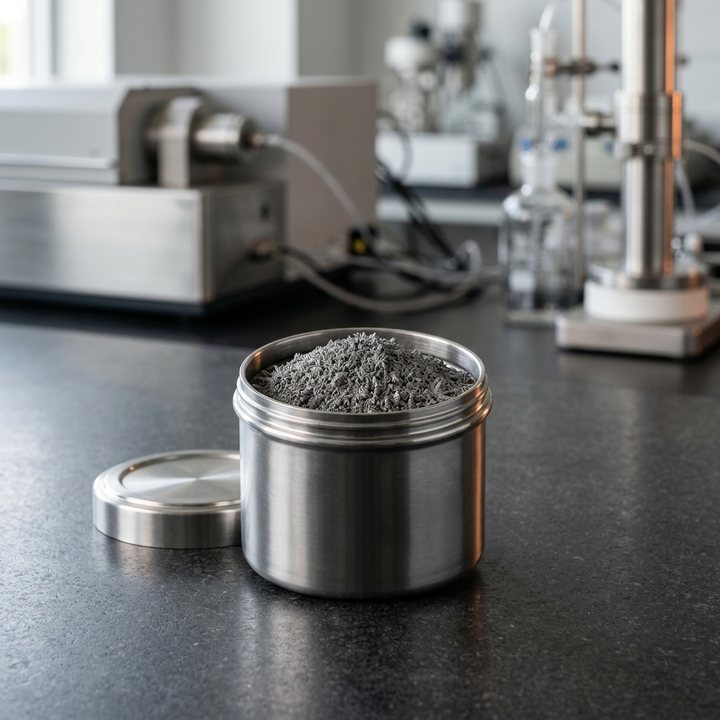
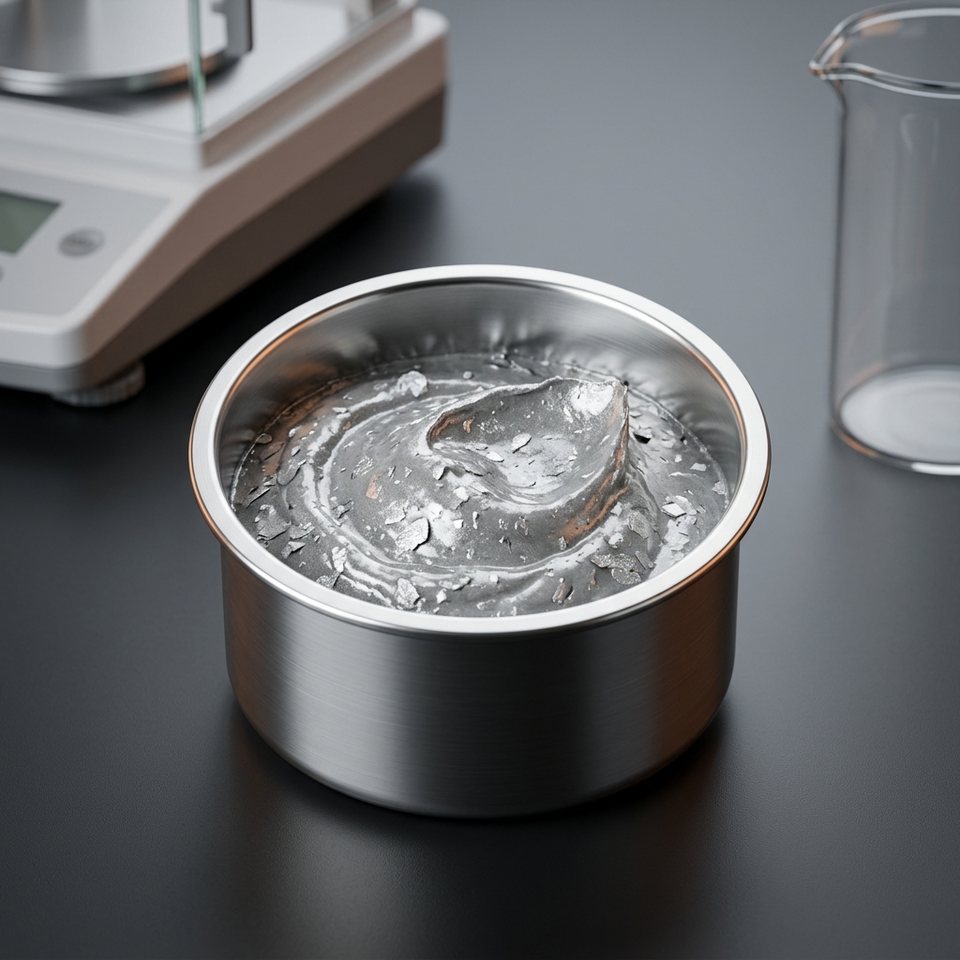
AAC Aluminum Paste (Aerated Concrete Grade) metal powder product sample

QUICK ANSWER

Performance Defined by Material and Process.

AAC aluminum paste is flake aluminum powder dispersed in a carrier (water or solvent with protective agents) used as the gas-forming agent in autoclaved aerated concrete — the lightweight building blocks and panels whose millions of uniform pores come from aluminum reacting with lime to release hydrogen. It is the highest-volume aluminum powder product in the world, consumed by every AAC plant on earth.

The chemistry is simple but the specification is exacting: aluminum flake reacts Ca(OH)₂ + Al → calcium aluminate + H₂, and the gas release must peak while the slurry is still plastic but peak neither too early (gas escapes) nor too late (cracking). Reactivity is controlled by flake size, thickness, oxide skin, and surface treatment — which is why AAC plants buy paste on gas-evolution curves, not just chemistry. Paste form (65-72% solids) eliminates dust explosion risk and doses cleanly into the mixing line. A standard AAC plant consumes 0.4-0.6 kg of aluminum per cubic meter of blocks — modest per unit, enormous in aggregate.

MATERIAL DATA

Chemistry and Technical Performance.

Lot-level controls focus on the chemistry, particle characteristics, and process values that influence manufacturing consistency and finished-part performance.

Chemical Composition

TYPICAL
ElementContentPerformance Role
Active aluminum85-92% of dry flakeGas-forming value — drives hydrogen release
Flake particle size (D50)15-40 µm grade dependentControls reaction timing and pore structure
Solids content65-72 wt% (paste)Dosing consistency and safe handling
CarrierWater or DEHP-free solvent systemsDust-free handling; water-based for green plants
Covering agentFatty acid protectedDelays reaction start for process window

Technical Specifications

BASE GRADE
Gas evolution
Certified curve: onset, peak time, total volume
Dosage
0.4-0.6 kg per m³ AAC typical
Grades
Fast, standard, delayed — by reaction curve
Packing
Drums, IBC — non-DG paste form
Density achieved
AAC 400-700 kg/m³ blocks
Shelf life
6-12 months sealed

Final limits can be aligned with the agreed purchase specification.

APPLICATIONS

Developed for Demanding Industrial Applications.

01

Autoclaved aerated concrete production

Autoclaved aerated concrete production is the entire market — and it is a giant: AAC is the standard wall material across China, Europe, the Middle East, and growing markets in India and Southeast Asia, with global production in the hundreds of millions of cubic meters annually. Every plant runs aluminum paste or powder dosing on every mix, buying on reaction-curve consistency because a drifting lot shows up immediately as off-spec block density or cracking. Plants qualify a paste supplier and stay for years — the switching cost is a production line full of scrapped blocks.

02

Additional Applications

Adjacent demand comes from calcium silicate boards, lightweight refractory castables, and cellular concrete variants that use the same gas-forming chemistry. Green-building momentum favors AAC (thermal insulation, fire resistance, low embodied energy), and water-based paste grades have displaced solvent systems as environmental standards tighten — the direction our product range already reflects.

AAC Aluminum Paste (Aerated Concrete Grade) industrial application detail

NON-FERROUS BASE METAL POWDERS

CUSTOM SUPPLY

A Supply Specification Built Around Your Process.

We supply AAC aluminum paste in fast, standard, and delayed reaction grades, water-based and solvent-based, each certified with gas-evolution curves (onset time, peak, total volume at standard conditions). Custom reactivity tuning for your lime quality and process temperature, dosing-equipment compatibility, and trial lots against your mix design are standard. Not export-controlled; paste form ships as non-DG.

01

We supply AAC aluminum paste in fast, standard, and delayed reaction grades, water-based and solvent-based, each certified with gas-evolution curves (onset time, peak, total volume at standard conditions).

02

Custom reactivity tuning for your lime quality and process temperature, dosing-equipment compatibility, and trial lots against your mix design are standard.

MATERIAL COMPARISON

Compare Materials Against the Production Requirement.

AAC Paste vs AAC Dry Powder

Comparison PointThis ProductDry Aluminum Powder
Dust explosion riskEliminated — wet pastePresent — needs ATEX handling
Dosing accuracyHigh — pumps/scaleGood but dust loss
Reaction startDelayed by carrier — forgivingImmediate — tighter window
Storage safetySimpleDG storage rules
Price per active AlSlightly higherLower
Plant preferenceModern standardLegacy plants

TECHNICAL FAQ

Technical Questions About This Grade.

Need a different chemistry, particle range, or processing route? Our material team can review the requirement and supply window.

How do I match paste grade to my plant?

Send your lime reactivity, mix temperature, and target density — we recommend fast/standard/delayed grade and tune if needed. The gas curve must peak while the cake is plastic; we certify the curve per lot.

What dosage should I expect?

0.4-0.6 kg per m³ for 500-600 kg/m³ blocks is typical; higher for lower densities. Active aluminum content drives it — our lots certify active content so your dosing stays stable.

Why does lot consistency matter so much?

AAC density is set by gas volume per batch. A 2% reactivity drift between lots shifts block density outside tolerance — visible as scrap within hours. Our lots are blended and certified to tight gas-curve windows.

Is water-based paste as reliable as solvent-based?

Yes with modern covering agents — our water-based grades match solvent curves and now outsell them as plants upgrade environmental compliance.

Is AAC aluminum paste export-controlled?

No — and in paste form it ships as non-dangerous goods, simplifying logistics considerably versus dry aluminum powder.

REQUEST THIS GRADE

Turn Your Production Requirement Into a Powder Specification.

Share your target chemistry, particle size, process, annual volume, and destination. Our powder specialists will confirm the closest production grade and documentation package.

Talk to a Powder Specialist
Send Inquiry