Metal3DPMETAL3DP
NON-FERROUS BASE METAL POWDERSTECHNICAL PRODUCT DATA

Carbonyl Nickel Powder

99.9% carbonyl nickel, fine spiky 2-5µm and filamentary grades. Battery-grade low-S lots, conductive paste percolation data, BET/FSSS certified per lot.

Grades
Fine spiky (2-5 µm), standard (5-10 µm), filamentary
Apparent density
0.3-1.8 g/cm³ grade dependent
Surface area
0.5-3 m²/g (BET certified)
Purity
99.9%+ metallic
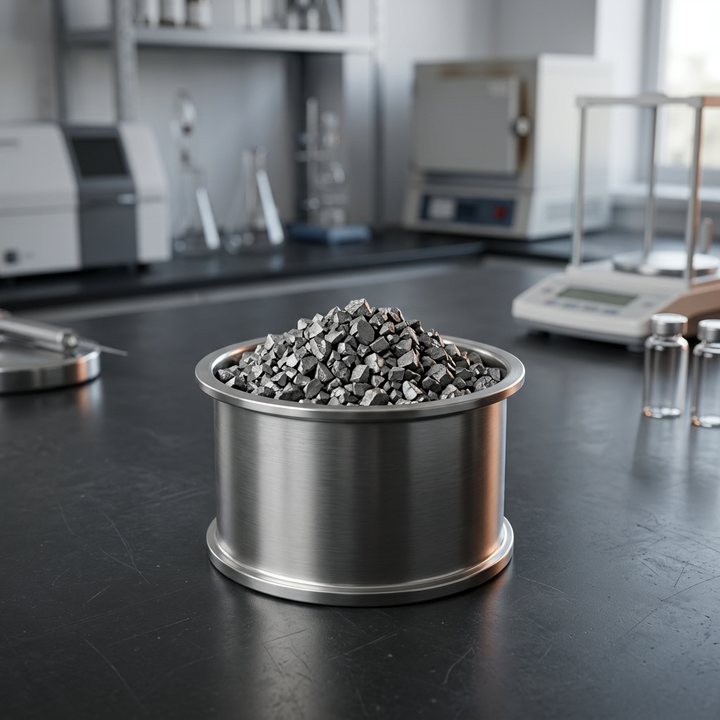
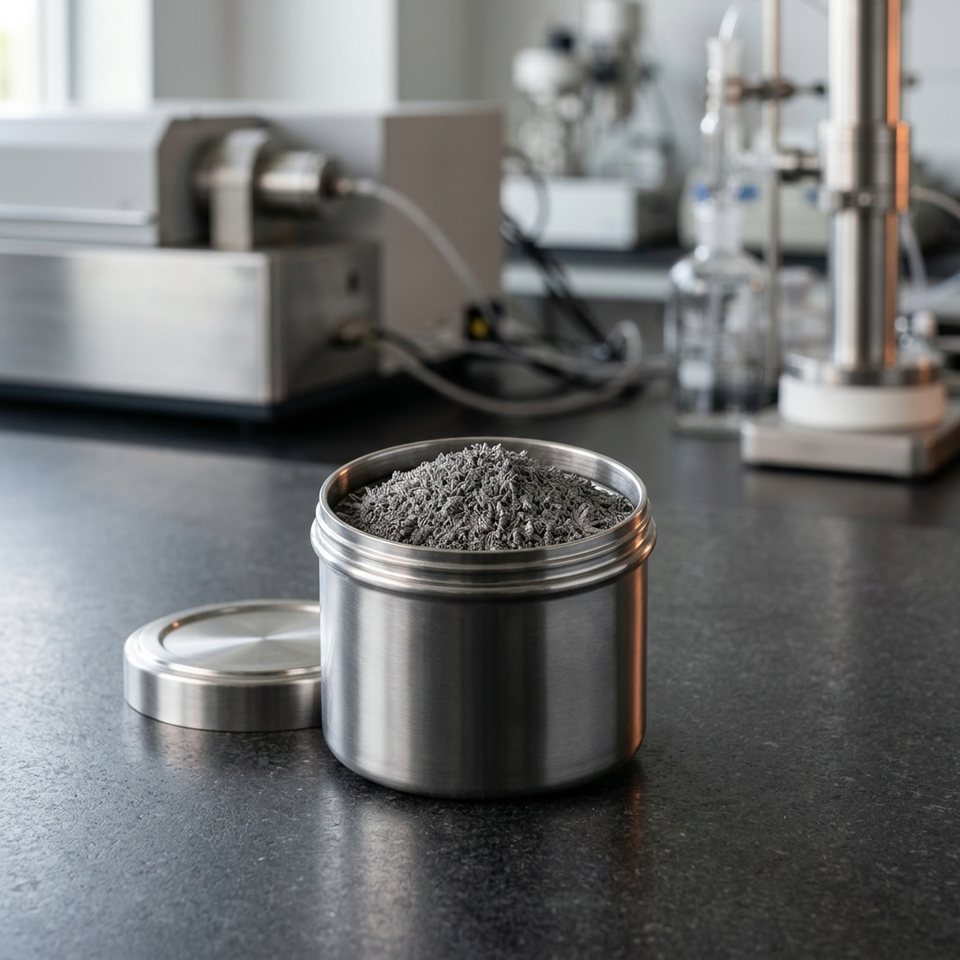
Carbonyl Nickel Powder metal powder product sample

QUICK ANSWER

Performance Defined by Material and Process.

Carbonyl nickel powder is ultra-pure nickel (99.9%+) produced by the carbonyl process — nickel carbonyl gas decomposed into perfectly controlled particles — available in fine spiky grades (2-5 µm, high surface area) for batteries, conductive pastes, and powder metallurgy, and filamentary grades for conductive fillers. Its purity, morphology control, and lot consistency make it the reference nickel powder of the electronics and battery industries.

The carbonyl process is unique among metal powder routes: vapor-phase decomposition builds particles with sub-micron precision — spiky sea-urchin morphologies that sinter actively and chain into conductive networks, or smooth fine spheres, all at impurity levels chemical routes cannot reach. Battery makers use carbonyl nickel as conductive additive and substrate in NiMH and lithium cells; conductive paste formulators rely on it for reliable percolation at low loading; powder metallurgy uses its sintering activity for nickel steels and magnets; and fuel cell and catalyst applications consume specialty grades. Buyers pay premium over electrolytic/atomized nickel for morphology and purity — and certify lots on FSSS size, apparent density, and chemistry.

MATERIAL DATA

Chemistry and Technical Performance.

Lot-level controls focus on the chemistry, particle characteristics, and process values that influence manufacturing consistency and finished-part performance.

Chemical Composition

TYPICAL
ElementContentPerformance Role
Nickel (Ni)> 99.9 wt%Vapor-refined purity — the carbonyl advantage
Iron (Fe)< 0.01 wt%Trace — vapor process rejects impurities
Cobalt (Co)< 0.01 wt%Controlled for battery and electronic uses
Carbon + oxygen0.05-0.3 wt% combinedProcess residue within grade limits
Sulfur< 0.001 wt%Ultra-low — critical for batteries

Technical Specifications

BASE GRADE
Grades
Fine spiky (2-5 µm), standard (5-10 µm), filamentary
Apparent density
0.3-1.8 g/cm³ grade dependent
Surface area
0.5-3 m²/g (BET certified)
Purity
99.9%+ metallic
Battery grade
Low S, controlled Fe/Co
Forms
Powder, filamentary for conductive filler

Final limits can be aligned with the agreed purchase specification.

APPLICATIONS

Developed for Demanding Industrial Applications.

01

Battery manufacturing anchors premium demand

Battery manufacturing anchors premium demand: carbonyl nickel serves as conductive additive in lithium-ion cathodes, substrate and current collector material in NiMH cells, and feed for battery-grade nickel chemicals. The morphology — spiky particles forming conductive networks at low loading — and ultra-low sulfur make it the qualified choice where cell consistency is measured in parts per million. Battery customers buy on long qualification with certified impurity panels per lot.

02

Electronics and PM form the established streams

Electronics and PM form the established streams: conductive pastes and inks (carbonyl nickel's percolation at 20-30% loading beats atomized alternatives), MLCC internal electrode pastes (nickel powder is the electrode metal of base-metal-electrode capacitors — one of the highest-value powder applications anywhere), PM nickel steels and magnet production, and conductive gaskets and coatings. MLCC electrode grade — sub-micron, ultra-narrow distribution, extraordinary purity — represents the pinnacle of nickel powder specification.

Carbonyl Nickel Powder industrial application detail

NON-FERROUS BASE METAL POWDERS

CUSTOM SUPPLY

A Supply Specification Built Around Your Process.

We supply carbonyl nickel in fine spiky, standard, and filamentary grades with certified FSSS size, BET surface, apparent density, and full impurity panels per lot. Battery-grade low-sulfur lots, MLCC-electrode discussions for qualified buyers, and conductive-filler morphology selection support are available. Not export-controlled.

01

We supply carbonyl nickel in fine spiky, standard, and filamentary grades with certified FSSS size, BET surface, apparent density, and full impurity panels per lot.

02

Battery-grade low-sulfur lots, MLCC-electrode discussions for qualified buyers, and conductive-filler morphology selection support are available.

MATERIAL COMPARISON

Compare Materials Against the Production Requirement.

Carbonyl vs Electrolytic Nickel Powder

Comparison PointThis ProductElectrolytic Nickel
Purity99.9%+ vapor-refined99.5-99.9%
Morphology controlPrecise — spiky to smoothDendritic only
Surface areaHigh, tunableModerate
Sintering activityExcellentGood
PricePremiumLower
Best useBatteries, pastes, MLCCBulk PM, chemical feed

TECHNICAL FAQ

Technical Questions About This Grade.

Need a different chemistry, particle range, or processing route? Our material team can review the requirement and supply window.

Which grade for conductive paste formulation?

Fine spiky grades (2-5 µm, high BET) give percolation at lowest loading; filamentary grades suit gasket and coating fillers where particle chaining builds networks. We supply BET and percolation guidance with samples.

Do you supply MLCC electrode-grade nickel?

MLCC internal electrodes demand sub-micron nickel with extraordinary purity and distribution control — we can discuss qualified supply for serious electrode paste developers with full NDA and qualification process.

What makes battery grade different?

Sulfur below 10 ppm, controlled Fe/Co, and certified morphology — sulfur poisons cell chemistry at ppm scale. Every battery lot ships with a full ICP panel.

How does carbonyl nickel sinter differently from atomized?

Its fine size and spiky morphology give high sintering activity — necks form at lower temperature, enabling dense PM parts and co-fired electrode structures that coarse powder cannot reach.

Is carbonyl nickel export-controlled?

No. Nickel powders ship without licensing requirements.

REQUEST THIS GRADE

Turn Your Production Requirement Into a Powder Specification.

Share your target chemistry, particle size, process, annual volume, and destination. Our powder specialists will confirm the closest production grade and documentation package.

Talk to a Powder Specialist
Send Inquiry