Metal3DPMETAL3DP
BRAZING FILLER & SOLDER POWDERSTECHNICAL PRODUCT DATA

AlSi12 Aluminum Brazing & Cladding Powder

AlSi12 eutectic powder (577°C) for CAB furnace brazing of radiators, condensers and EV battery cooling plates. Paste and spray cuts, AlSi7.5/10 variants.

Melting point
577-582 °C (near-eutectic)
Brazing temperature
600-610 °C in Nocolok CAB furnaces
Particle size
-325 mesh (paste), custom cuts for spray
Forms
Paste powder, spray powder, cored-wire fill
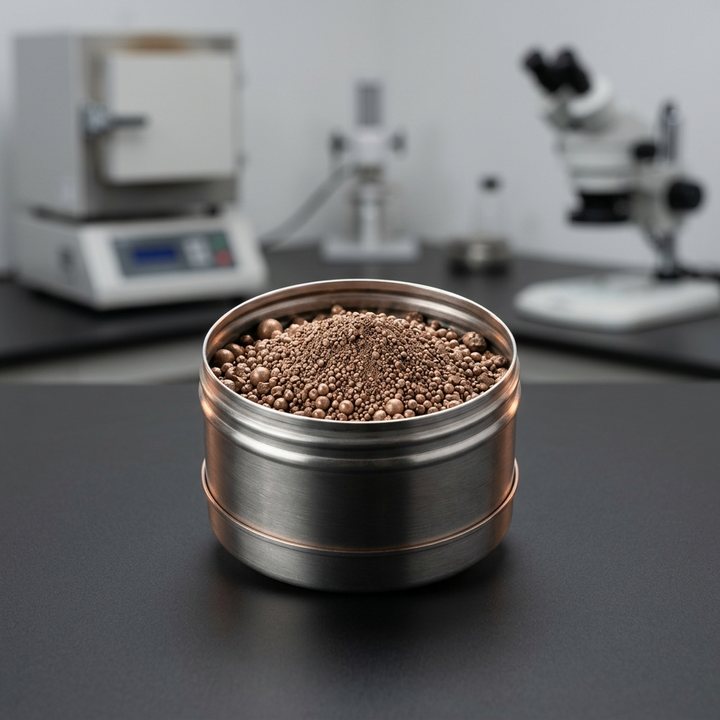
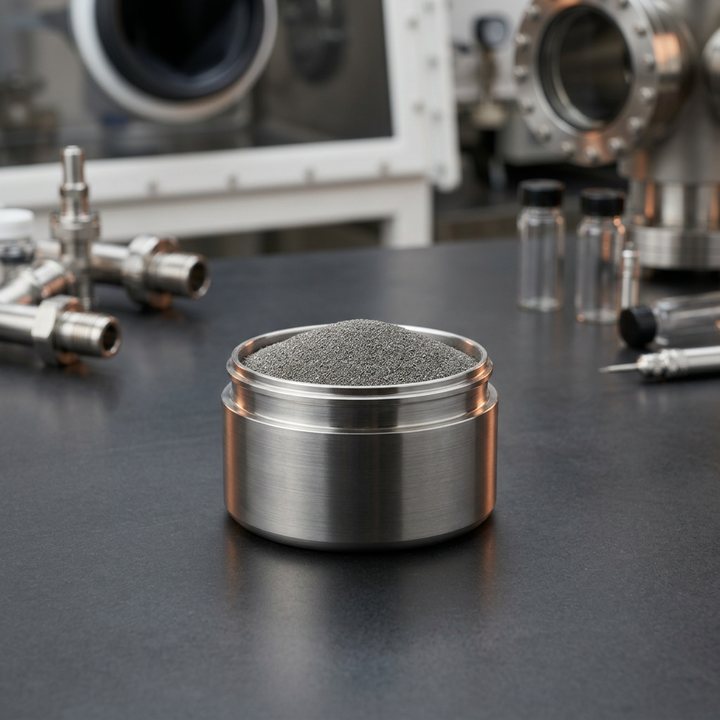
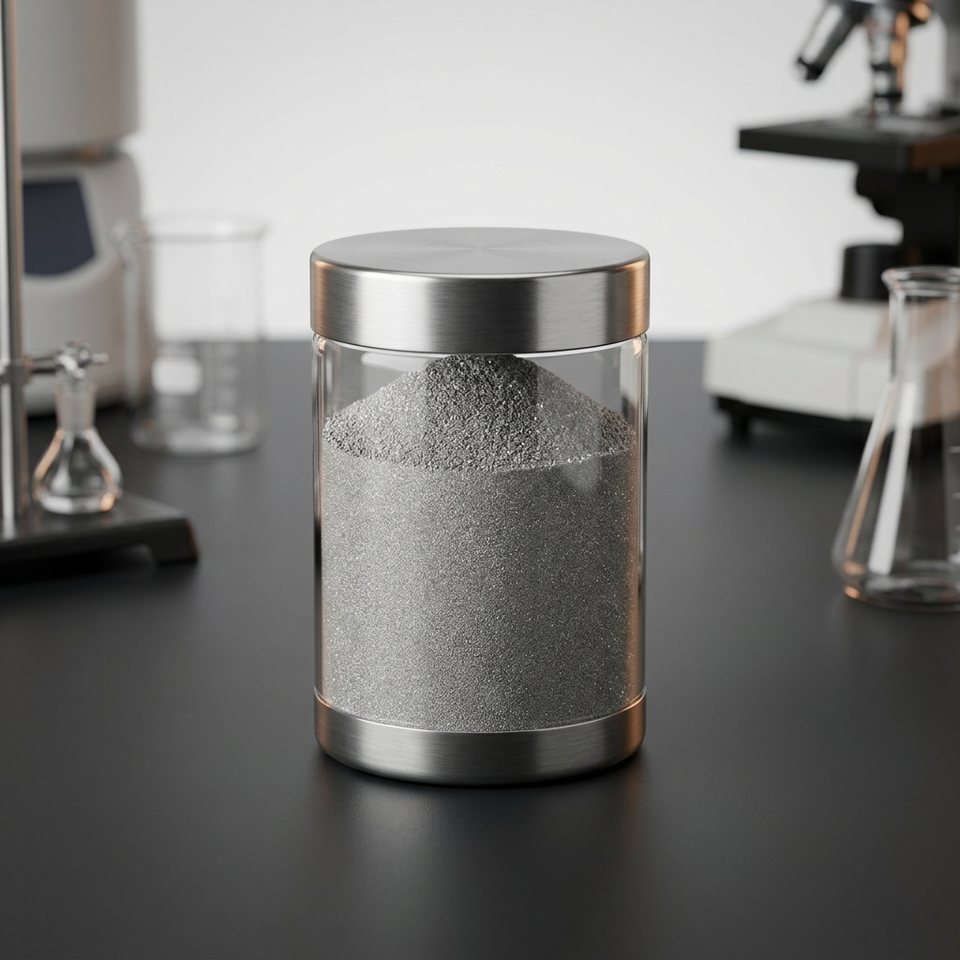
AlSi12 Aluminum Brazing & Cladding Powder metal powder product sample

QUICK ANSWER

Performance Defined by Material and Process.

AlSi12 is an aluminum-silicon eutectic alloy powder (12% Si) melting at 577 °C, used as the brazing filler for aluminum heat exchangers — automotive radiators, condensers, evaporators, and battery cooling plates — and as a spray and cladding alloy for aluminum surface modification. Its eutectic melting behavior gives sharp, predictable flow in the CAB (controlled atmosphere brazing) furnaces that produce the world's aluminum heat exchangers.

Aluminum brazing is a hidden giant: every car contains multiple aluminum-brazed heat exchangers, and the EV transition is multiplying demand through battery cooling plates and thermal management modules. AlSi12 powder is consumed as paste for joint application, as filler in flux-cored wire, and in thermal spray form for localized clad repair. The alloy's near-eutectic composition gives a narrow 577-582 °C melting window that flows at 600-610 °C — safely below the 660 °C melting point of the aluminum components being joined.

MATERIAL DATA

Chemistry and Technical Performance.

Lot-level controls focus on the chemistry, particle characteristics, and process values that influence manufacturing consistency and finished-part performance.

Chemical Composition

TYPICAL
ElementContentPerformance Role
Aluminum (Al)Balance (~88 wt%)Base matching the heat exchanger alloys being joined
Silicon (Si)11-13 wt%Eutectic former — drops melting to 577 °C and drives fluid flow
Iron (Fe)< 0.8 wt%Impurity limit per standard specifications
Copper (Cu)< 0.3 wt%Limited — excess copper degrades corrosion resistance
Zinc + others< 0.3 wt% combinedTrace control for consistent brazing behavior

Technical Specifications

BASE GRADE
Melting point
577-582 °C (near-eutectic)
Brazing temperature
600-610 °C in Nocolok CAB furnaces
Particle size
-325 mesh (paste), custom cuts for spray
Forms
Paste powder, spray powder, cored-wire fill
Corrosion resistance
Good — matches aluminum base
Equivalent grades
AlSi10, AlSi7.5 for different flow/melting

Final limits can be aligned with the agreed purchase specification.

APPLICATIONS

Developed for Demanding Industrial Applications.

01

Automotive heat exchanger production is the dominant market

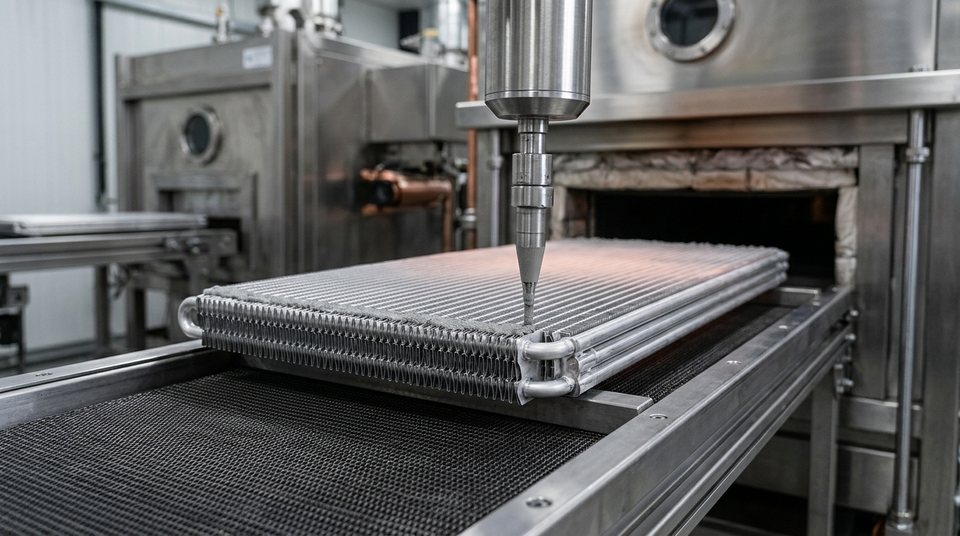
Automotive heat exchanger production is the dominant market: radiators, condensers, charge-air coolers, and evaporators are brazed in continuous Nocolok CAB furnaces where AlSi12-based filler flows into thousands of fin-to-tube joints per unit. Tier-1 suppliers consume the alloy primarily as clad sheet, but powder-paste application serves prototype lines, aftermarket radiator repair, and complex joint geometries that clad sheet cannot reach — a steady specialty market that buys on particle size consistency and flux compatibility.

02

The EV thermal management boom is the growth story

The EV thermal management boom is the growth story: battery cooling plates, motor cooling jackets, and power electronics cold plates are brazed aluminum assemblies, and their low-volume high-mix production favors paste-applied filler over clad sheet. AlSi12 thermal spray powder also serves aluminum surface hardening and repair — spraying wear-resistant Al-Si layers onto aluminum substrates and rebuilding worn aluminum castings where welding would distort thin sections.

AlSi12 Aluminum Brazing & Cladding Powder industrial application detail

BRAZING FILLER & SOLDER POWDERS

CUSTOM SUPPLY

A Supply Specification Built Around Your Process.

We supply AlSi12 in paste-grade -325 mesh and thermal spray cuts, plus AlSi7.5, AlSi10, and zinc-bearing variants for different melting windows. Low-magnesium versions for vacuum brazing, flux-compatible surface condition for Nocolok paste formulation, and EV cooling-plate qualification lots are available. Not export-controlled.

01

We supply AlSi12 in paste-grade -325 mesh and thermal spray cuts, plus AlSi7.5, AlSi10, and zinc-bearing variants for different melting windows.

02

Low-magnesium versions for vacuum brazing, flux-compatible surface condition for Nocolok paste formulation, and EV cooling-plate qualification lots are available.

MATERIAL COMPARISON

Compare Materials Against the Production Requirement.

AlSi12 vs AlSi7.5 (Lower Silicon) Filler

Comparison PointThis ProductAlSi7.5
Melting range577-582 °C — sharp eutectic577-615 °C — wide mushy range
Flow behaviorExcellent — floods fine jointsSluggish — better for gap filling
Joint gap suitabilityTight, consistent jointsWider, variable gaps
Erosion of thin finsHigher risk — very fluidLower — partial melting control
Typical useCAB heat exchangers, fine jointsRepair, variable fit-up, torch brazing
CostBaselineSimilar

TECHNICAL FAQ

Technical Questions About This Grade.

Need a different chemistry, particle range, or processing route? Our material team can review the requirement and supply window.

Can AlSi12 braze without flux?

In vacuum brazing with magnesium-bearing variants, yes. In atmospheric CAB furnaces, Nocolok flux is required to break the aluminum oxide — our powder is supplied in surface condition compatible with flux paste formulation.

What causes fin erosion in CAB brazing and how do I avoid it?

Excess filler quantity and over-temperature dissolve thin fin stock. The fixes are precise paste dosing, a 600-605 °C peak, and minimizing time above liquidus — our narrow-melting lots give the widest process window.

Is AlSi12 suitable for brazing 6000-series extrusions?

Yes — it is the standard filler for 3003/6060/6061 assemblies. Keep peak temperature below 610 °C to protect the extrusion temper.

Can I use it for thermal spray repair of aluminum castings?

Yes — flame or arc-sprayed AlSi12 rebuilds worn aluminum surfaces and seals porous castings, machineable to dimension. The spray cut differs from paste grade; specify the application when ordering.

Is AlSi12 export-controlled?

No. Aluminum-silicon powders ship without licensing requirements.

REQUEST THIS GRADE

Turn Your Production Requirement Into a Powder Specification.

Share your target chemistry, particle size, process, annual volume, and destination. Our powder specialists will confirm the closest production grade and documentation package.

Talk to a Powder Specialist
Send Inquiry