Metal3DPMETAL3DP
BRAZING FILLER & SOLDER POWDERSTECHNICAL PRODUCT DATA

BCuP Copper-Phosphorus Brazing Powder

BCuP-2 to BCuP-5 powder for paste, rings and preforms. Self-fluxing on copper, silver-bearing options for brass and wide gaps. AWS A5.8 certified lots.

Grades
BCuP-2 (Cu-7P), BCuP-5 (Cu-15Ag-5P), BCuP-6, BCuP-9
Melting range
643-800 °C grade dependent
Forms
Powder for paste, ring pressing, preforms
Flux requirement
None on copper; flux needed on brass/bronze
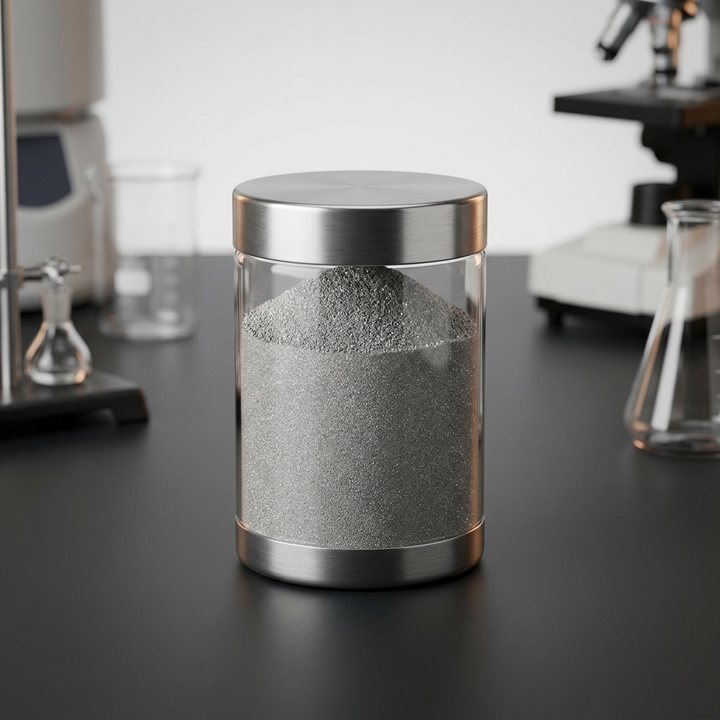
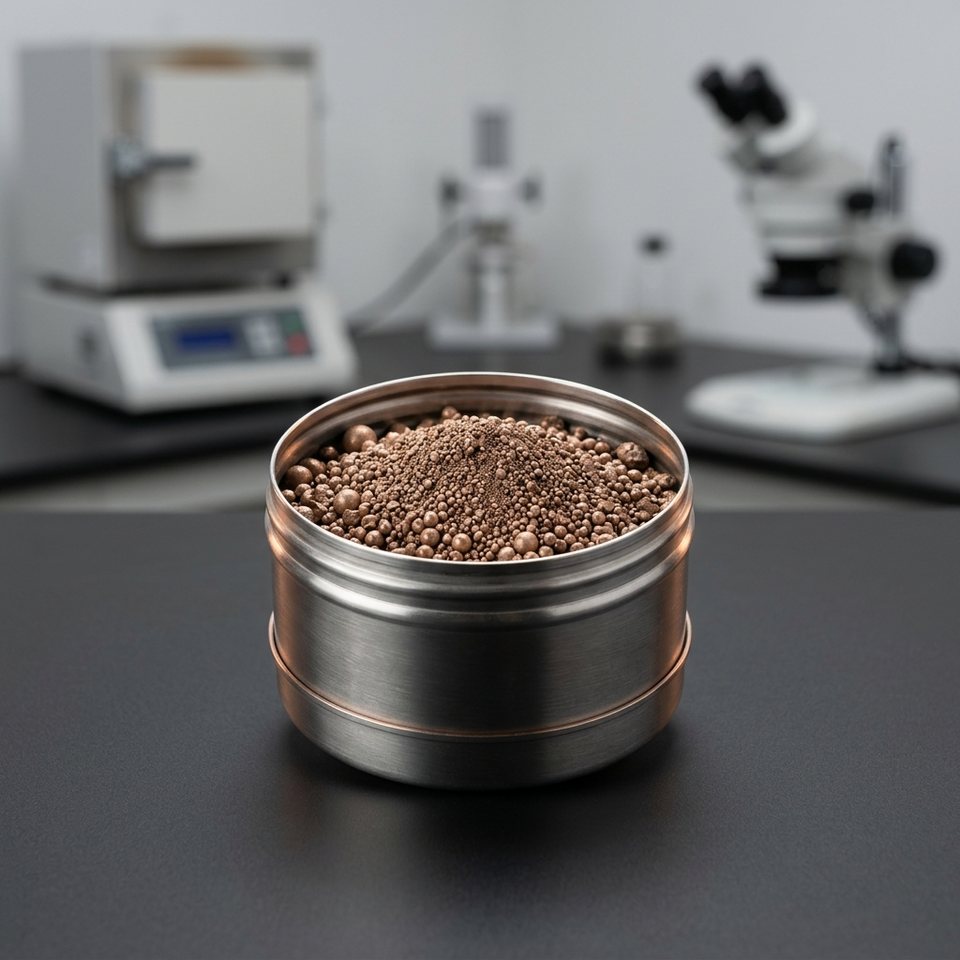
BCuP Copper-Phosphorus Brazing Powder metal powder product sample

QUICK ANSWER

Performance Defined by Material and Process.

BCuP powder is a copper-phosphorus brazing alloy (typically Cu-7P, or silver-bearing BCuP-5 with 15% Ag) that self-fluxes on copper and joins copper-to-copper and copper-to-brass without additional flux. Melting at 650-800 °C depending on grade, it is the standard filler for HVAC/R copper tube joining, electrical busbar brazing, and heat exchanger production — the highest-volume brazing alloy family in the world.

Phosphorus does two jobs in these alloys: it depresses the copper melting point into a practical brazing range, and it reduces copper oxide on the joint surface, giving self-fluxing behavior on copper that eliminates flux cost and flux-residue corrosion. Powder and paste forms serve automated dispensing in refrigeration line-set production and preplaced-ring manufacture, where dosing accuracy determines joint quality at line speeds. Note: phosphorus-bearing alloys must never be used on nickel-bearing or ferrous alloys, where they form brittle phosphides.

MATERIAL DATA

Chemistry and Technical Performance.

Lot-level controls focus on the chemistry, particle characteristics, and process values that influence manufacturing consistency and finished-part performance.

Chemical Composition

TYPICAL
ElementContentPerformance Role
Copper (Cu)Balance (86-93 wt%)Conductive, ductile base matching copper tube metallurgy
Phosphorus (P)6.8-7.5 wt% (BCuP-2)Melting depressant and self-fluxing agent on copper
Silver (Ag)0-15 wt% (grade dependent)Improves flow, ductility, and gap-filling in premium grades
Tin (Sn)0-6 wt% (some grades)Further lowers melting point and improves wetting
Others< 0.15 wt% totalImpurity limits per AWS A5.8

Technical Specifications

BASE GRADE
Grades
BCuP-2 (Cu-7P), BCuP-5 (Cu-15Ag-5P), BCuP-6, BCuP-9
Melting range
643-800 °C grade dependent
Forms
Powder for paste, ring pressing, preforms
Flux requirement
None on copper; flux needed on brass/bronze
Restriction
Not for ferrous or nickel-bearing alloys
Joint conductivity
Excellent — matches copper base

Final limits can be aligned with the agreed purchase specification.

APPLICATIONS

Developed for Demanding Industrial Applications.

01

HVAC and refrigeration is the defining market

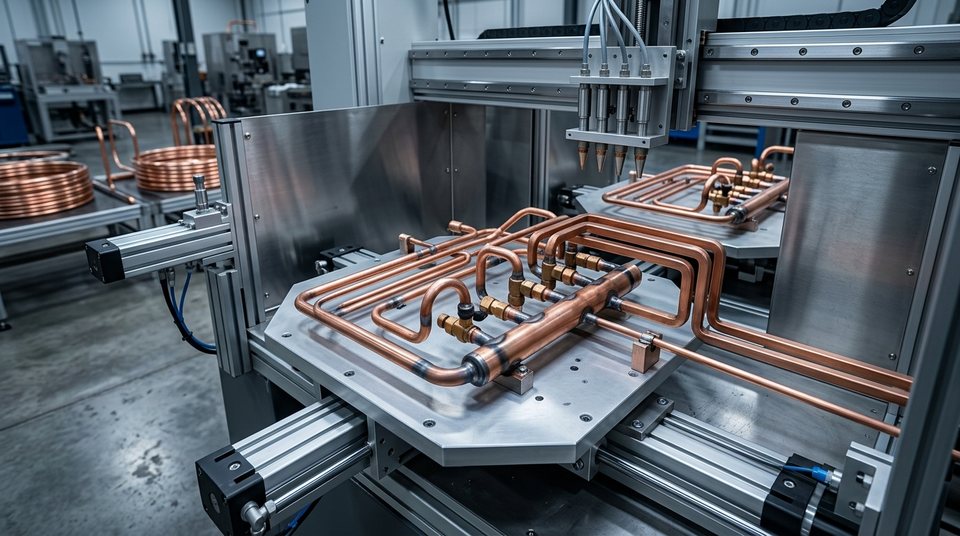
HVAC and refrigeration is the defining market: copper tube joints in air conditioners, heat pumps, refrigeration line sets, and heat exchangers are brazed by the billions annually with copper-phosphorus alloys. Automated production lines use paste-dispensed or preplaced-ring BCuP on return bends and manifold assemblies, where the self-fluxing behavior keeps cycle times short and joints leak-tight for the unit's service life. Powder buyers in this market are paste formulators and ring manufacturers who buy on particle size consistency and phosphorus control.

02

Electrical and plumbing markets follow

Electrical and plumbing markets follow: busbar and switchgear joints use BCuP where conductivity matters; copper plumbing fittings in commercial buildings are brazed with silver-bearing grades for their better gap-filling on field-fit joints. The silver-bearing grades (BCuP-5, BCuP-6) also serve jewelry and instrument manufacture where their lower melting range protects heat-sensitive assemblies.

BCuP Copper-Phosphorus Brazing Powder industrial application detail

BRAZING FILLER & SOLDER POWDERS

CUSTOM SUPPLY

A Supply Specification Built Around Your Process.

We supply the full BCuP range in powder form for paste and preform production: BCuP-2 for flux-free copper joining, silver-bearing grades for improved flow on brass and wider gaps. Custom phosphorus levels, size cuts for ring pressing, and matched paste-formulation support are available. Export note for silver-bearing grades: China's silver export is administered under quota and state-trading rules; our silver-bearing brazing powders are exported as manufactured alloy products with the required declarations, and we confirm documentation at order placement.

01

We supply the full BCuP range in powder form for paste and preform production: BCuP-2 for flux-free copper joining, silver-bearing grades for improved flow on brass and wider gaps.

02

Custom phosphorus levels, size cuts for ring pressing, and matched paste-formulation support are available.

03

Export note for silver-bearing grades: China's silver export is administered under quota and state-trading rules; our silver-bearing brazing powders are exported as manufactured alloy products with the required declarations, and we confirm documentation at order placement.

MATERIAL COMPARISON

Compare Materials Against the Production Requirement.

BCuP-2 vs BCuP-5 (Silver-Bearing)

Comparison PointThis ProductBCuP-5 (15% Ag)
Melting range707-793 °C643-802 °C — wider plastic range
Gap fillingClose-fit jointsExcellent on wider, uneven gaps
DuctilityModerate — P-rich phasesHigh — silver plasticizes the alloy
CostLow2-3x (silver content)
Flux on brassRequiredRequired
Best useProduction-line copper tubeField joints, brass, vibration service

TECHNICAL FAQ

Technical Questions About This Grade.

Need a different chemistry, particle range, or processing route? Our material team can review the requirement and supply window.

Why can't BCuP be used on steel or nickel alloys?

Phosphorus reacts with iron and nickel to form hard, brittle phosphide layers along the joint interface. The joint may look acceptable but fails under vibration or thermal cycling — use silver-bearing BAg alloys or nickel fillers for ferrous joints instead.

Do I need flux with BCuP on copper?

No — the phosphorus self-fluxes on copper and copper-rich alloys. On brass and bronze, zinc and tin oxides are not reduced by phosphorus, so an external flux is required.

Which grade for automated refrigeration line brazing?

BCuP-2 or the tin-modified variants for close-fit production joints; move to BCuP-5/6 when joint fit-up varies or brass components enter the assembly. We supply trial quantities for line qualification.

How does silver export policy affect BCuP-5 supply?

Silver metal export from China is quota-administered, but manufactured brazing alloys ship as finished products with composition declarations. Lead times remain normal; we handle the export documentation.

What powder size suits preform ring pressing?

Typically -100/+325 mesh with controlled apparent density for consistent press-fill. Tell us your ring geometry and we match the powder cut and flow characteristics.

REQUEST THIS GRADE

Turn Your Production Requirement Into a Powder Specification.

Share your target chemistry, particle size, process, annual volume, and destination. Our powder specialists will confirm the closest production grade and documentation package.

Talk to a Powder Specialist
Send Inquiry