Metal3DPMETAL3DP
BRAZING FILLER & SOLDER POWDERSTECHNICAL PRODUCT DATA

CuSnTi Active Brazing Powder for Diamond Tools

Cu-14Sn-10Ti active braze forming chemical TiC bonds to diamond and ceramics. Paste-grade cuts, custom titanium levels, qualification lots for toolmakers.

Standard grade
Cu-14Sn-10Ti (variants on request)
Brazing temperature
880-930 °C, vacuum < 10⁻³ mbar
Particle size
-200 mesh to -325 mesh for paste application
Compatible materials
Diamond, CBN, Si3N4, Al2O3, carbide, PCD
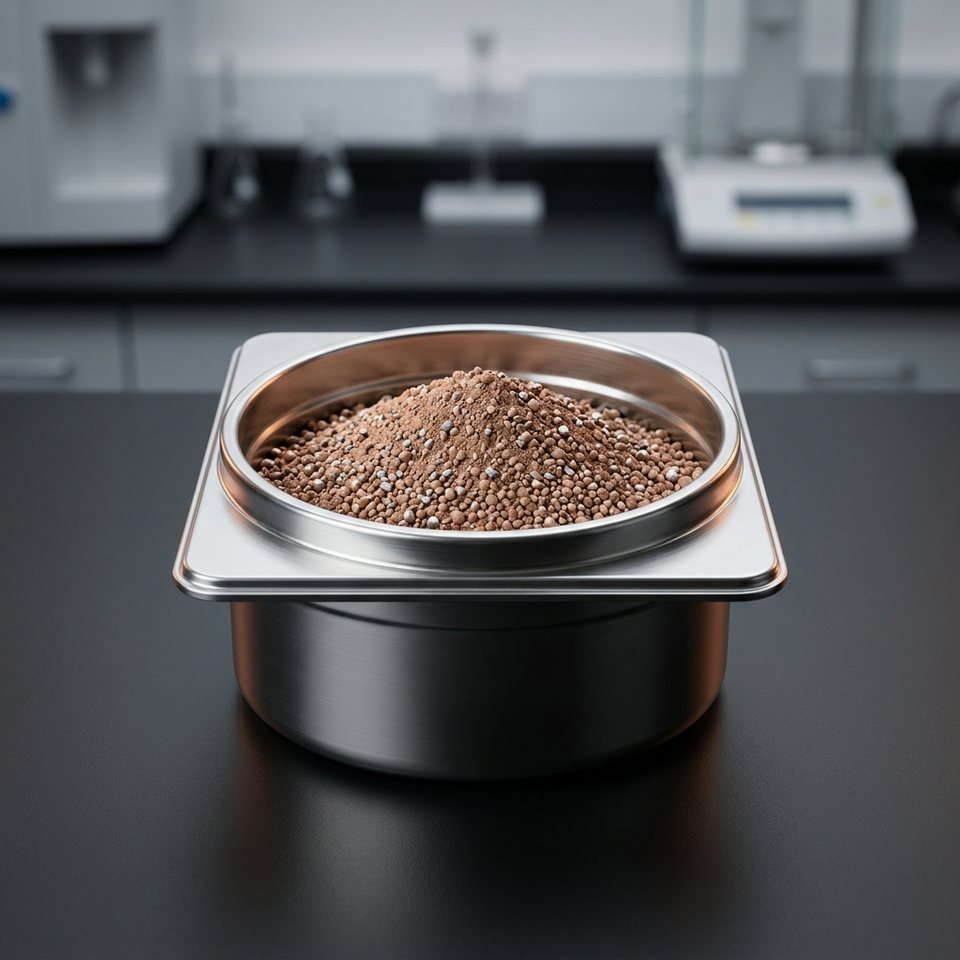
CuSnTi Active Brazing Powder for Diamond Tools metal powder product sample

QUICK ANSWER

Performance Defined by Material and Process.

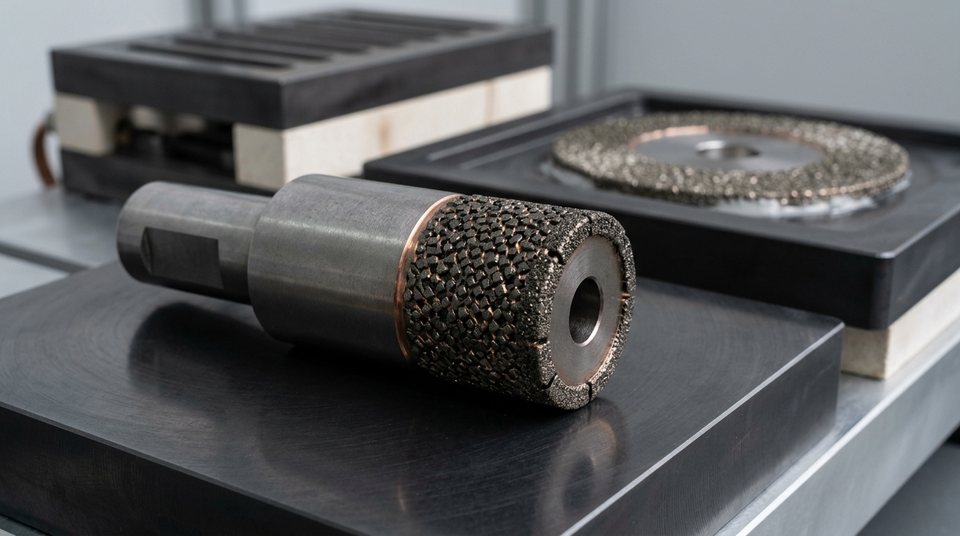
CuSnTi active brazing powder is a copper-tin-titanium alloy (typically Cu-14Sn-10Ti) that brazes diamond, CBN, ceramics, and carbide to steel without metallization — the titanium reacts directly with the diamond or ceramic surface to form a chemical bond. It is the enabling material for vacuum-brazed diamond tools: router bits, grinding wheels, saw segments, and dressing tools with aggressive, exposed-grit cutting action.

Conventional fillers cannot wet diamond or ceramic — the joint fails at the interface under cutting loads. Active brazing solves this chemically: at 880-920 °C in vacuum, titanium migrates to the diamond surface and forms titanium carbide, anchoring each grit in a true metallurgical grip that holds until the diamond is worn away. This lets toolmakers use a single, fully exposed diamond layer that cuts far more aggressively than resin or metal-bond tools — the reason vacuum-brazed diamond tools dominate stone profiling, composite machining, and concrete grinding niches.

MATERIAL DATA

Chemistry and Technical Performance.

Lot-level controls focus on the chemistry, particle characteristics, and process values that influence manufacturing consistency and finished-part performance.

Chemical Composition

TYPICAL
ElementContentPerformance Role
Copper (Cu)Balance (~76 wt%)Ductile, conductive matrix cushioning the brazed grit
Tin (Sn)12-16 wt%Lowers melting point and improves flow and wetting
Titanium (Ti)8-12 wt%Active element — forms TiC on diamond and Ti-oxides on ceramics, creating the chemical bond
Silver (Ag)0-20 wt% (CuSnTiAg variants)Improves ductility and lowers brazing temperature in premium grades
Others< 0.5 wt%Impurity control preserving titanium activity

Technical Specifications

BASE GRADE
Standard grade
Cu-14Sn-10Ti (variants on request)
Brazing temperature
880-930 °C, vacuum < 10⁻³ mbar
Particle size
-200 mesh to -325 mesh for paste application
Compatible materials
Diamond, CBN, Si3N4, Al2O3, carbide, PCD
Grit retention
Chemical bond — holds to full grit consumption
Joint strength
High — limited by parent material, not interface

Final limits can be aligned with the agreed purchase specification.

APPLICATIONS

Developed for Demanding Industrial Applications.

01

Vacuum-brazed diamond tool manufacturing

Vacuum-brazed diamond tool manufacturing is the entire reason this product exists: profiling wheels for stone countertops, grinding discs for concrete and terrazzo, root-and-branch cutting bits, and composite trimming tools all use CuSnTi to fix a single diamond layer onto the steel body. The toolmaker mixes the powder into paste, places diamond grit into it, and vacuum brazes the assembly — emerging with tools whose aggressive free-cutting action and long life command premium prices over electroplated equivalents. Toolmakers buy the powder on titanium activity and lot-to-lot wetting consistency.

02

Additional Applications

Beyond diamond tools, active brazing powder joins technical ceramics to metal in sensor housings, vacuum feedthroughs, and power electronics substrates, and brazes CBN and PCD cutting elements onto tool bodies. These are specification-driven, low-volume, high-margin applications where the buyer's qualification process centers on joint shear strength testing of trial lots — we support that with consistent titanium content and retained samples per lot.

CuSnTi Active Brazing Powder for Diamond Tools industrial application detail

BRAZING FILLER & SOLDER POWDERS

CUSTOM SUPPLY

A Supply Specification Built Around Your Process.

We supply CuSnTi in standard Cu-14Sn-10Ti and silver-modified variants, -200/-325 mesh for paste formulation, with certified titanium content and lot-specific brazing behavior data. Custom Ti levels (8-15%) for different grit sizes and substrate combinations, paste-ready surface treatment, and small qualification lots are standard. Note: China's superhard-materials export control framework currently sits under suspension through November 2026; our CuSnTi powder itself is a copper alloy and ships normally — we monitor the policy status and advise at order time.

01

We supply CuSnTi in standard Cu-14Sn-10Ti and silver-modified variants, -200/-325 mesh for paste formulation, with certified titanium content and lot-specific brazing behavior data.

02

Custom Ti levels (8-15%) for different grit sizes and substrate combinations, paste-ready surface treatment, and small qualification lots are standard.

03

Note: China's superhard-materials export control framework currently sits under suspension through November 2026; our CuSnTi powder itself is a copper alloy and ships normally — we monitor the policy status and advise at order time.

MATERIAL COMPARISON

Compare Materials Against the Production Requirement.

CuSnTi Active Braze vs Electroplated Diamond Fixation

Comparison PointThis ProductNickel Electroplating
Grit bondingChemical (TiC formation)Mechanical encapsulation only
Grit exposureHigh — aggressive cuttingLimited — nickel covers 60-70% of grit
Cutting speedFast, free-cuttingSlower, tends to glaze
Tool lifeLong — grit held to full wearGrit pullout common
Re-tip / re-plateRe-braze possibleRe-plate standard
Best toolsProfiling, grinding, dry cuttingPrecision form wheels, fine finishing

TECHNICAL FAQ

Technical Questions About This Grade.

Need a different chemistry, particle range, or processing route? Our material team can review the requirement and supply window.

What brazing cycle does CuSnTi need?

Heat at 10-15 °C/min to 880-930 °C under vacuum below 10⁻³ mbar, hold 5-15 minutes, cool slowly. Exceeding 950 °C risks diamond graphitization; our lot data sheet gives the recommended profile for the specific titanium level.

How do I choose titanium content?

8-10% Ti suits fine grit and ceramic joining; 10-12% gives stronger bonding for coarse diamond grit in aggressive tools. Higher is not better — excess titanium embrittles the filler matrix.

Can it braze CBN as well as diamond?

Yes — titanium forms titanium borides and nitrides with CBN, giving the same chemical anchoring. CBN tools tolerate the brazing temperature better than diamond does.

What paste formulation do you recommend?

A neutral organic binder at 10-15% by weight gives screen-printable or dispensable consistency. We supply powder surface-treated for stable paste rheology and can recommend binder systems.

Is CuSnTi affected by China's diamond export controls?

The 2025 superhard-materials measures target diamond and CBN products, not copper alloy brazing powders. CuSnTi ships as a standard alloy product; the measures are additionally suspended through November 2026, and we track status for every order.

REQUEST THIS GRADE

Turn Your Production Requirement Into a Powder Specification.

Share your target chemistry, particle size, process, annual volume, and destination. Our powder specialists will confirm the closest production grade and documentation package.

Talk to a Powder Specialist
Send Inquiry