Metal3DPMETAL3DP
PRESS & SINTER (PM) POWDERSTECHNICAL PRODUCT DATA

Diffusion-Alloyed Steel Powder (Fe-Ni-Mo-Cu, Distaloy Type)

Fe-Ni-Mo-Cu, Distaloy Type

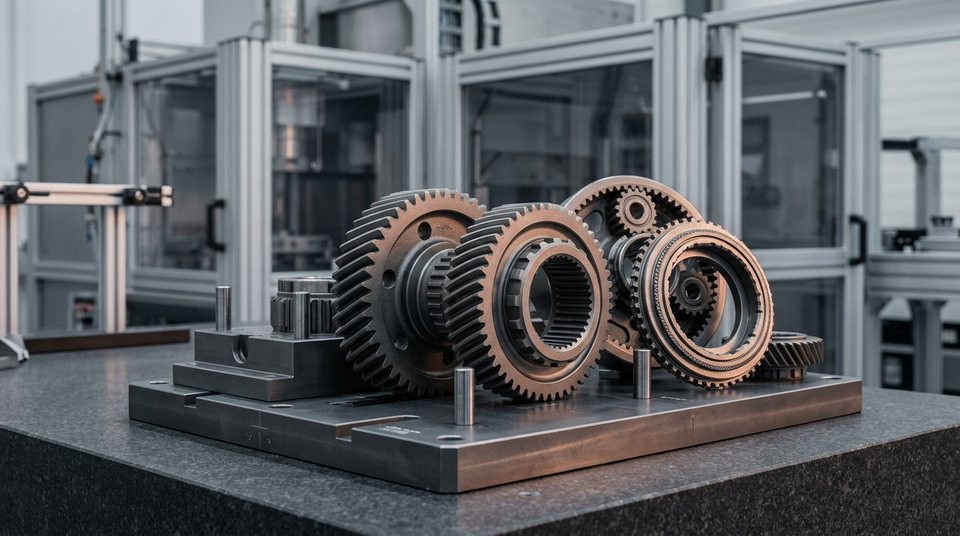
Distaloy-type diffusion alloyed powder, 800-1200 MPa heat-treated, Jominy certified per lot. Transmission gears, synchronizer parts, EV drivetrain PM.

Type
Diffusion-alloyed (Distaloy-equivalent)
Compressibility
> 6.9 g/cm³ at 600 MPa
Sintered density
7.0-7.4 g/cm³ (press-sinter)
Heat-treated strength
800-1200 MPa
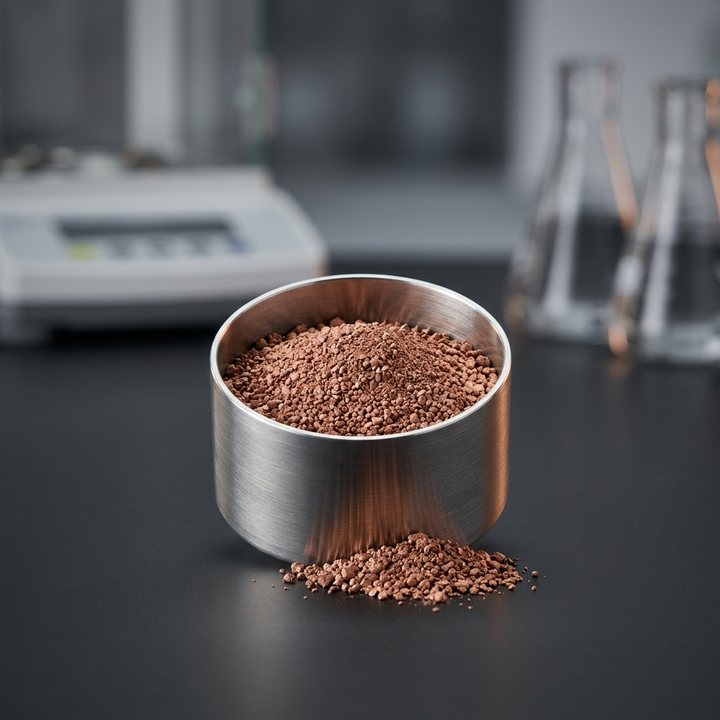
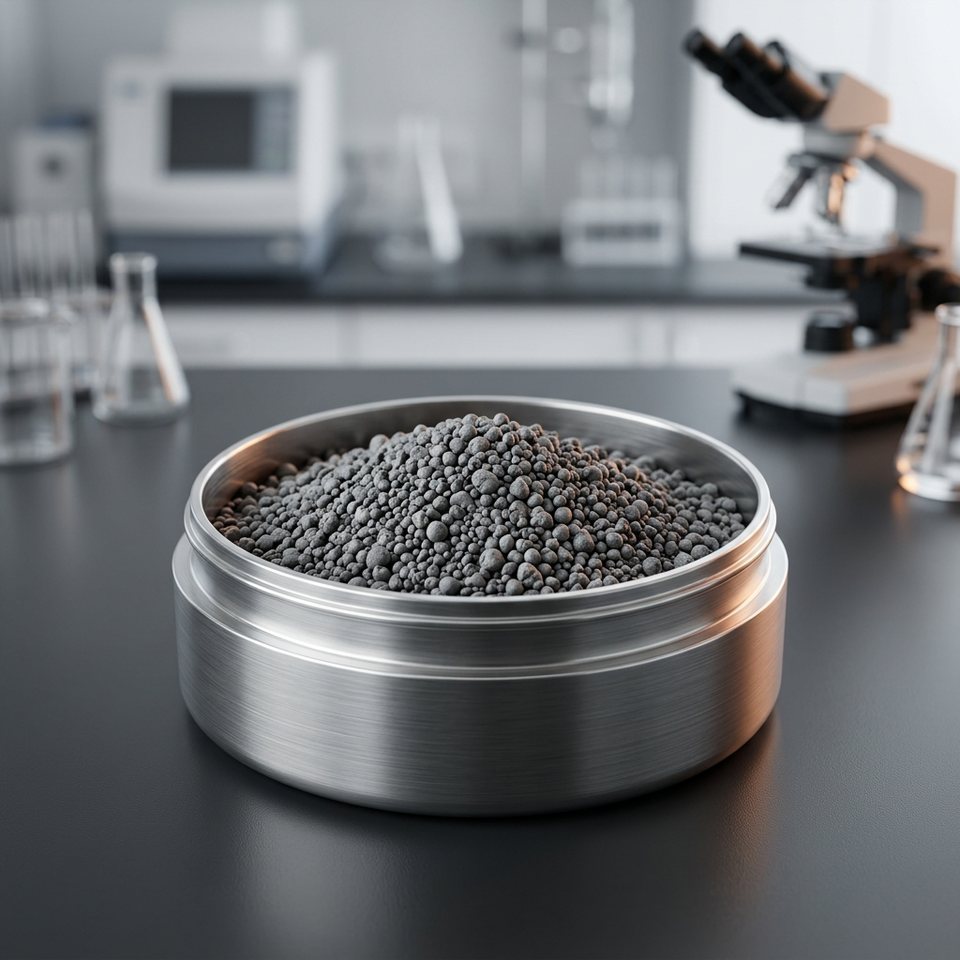
Diffusion-Alloyed Steel Powder (Fe-Ni-Mo-Cu, Distaloy Type) metal powder product sample

QUICK ANSWER

Performance Defined by Material and Process.

Diffusion-alloyed steel powder is a water atomized iron base with nickel, molybdenum, and copper partially diffusion-bonded to each particle — delivering alloy-steel hardenability with near-iron compressibility. Sintered and heat-treated parts reach 800-1200 MPa tensile strength, making it the standard material for high-load PM gears, sprockets, and synchronizer components in automotive powertrains.

Diffusion alloying solved PM's central dilemma: pre-alloyed powders are hard and compress poorly, while elemental premixes segregate and give uneven properties. The diffusion-bonded route anchors alloy elements to the iron particle surface — no segregation in handling, iron-like compressibility in the die, and full alloy homogenization during sintering as the elements diffuse into the matrix. The result is heat-treatable PM steel that survives transmission-duty loads, which is why it dominates the demanding end of automotive PM.

MATERIAL DATA

Chemistry and Technical Performance.

Lot-level controls focus on the chemistry, particle characteristics, and process values that influence manufacturing consistency and finished-part performance.

Chemical Composition

TYPICAL
ElementContentPerformance Role
Nickel (Ni)1.75-4.0 wt%Hardenability and toughness — diffusion-bonded to base particles
Molybdenum (Mo)0.5-1.5 wt%Deep hardenability and tempering resistance
Copper (Cu)1.5-2.0 wt%Sintering aid and secondary hardenability
Iron (Fe)BalanceSoft water atomized base for compressibility
Carbon (C)Premix addedGraphite added at blending to part specification

Technical Specifications

BASE GRADE
Type
Diffusion-alloyed (Distaloy-equivalent)
Compressibility
> 6.9 g/cm³ at 600 MPa
Sintered density
7.0-7.4 g/cm³ (press-sinter)
Heat-treated strength
800-1200 MPa
Sintering
1120-1250 °C, N2-H2 or endogas
Segregation
None — bonded alloy system

Final limits can be aligned with the agreed purchase specification.

APPLICATIONS

Developed for Demanding Industrial Applications.

01

Automotive powertrain PM is the core market

Automotive powertrain PM is the core market: transmission gears, synchronizer hubs and rings, planetary carriers, and sprockets that see real torque are pressed from diffusion-alloyed grades, sintered, and case-hardened or through-hardened. The grade family enabled PM to invade territory once exclusive to machined wrought steel — a transmission gear PM program saves 30-50 percent against machining at volume. Part makers buy on hardenability certification (Jominy data per lot) and dimensional stability through heat treatment.

02

The second market is high-performance machinery PM

The second market is high-performance machinery PM: hydraulic pump components, heavy-duty power tool gears, and industrial drive parts, plus the growing segment of PM parts for electric vehicle drivetrains where the material's fatigue performance at high density competes with wrought steel. Double-press double-sinter and surface-densification processes (selective densification of gear teeth) push the grade to 7.5+ g/cm³ local density — the frontier of PM gear technology.

Diffusion-Alloyed Steel Powder (Fe-Ni-Mo-Cu, Distaloy Type) industrial application detail

PRESS & SINTER (PM) POWDERS

CUSTOM SUPPLY

A Supply Specification Built Around Your Process.

We supply diffusion-alloyed steel powder in Ni-Mo-Cu compositions equivalent to the industry-standard grades, with certified compressibility, hardenability (Jominy), and chemistry per lot. Custom alloy levels, high-density and surface-densification optimized variants, and premix supply with graphite and lubricant are available. Not export-controlled.

01

We supply diffusion-alloyed steel powder in Ni-Mo-Cu compositions equivalent to the industry-standard grades, with certified compressibility, hardenability (Jominy), and chemistry per lot.

02

Custom alloy levels, high-density and surface-densification optimized variants, and premix supply with graphite and lubricant are available.

MATERIAL COMPARISON

Compare Materials Against the Production Requirement.

Diffusion-Alloyed vs Pre-Alloyed Steel Powder

Comparison PointThis ProductPre-Alloyed (FL-4605 type)
CompressibilityNear-iron — soft base particlesLower — pre-hardened particles
Alloy uniformityHomogenizes during sinteringUniform from the melt
Segregation riskNone — bondedNone — alloyed
HardenabilityHigh (Ni-Mo-Cu system)Moderate (Mo-only typical)
CostModerateModerate
Best useHigh-strength heat-treated gearsModerate-strength as-sintered parts

TECHNICAL FAQ

Technical Questions About This Grade.

Need a different chemistry, particle range, or processing route? Our material team can review the requirement and supply window.

What hardenability documentation comes with each lot?

Jominy end-quench curves from sintered and heat-treated test bars of the actual powder lot, plus chemistry and compressibility certificates. Transmission part makers qualify on this data package.

Can the grade be surface densified for gear teeth?

Yes — it is the standard base for selective surface densification (rolling densification of tooth flanks), reaching 7.5+ g/cm³ local density and contact fatigue performance approaching wrought gears.

What sintering temperature is needed for full diffusion?

1120 °C gives partial homogenization (acceptable for most parts); 1250 °C high-temperature sintering completes diffusion and maximizes properties. The grade is designed to perform across both furnace types.

How does copper content affect dimensional change?

Copper drives sintering growth — its level is set to balance the shrinkage from other elements, and our lots hold copper tightly so your die design dimensions transfer between lots.

Is diffusion-alloyed powder export-controlled?

No. Iron-nickel-molybdenum-copper PM powders ship without licensing requirements.

REQUEST THIS GRADE

Turn Your Production Requirement Into a Powder Specification.

Share your target chemistry, particle size, process, annual volume, and destination. Our powder specialists will confirm the closest production grade and documentation package.

Talk to a Powder Specialist
Send Inquiry