Metal3DPMETAL3DP
LASER CLADDING & DIRECTED ENERGY REPAIR POWDERSTECHNICAL PRODUCT DATA

Fe-Based Self-Fluxing Laser Cladding Powder (Fe45 / Fe60)

Fe45 / Fe60

Economical Fe-based self-fluxing cladding powders at 1/3 nickel alloy cost. WC-reinforced options, machinable Fe45 to severe-abrasion Fe60. Mining, agriculture, machinery rebuilds.

Grades
Fe45 (40-47 HRC), Fe60 (58-62 HRC), intermediate options
Particle size
45-106 µm (coaxial laser), 20-53 µm (high-speed)
Morphology
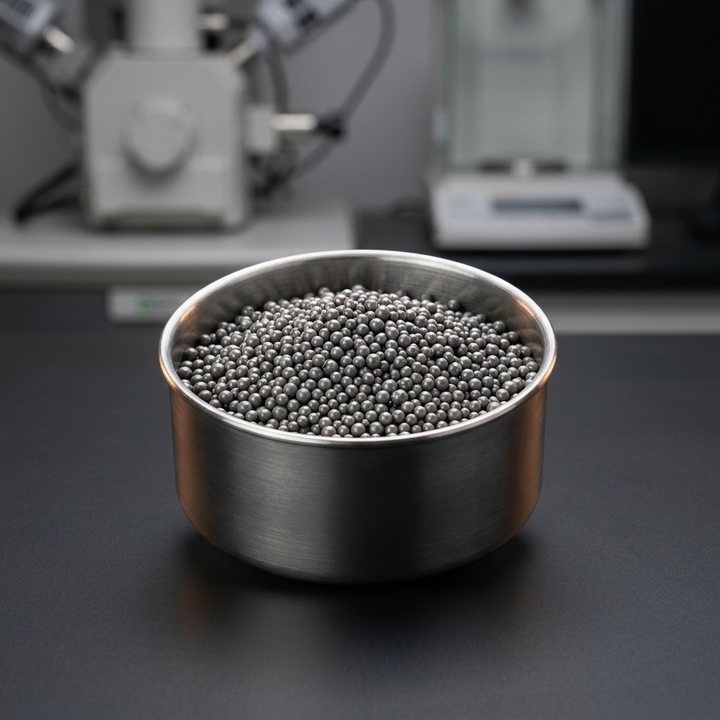
Spherical, gas atomized
Corrosion resistance
Moderate — mild environments only
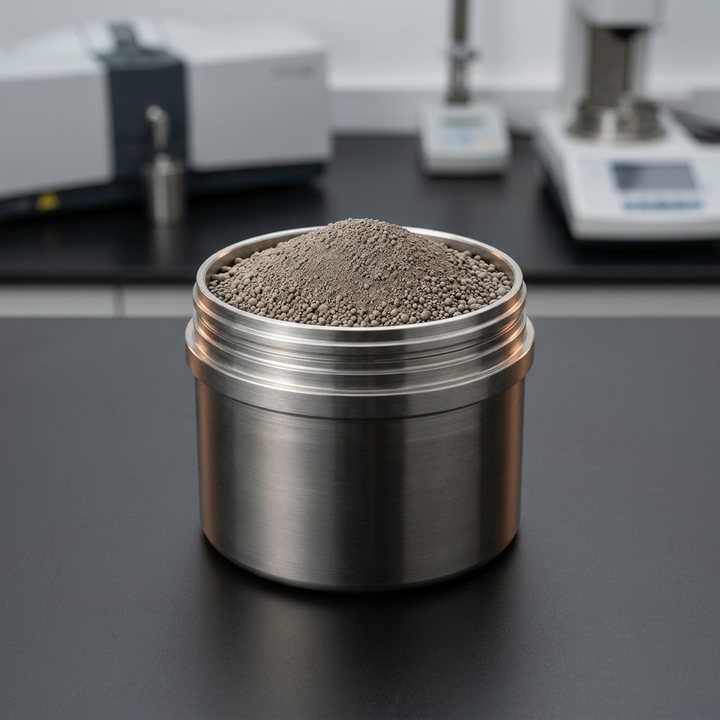
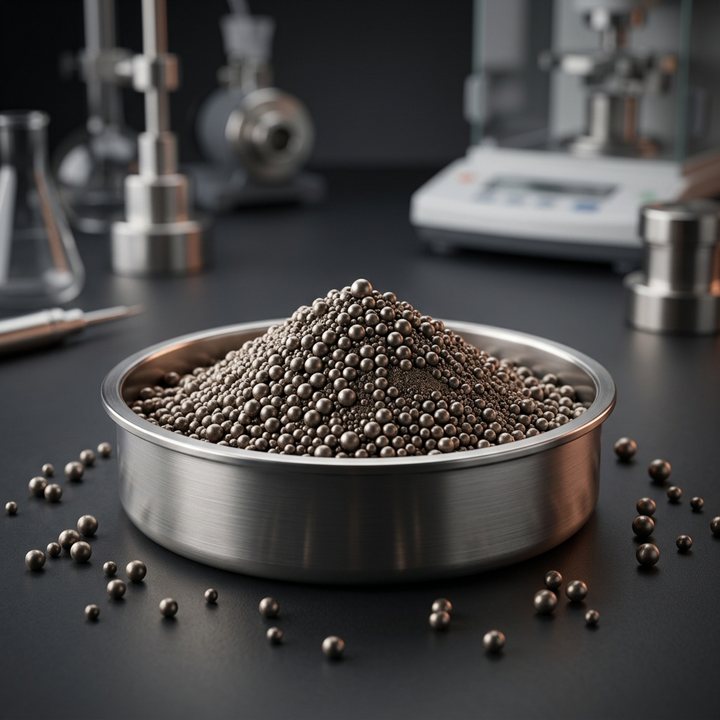
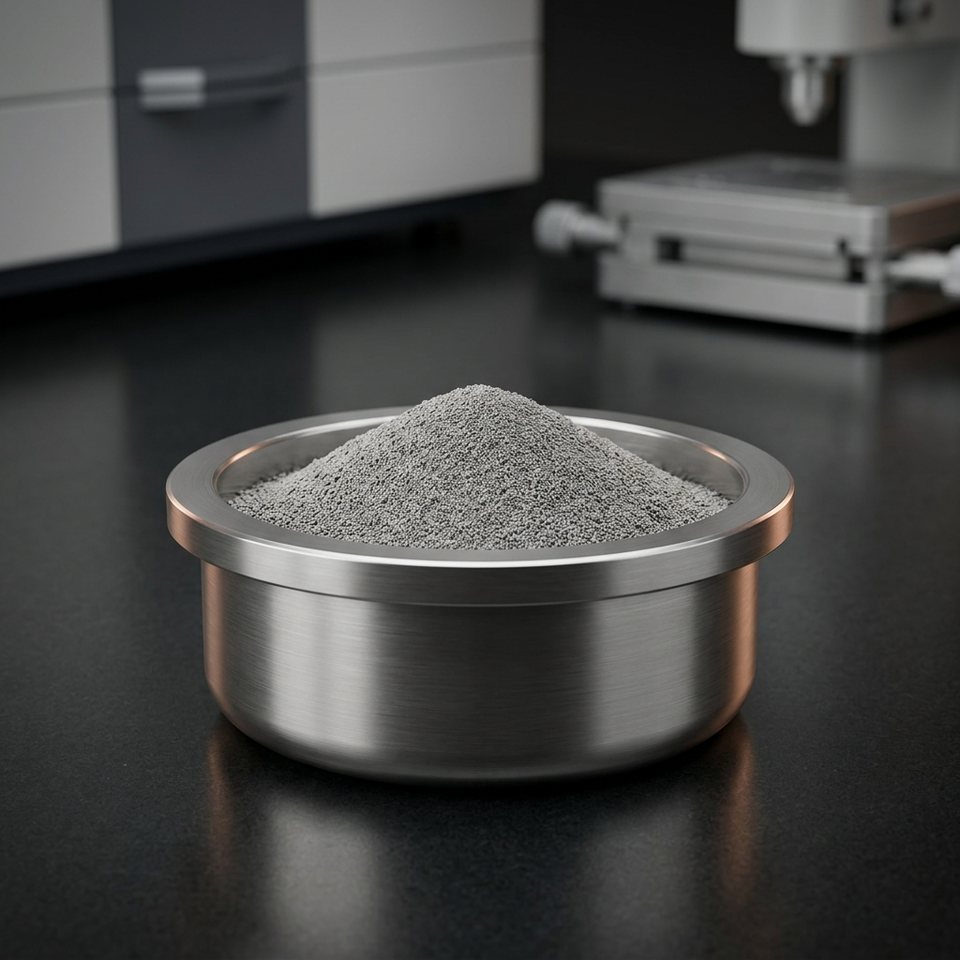
Fe-Based Self-Fluxing Laser Cladding Powder (Fe45 / Fe60) metal powder product sample

QUICK ANSWER

Performance Defined by Material and Process.

Fe-based self-fluxing powders are iron-chromium-boron-silicon alloys that laser-clad into 40-62 HRC wear layers at roughly one-third the cost of nickel-based equivalents. Fe45 suits machinable repairs on shafts and general machinery; Fe60 serves severe abrasion in mining, agricultural, and construction equipment — the economical choice whenever corrosion resistance is not the primary requirement.

Iron-based cladding powders exist for one reason: cost-per-wear-life on parts where the corrosion performance of nickel or cobalt alloys would be wasted. The Cr-B-Si chemistry generates hard borides and carbides in a martensitic iron matrix that performs comparably to Ni60 in pure abrasion service. The trade-offs are real — lower corrosion resistance, higher crack sensitivity, and more attention to preheat — but on a mining bucket lip or agricultural wear plate, these powders deliver eighty percent of the performance at a third of the powder cost.

MATERIAL DATA

Chemistry and Technical Performance.

Lot-level controls focus on the chemistry, particle characteristics, and process values that influence manufacturing consistency and finished-part performance.

Chemical Composition

TYPICAL
ElementContentPerformance Role
Iron (Fe)BalanceMartensitic matrix — the cost-effective base
Chromium (Cr)10-18 wt% (grade dependent)Boride and carbide former; moderate corrosion contribution
Boron (B)2.0-4.0 wt%Hard boride phases and self-fluxing melting behavior
Silicon (Si)2.5-4.5 wt%Melting-point depressant for smooth laser melting
Carbon (C)0.3-1.0 wt% (grade dependent)Martensite hardness and carbide volume control

Technical Specifications

BASE GRADE
Grades
Fe45 (40-47 HRC), Fe60 (58-62 HRC), intermediate options
Particle size
45-106 µm (coaxial laser), 20-53 µm (high-speed)
Morphology
Spherical, gas atomized
Corrosion resistance
Moderate — mild environments only
Preheat
200-400 °C for Fe60 on large parts
Cost position
~1/3 of Ni60, ~1/6 of Stellite

Final limits can be aligned with the agreed purchase specification.

APPLICATIONS

Developed for Demanding Industrial Applications.

01

Mining and mineral processing is the anchor market

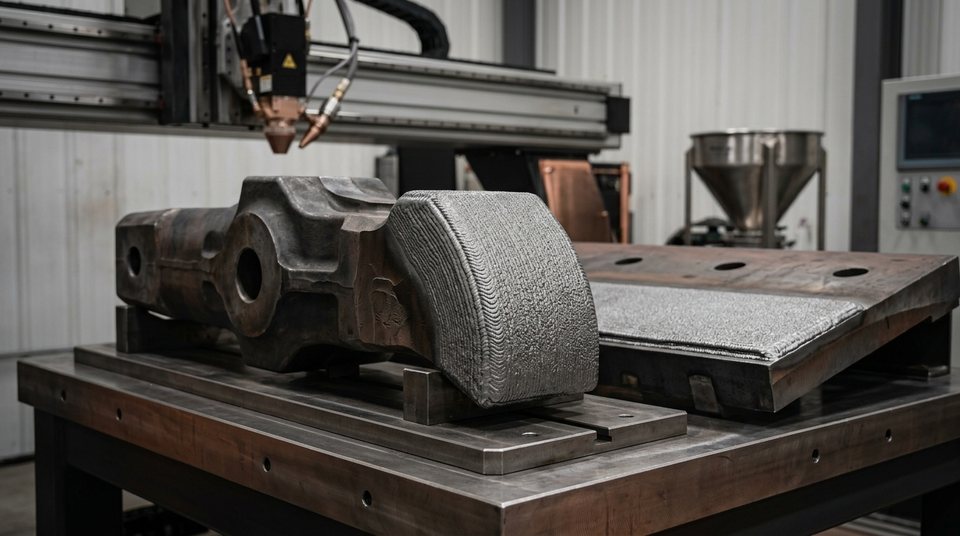
Mining and mineral processing is the anchor market: Fe60 clads bucket lips, crusher hammers and liners, chute and hopper wear zones, and ground-engaging tools where quartz and ore abrasion destroys unprotected steel in weeks. The cladding is applied in rebuild shops during planned maintenance, and purchasing is brutally economic — wear life per dollar is the only metric, which is why Fe60 plus optional WC reinforcement dominates wherever the service is dry and abrasive.

02

General machinery repair forms the second market

General machinery repair forms the second market: Fe45 rebuilds worn shafts, bearing journals, gear teeth, and slideways with a machinable layer that finishes with carbide tooling — the budget alternative to nickel-based repair alloys for parts that live in oil or indoor service. Agricultural equipment adds seasonal volume: plowshares, cultivator sweeps, and harvester components clad in rebuild programs where the farmer's calculation is repair cost versus one more season of service.

Fe-Based Self-Fluxing Laser Cladding Powder (Fe45 / Fe60) industrial application detail

LASER CLADDING & DIRECTED ENERGY REPAIR POWDERS

CUSTOM SUPPLY

A Supply Specification Built Around Your Process.

We supply the Fe45/Fe60 family in spherical gas-atomized form with flow and chemistry certification, plus WC-reinforced variants (Fe60 + 20-35% WC) for extreme abrasion and low-crack-sensitivity modified grades for difficult substrates. Custom hardness targets between the standard grades are available for repeat programs. Not export-controlled.

01

We supply the Fe45/Fe60 family in spherical gas-atomized form with flow and chemistry certification, plus WC-reinforced variants (Fe60 + 20-35% WC) for extreme abrasion and low-crack-sensitivity modified grades for difficult substrates.

02

Custom hardness targets between the standard grades are available for repeat programs.

MATERIAL COMPARISON

Compare Materials Against the Production Requirement.

Fe60 vs Ni60 Laser Cladding Powder

Comparison PointThis ProductNi60
Powder cost~1/3 of Ni60Baseline for hard nickel alloys
Abrasion resistanceComparable in dry serviceComparable, slightly better toughness
Corrosion resistanceModerate — dry/indoor serviceGood — wet and chemical service
Crack sensitivityHigher — preheat discipline neededLower
MachinabilityGrinding (Fe60), carbide (Fe45)Grinding (Ni60), carbide (Ni45)
Best useDry abrasive wear on budgetCorrosive or impact-loaded service

TECHNICAL FAQ

Technical Questions About This Grade.

Need a different chemistry, particle range, or processing route? Our material team can review the requirement and supply window.

How do I choose between Fe45 and Fe60?

By wear severity and finishing route: Fe45 for machinable repairs and moderate wear; Fe60 for severe abrasion where grinding is acceptable. If you are unsure, Fe45 is the forgiving starting point — Fe60 punishes poor preheat practice with cracks.

Can Fe-based powders be used outdoors in wet service?

Only with caution — the iron matrix rusts in wet service, undermining the deposit. For wet, slurry, or chemical exposure, move to Ni60 or a stainless-based grade; the cost premium buys real life in those environments.

What preheat does Fe60 require?

200-400 °C depending on part mass and substrate carbon. Small parts on steel fixtures often need only 200 °C; large castings and high-carbon substrates need the upper range plus slow cooling.

Is WC reinforcement worth the cost?

In quartz-rich abrasion (sand, granite, iron ore), WC-reinforced Fe60 can double wear life for a 40-60 percent powder cost increase — clearly worth it. In soft-soil or impact service, plain Fe60 is the better buy.

Is Fe-based cladding powder export-controlled?

No. Iron-based hardfacing powders are unrestricted commercial products.

REQUEST THIS GRADE

Turn Your Production Requirement Into a Powder Specification.

Share your target chemistry, particle size, process, annual volume, and destination. Our powder specialists will confirm the closest production grade and documentation package.

Talk to a Powder Specialist
Send Inquiry