Metal3DPMETAL3DP
SOFT MAGNETIC & MAGNETIC MATERIAL POWDERSTECHNICAL PRODUCT DATA

FeNi50 Powder for Shielding & High-Permeability Cores

50Ni-50Fe soft magnetic powder for current transformer cores, RCD toroids and magnetic shielding. Spherical and flake forms, Mo-bearing high-µ variants, lot test-ring data.

Initial permeability (annealed)
20,000-50,000 grade dependent
Saturation flux density
~1.5 T
Curie temperature
~450 °C
Forms
Atomized spherical, milled flake, custom cuts
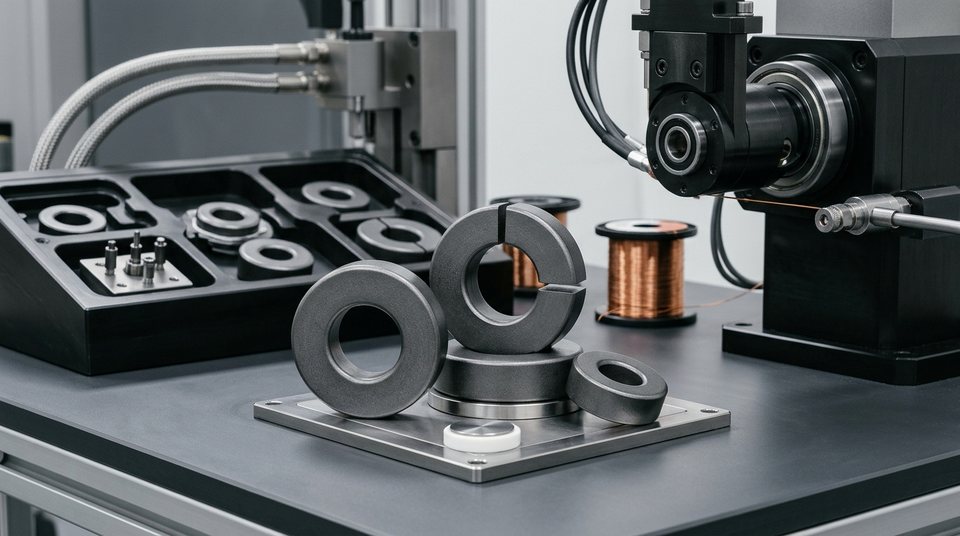
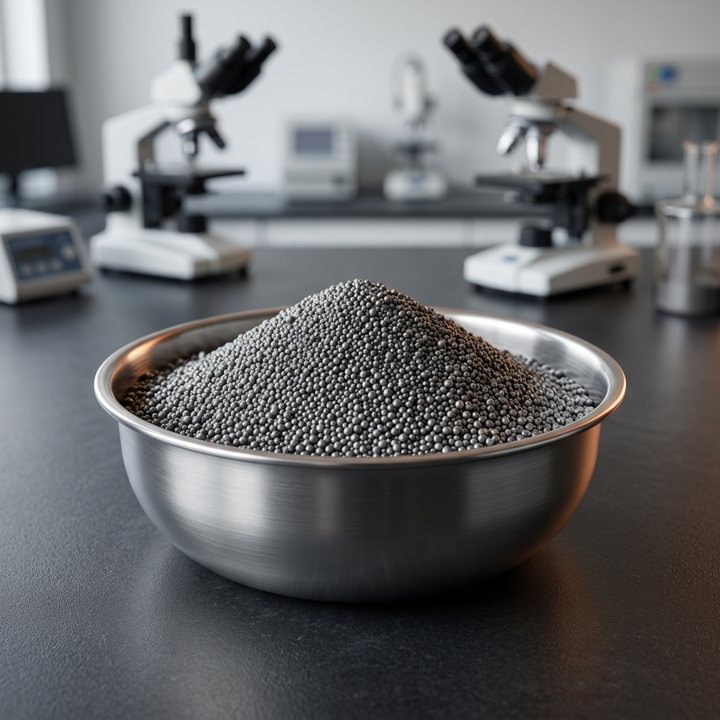
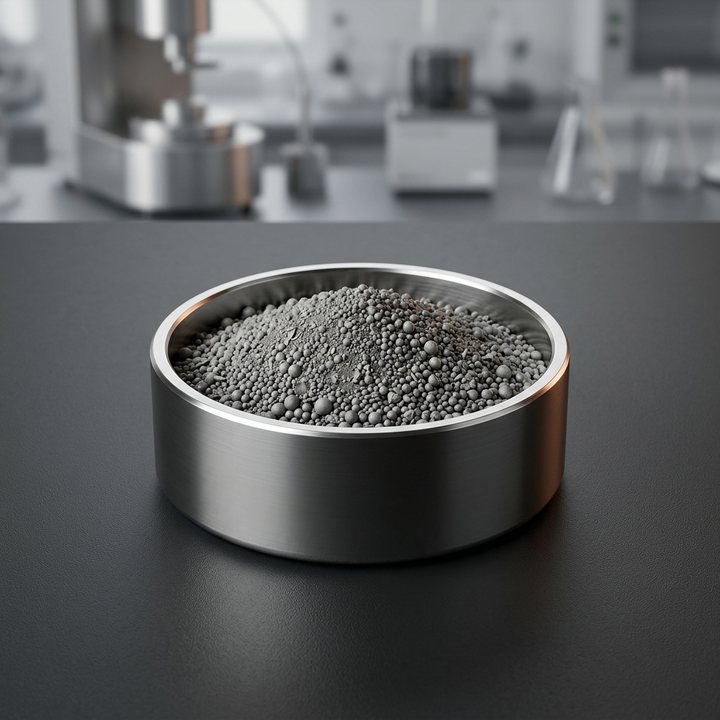
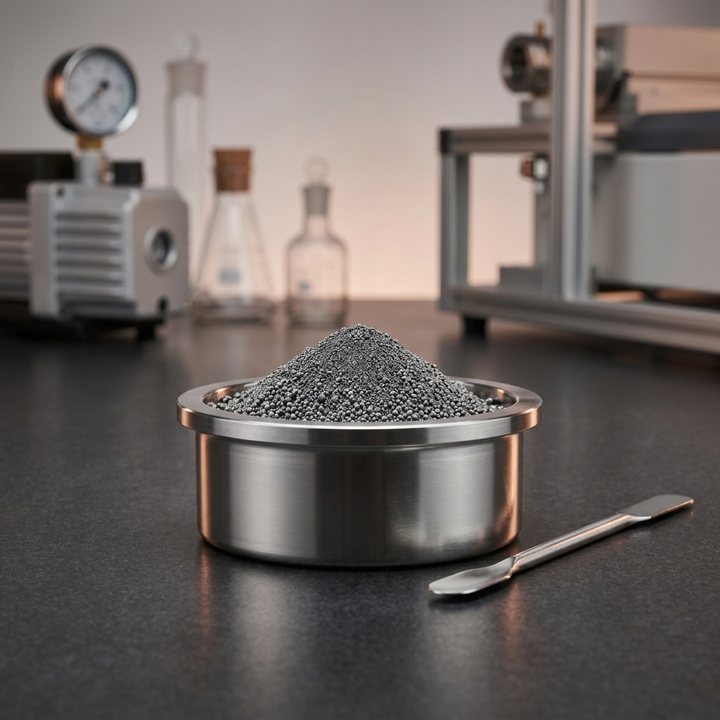
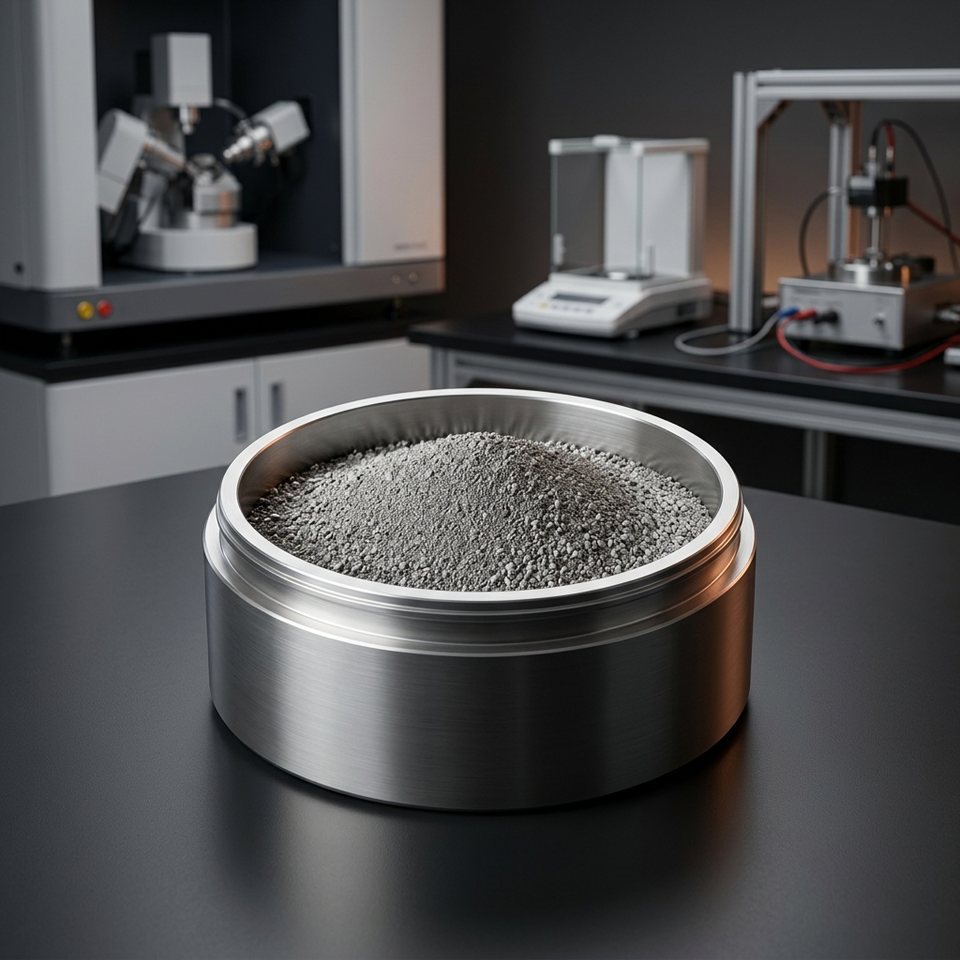
FeNi50 Powder for Shielding & High-Permeability Cores metal powder product sample

QUICK ANSWER

Performance Defined by Material and Process.

FeNi50 is a 50% nickel-50% iron soft magnetic alloy powder (mid-range permalloy) combining high permeability with useful saturation flux density (~1.5 T) — atomized or ground into powder for pressed toroids, molded shielding components, and magnetic flake. It fills the gap between cheap iron cores and expensive 80% nickel permalloy where both sensitivity and flux capacity matter.

Nickel-iron alloys derive their value from the permeability peak near 50-80% Ni, where magnetocrystalline anisotropy passes through zero. FeNi50 trades some of 80-permalloy's extreme permeability for higher saturation and lower cost — the practical choice for current-transformer cores, ground-fault interrupter toroids, magnetic shielding cans pressed from powder, and high-permeability molded components. In powder form it also serves magnetic flake applications in absorption coatings and permeability-tuned composites.

MATERIAL DATA

Chemistry and Technical Performance.

Lot-level controls focus on the chemistry, particle characteristics, and process values that influence manufacturing consistency and finished-part performance.

Chemical Composition

TYPICAL
ElementContentPerformance Role
Nickel (Ni)48-52 wt%Permeability driver — the 50% level balances µ and saturation
Iron (Fe)Balance (~50 wt%)Magnetic base contributing saturation flux density
Molybdenum (Mo)0-4 wt% (FeNiMo variants)Raises permeability and resistivity in supermalloy-type grades
Manganese (Mn)< 0.5 wt%Deoxidation residue within specification
Silicon + C + S + P< 0.1 wt% combinedImpurity control — magnetic softness is impurity-sensitive

Technical Specifications

BASE GRADE
Initial permeability (annealed)
20,000-50,000 grade dependent
Saturation flux density
~1.5 T
Curie temperature
~450 °C
Forms
Atomized spherical, milled flake, custom cuts
Heat treatment
Hydrogen anneal develops full permeability
Powder oxygen
< 1000 ppm (atomized grades)

Final limits can be aligned with the agreed purchase specification.

APPLICATIONS

Developed for Demanding Industrial Applications.

01

Current sensing and protection form the volume market

Current sensing and protection form the volume market: current transformers for energy metering, residual-current (ground fault) interrupter toroids, and precision measurement cores are wound from strip or pressed from FeNi powder where high permeability at low field detects milliamp-level imbalances. The distributed-gap powder core version suits applications carrying DC bias or requiring gapped stability. Buyers are core manufacturers who anneal the pressed parts in hydrogen — they purchase powder on purity, since sulfur, carbon, and oxygen pin domain walls and kill permeability.

02

Magnetic shielding and absorption form the specialty market

Magnetic shielding and absorption form the specialty market: pressed and machined FeNi50 shielding cans protect sensitive sensors, photomultipliers, and quantum devices from ambient fields; FeNi flake loads into paints and composites for electromagnetic absorption. Medical electronics — MRI-adjacent sensors, implantable device magnetics — add a growing qualified niche. These buyers need morphology control (flake aspect ratio, spherical distribution) as much as chemistry.

FeNi50 Powder for Shielding & High-Permeability Cores industrial application detail

SOFT MAGNETIC & MAGNETIC MATERIAL POWDERS

CUSTOM SUPPLY

A Supply Specification Built Around Your Process.

We supply FeNi50 in atomized spherical powder for pressing, milled flake for absorption and shielding composites, and molybdenum-bearing high-permeability variants. Custom Ni levels from 36% (high saturation) to 80% (maximum permeability), hydrogen-anneal-ready purity grades, and lot permeability data on pressed-annealed test rings are available. Not export-controlled.

01

We supply FeNi50 in atomized spherical powder for pressing, milled flake for absorption and shielding composites, and molybdenum-bearing high-permeability variants.

02

Custom Ni levels from 36% (high saturation) to 80% (maximum permeability), hydrogen-anneal-ready purity grades, and lot permeability data on pressed-annealed test rings are available.

MATERIAL COMPARISON

Compare Materials Against the Production Requirement.

FeNi50 vs FeNi80 (80% Permalloy)

Comparison PointThis ProductFeNi80 Permalloy
Initial permeability20,000-50,000100,000+ — much higher
Saturation flux density~1.5 T~0.8 T — half
Nickel cost exposureModerateHigh
DC bias toleranceBetter (higher Bs)Poor — saturates early
Best useCT cores, shielding with field capacityMaximum-sensitivity, low-field sensing
Strain sensitivityModerateHigh — handling degrades µ

TECHNICAL FAQ

Technical Questions About This Grade.

Need a different chemistry, particle range, or processing route? Our material team can review the requirement and supply window.

Does powder-form FeNi50 reach strip-wound core permeability?

Not fully — the distributed gap from particle insulation lowers effective permeability. Powder cores win where DC bias or gap stability matters; strip wound cores win on raw permeability. We supply both target grades with test-ring data.

Why is powder purity so critical for permalloys?

Permeability in NiFe alloys is destroyed by parts-per-thousand impurity levels — carbon, sulfur, and oxygen pin domain walls. Our powder is atomized and handled for minimum contamination, with hydrogen anneal recommended to develop final properties.

Can you supply FeNi50 flake for absorption coatings?

Yes — milled flake with controlled aspect ratio (typically 30-80:1) for radar-absorbing and permeability-tuned composite formulations.

What anneal cycle develops full permeability?

Typically 1100-1200 °C in dry hydrogen with controlled cooling through the ordering range for 50% alloys. We provide recommended cycles with each lot; Mo-bearing grades need slow cooling for maximum µ.

Is FeNi50 export-controlled?

No. Nickel-iron soft magnetic powders ship without licensing requirements.

REQUEST THIS GRADE

Turn Your Production Requirement Into a Powder Specification.

Share your target chemistry, particle size, process, annual volume, and destination. Our powder specialists will confirm the closest production grade and documentation package.

Talk to a Powder Specialist
Send Inquiry