Metal3DPMETAL3DP
SOFT MAGNETIC & MAGNETIC MATERIAL POWDERSTECHNICAL PRODUCT DATA

FeSiCr Powder for Molded Inductors

Spherical FeSiCr powder, D50 10-25µm, for MHz molded power inductors. Cr-passivated for 85/85 humidity life. Custom Si/Cr ratios and coated grades.

Saturation flux density
1.2-1.4 T (grade dependent)
Particle size
D50 10-25 µm typical for molding
Application frequency
1-5 MHz POL conversion
Corrosion resistance
Passes 85/85 humidity testing in molded state
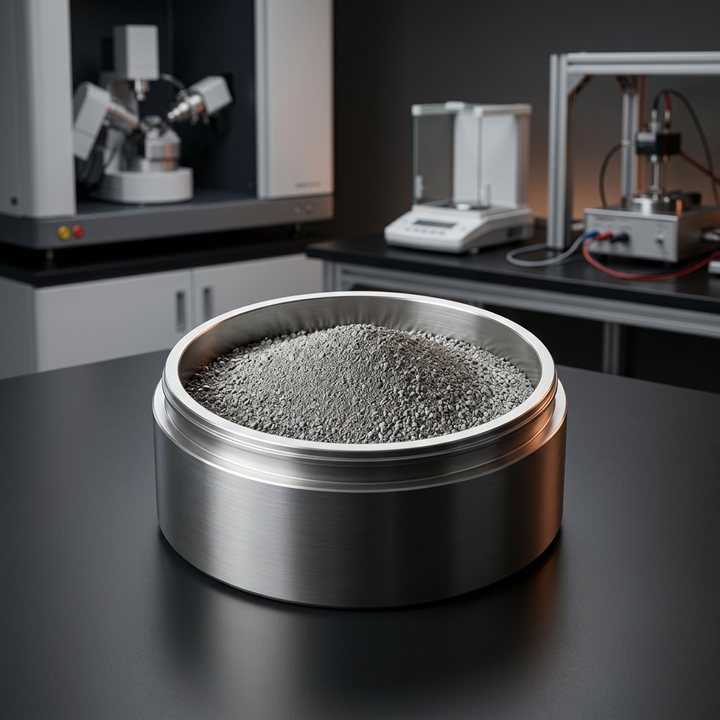
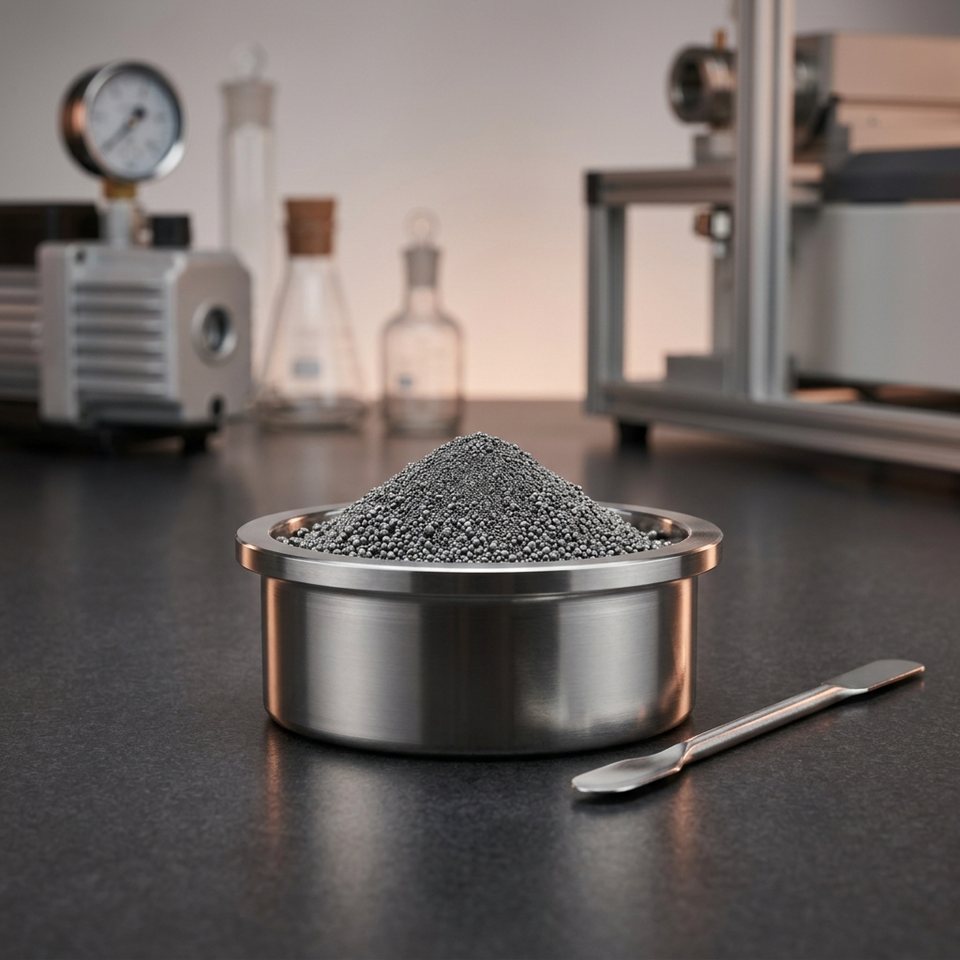
FeSiCr Powder for Molded Inductors metal powder product sample

QUICK ANSWER

Performance Defined by Material and Process.

FeSiCr powder is an iron-silicon-chromium soft magnetic alloy (typically Fe-6.5Si with 2-6% Cr) atomized into fine spherical powder for molded (molding) power inductors — the miniature shielded inductors inside smartphones, laptops, and server voltage regulators. The chromium addition provides corrosion and oxidation resistance that pure FeSi lacks, enabling fine powders to survive molding and deliver stable inductance over the product lifetime.

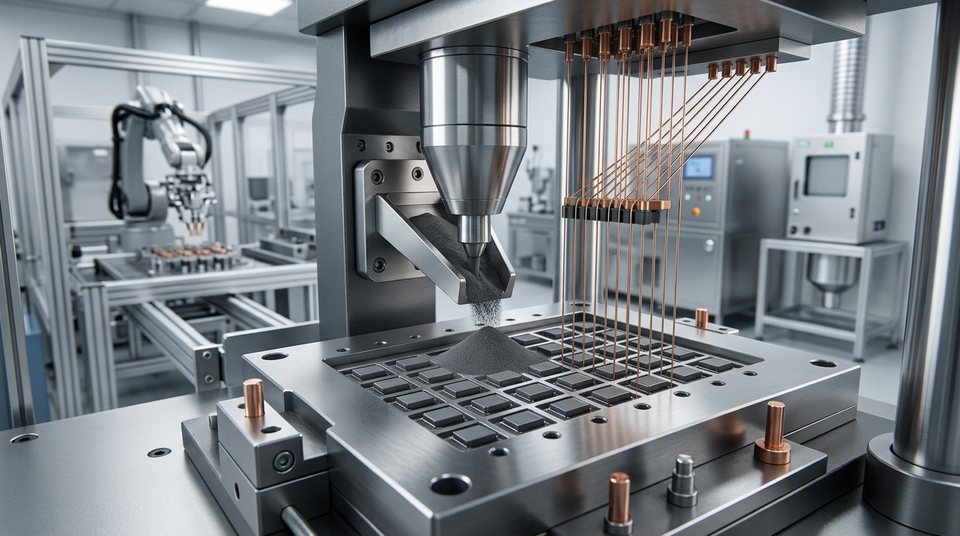
Molded inductors are made by pressing insulated magnetic powder directly around a wound coil in a die — the powder is simultaneously the core and the shield. This demands fine, spherical, flowable powder (typically D50 10-25 µm) that packs densely under tonnage-scale pressing, insulates per-particle to control eddy loss, and resists corrosion because the molded body has no hermetic case. FeSiCr answers all three: the alloy's resistivity cuts eddy loss at the 1-5 MHz switching of modern POL converters, and chromium passivation survives humidity testing that rusts plain FeSi.

MATERIAL DATA

Chemistry and Technical Performance.

Lot-level controls focus on the chemistry, particle characteristics, and process values that influence manufacturing consistency and finished-part performance.

Chemical Composition

TYPICAL
ElementContentPerformance Role
Iron (Fe)Balance (~88-93 wt%)Magnetic base with high saturation flux density
Silicon (Si)3-6.5 wt%Raises electrical resistivity, cutting eddy current loss at MHz frequencies
Chromium (Cr)2-6 wt%Passivation — corrosion and oxidation resistance for fine powder stability
Oxygen (O)< 800 ppmControlled for insulation quality and loss
Carbon (C)< 0.02 wt%Magnetic softness preservation

Technical Specifications

BASE GRADE
Saturation flux density
1.2-1.4 T (grade dependent)
Particle size
D50 10-25 µm typical for molding
Application frequency
1-5 MHz POL conversion
Corrosion resistance
Passes 85/85 humidity testing in molded state
Morphology
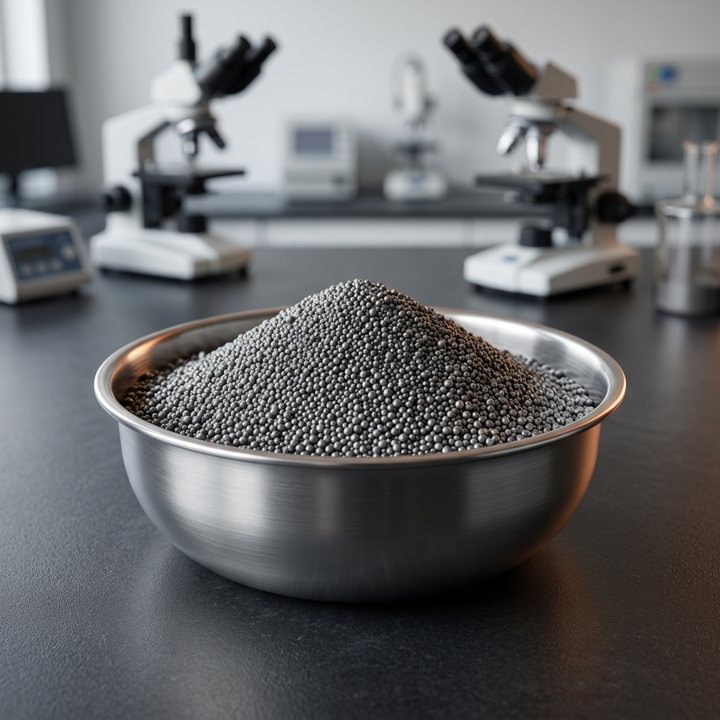
Spherical, high flowability and tap density
Use form
Insulation-coated, die-pressed around coil

Final limits can be aligned with the agreed purchase specification.

APPLICATIONS

Developed for Demanding Industrial Applications.

01

Molded power inductor manufacture

Molded power inductor manufacture is the sole defining market — and it is enormous. Every smartphone carries dozens of molded inductors; every server CPU and GPU sits behind arrays of voltage-regulator inductors pressed from FeSiCr-type powder. As processors migrate to higher current and faster switching, inductor makers push toward finer powder with better insulation quality, making powder morphology, oxygen content, and size distribution the decisive purchase criteria. Leading inductor makers qualify powder suppliers over years, then buy in high volume against certified lots.

02

Adjacent applications

Adjacent applications include automotive molded inductors (AEC-Q200 qualified, harsher humidity and temperature cycling), integrated power modules, and metal-composite EMI suppression cores. The automotive segment is growing fastest — EV power electronics multiply the inductor count per vehicle, and the humidity robustness of FeSiCr over plain FeSi makes it the default alloy choice where qualification standards are toughest.

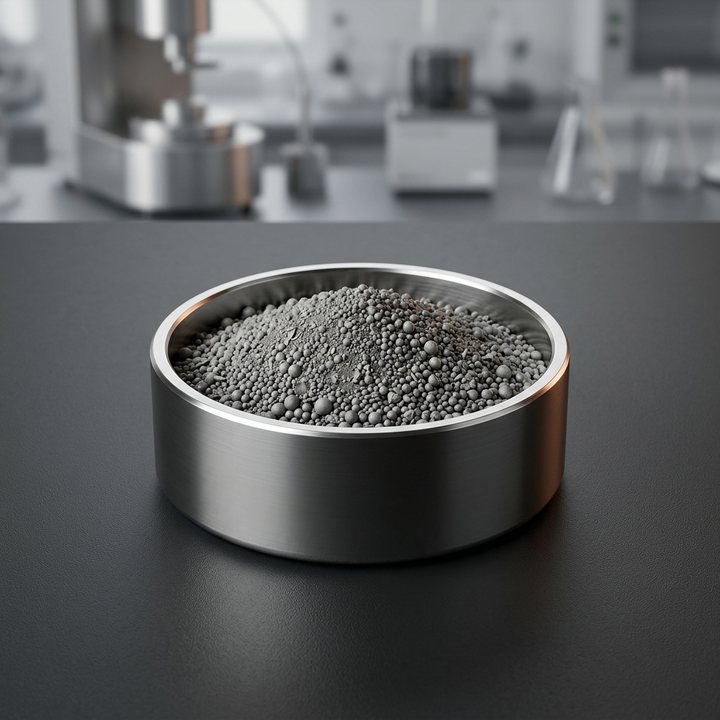
FeSiCr Powder for Molded Inductors industrial application detail

SOFT MAGNETIC & MAGNETIC MATERIAL POWDERS

CUSTOM SUPPLY

A Supply Specification Built Around Your Process.

We supply gas-atomized FeSiCr in molding-grade size distributions (D50 10-25 µm standard, finer on request) with certified sphericity, flowability, and oxygen content. Custom Si/Cr ratios for specific loss-corrosion balances, insulation-coated grades, and high-tap-density distributions for maximum pressed density are available. Lot data includes particle size distribution, morphology imaging, and composition. Not export-controlled.

01

We supply gas-atomized FeSiCr in molding-grade size distributions (D50 10-25 µm standard, finer on request) with certified sphericity, flowability, and oxygen content.

02

Custom Si/Cr ratios for specific loss-corrosion balances, insulation-coated grades, and high-tap-density distributions for maximum pressed density are available.

03

Lot data includes particle size distribution, morphology imaging, and composition.

MATERIAL COMPARISON

Compare Materials Against the Production Requirement.

FeSiCr vs Carbonyl Iron Powder (CIP) for Molded Inductors

Comparison PointThis ProductCarbonyl Iron
Corrosion resistanceExcellent — Cr passivatedPoor — rusts without heavy coating
Core loss at 1-5 MHzLowModerate — higher eddy loss
Saturation flux density1.2-1.4 TUp to 2.0 T — higher
Particle size available5-30 µm atomized1-10 µm — finer possible
CostModerateHigher for fine grades
Best useHumidity-critical molded inductorsUltra-miniature, coated-protected parts

TECHNICAL FAQ

Technical Questions About This Grade.

Need a different chemistry, particle range, or processing route? Our material team can review the requirement and supply window.

Why does chromium matter in molded inductor powder?

Molded inductors are unencapsulated — the pressed powder body faces humidity directly. Chromium forms a passive film that passes 85 °C/85% RH qualification; plain FeSi powder corrodes, inductance drifts, and parts fail field life.

What particle size distribution do inductor makers need?

D50 of 10-25 µm with tight span and minimal fines below 3 µm — fines raise insulation demand and pressing pressure without adding magnetic value. We certify the full distribution per lot, laser diffraction.

Can you match a competitor's loss specification?

Yes — send the target (e.g., core loss at 3 MHz/30 mT) and we adjust Si/Cr ratio and size distribution to match or beat it, with qualification samples.

How is the powder insulated before molding?

Typically phosphated then resin-coated by the inductor maker. We supply surface condition optimized for phosphating adhesion, and fully coated grades where the customer has no coating line.

Is FeSiCr export-controlled?

No. Iron-silicon-chromium soft magnetic powders ship without licensing requirements.

REQUEST THIS GRADE

Turn Your Production Requirement Into a Powder Specification.

Share your target chemistry, particle size, process, annual volume, and destination. Our powder specialists will confirm the closest production grade and documentation package.

Talk to a Powder Specialist
Send Inquiry