Metal3DPMETAL3DP
METAL INJECTION MOLDING (MIM) POWDERSTECHNICAL PRODUCT DATA

M2 High-Speed Steel MIM Powder

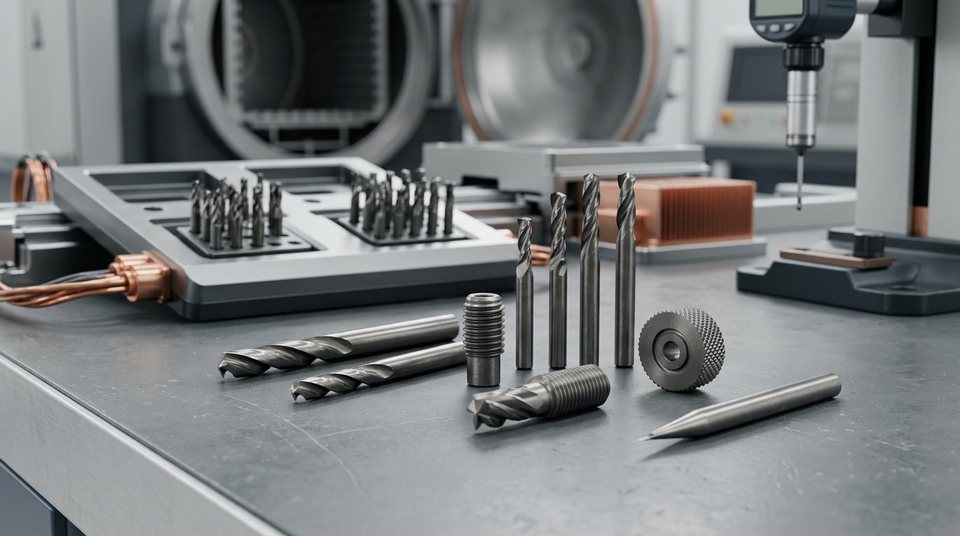
Gas-atomized M2 MIM powder with lot-specific sintering curves. W-free export-friendly variant available. Micro drills, knurling wheels, punch tips.

Particle size (D90)
< 22 µm
Morphology
Spherical, gas atomized
Sintered density
> 8.0 g/cm³
Hardened + tempered hardness
62-66 HRC
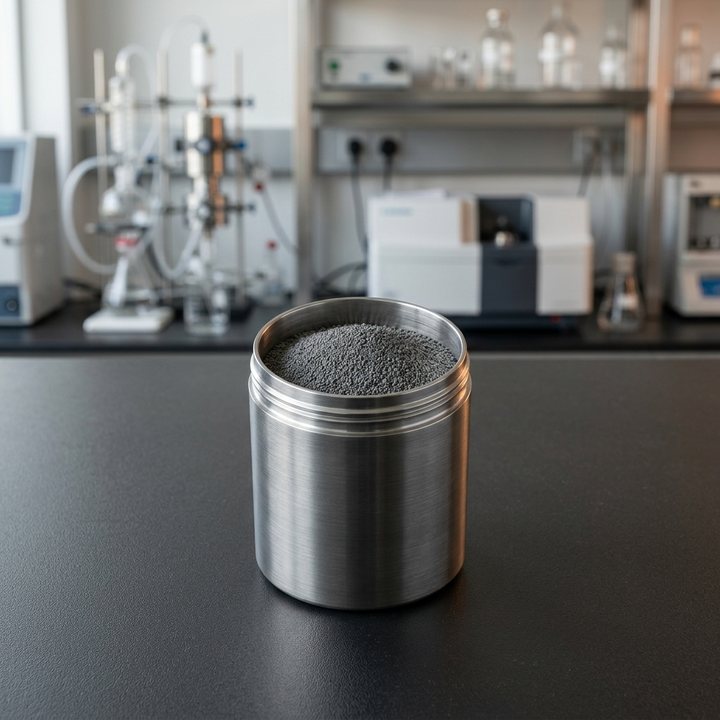
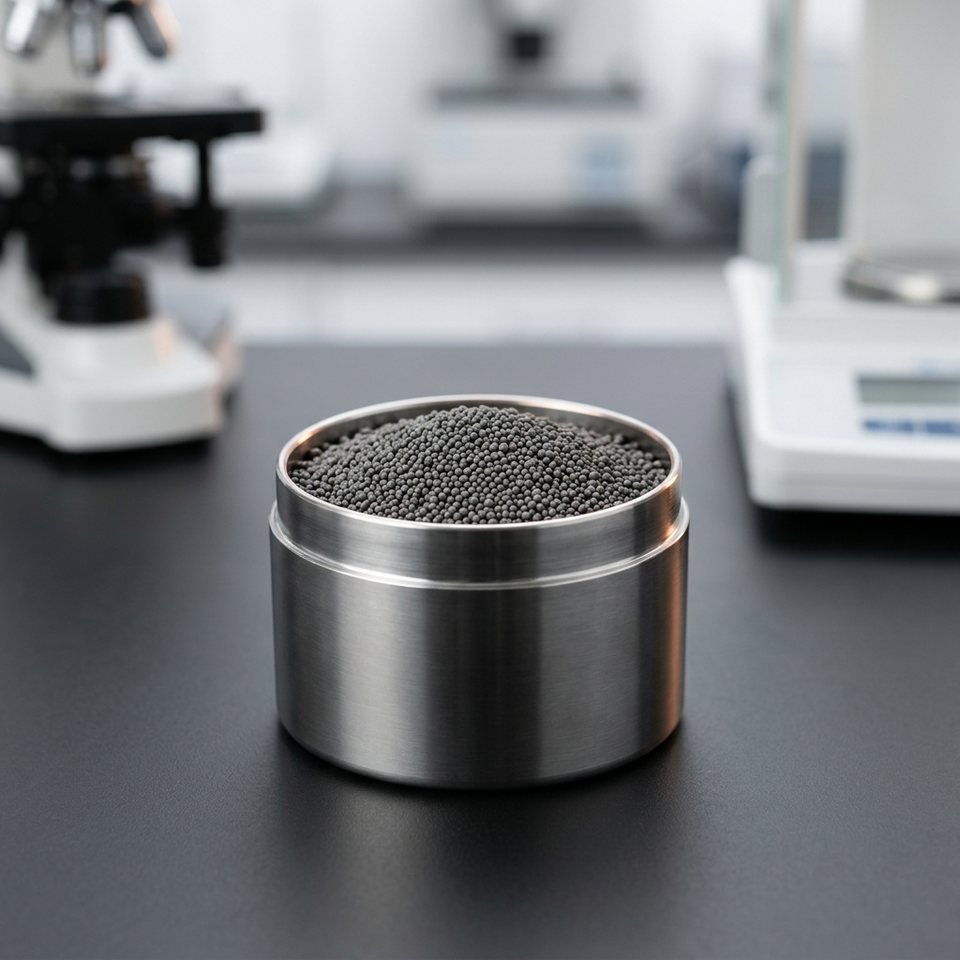
M2 High-Speed Steel MIM Powder metal powder product sample

QUICK ANSWER

Performance Defined by Material and Process.

M2 high-speed steel MIM powder is a gas-atomized tungsten-free high-speed steel powder (Fe-Mo-Cr-V-W family chemistry, with molybdenum doing most of the heavy lifting) used to mold small cutting, wear, and tooling components that reach 62-66 HRC after hardening and triple tempering. Typical parts include micro drills, milling cutter inserts, knurling wheels, punch tips, and wear-resistant mechanism components.

M2 is the workhorse grade of the high-speed steel world, and its MIM variant opens shapes that forging and grinding cannot touch — internal coolant features, complex flutes, net-shape teeth. Because the sintering window of high-speed steels is narrow (typically 1220-1260 °C, within 10 degrees of incipient melting), powder consistency is everything: tight chemistry, low oxygen, and uniform particle size are the difference between a profitable furnace run and a scrap bin.

MATERIAL DATA

Chemistry and Technical Performance.

Lot-level controls focus on the chemistry, particle characteristics, and process values that influence manufacturing consistency and finished-part performance.

Chemical Composition

TYPICAL
ElementContentPerformance Role
Molybdenum (Mo)4.5-5.5 wt%Principal carbide former; delivers red hardness and wear resistance
Chromium (Cr)3.8-4.4 wt%Improves hardenability and oxidation resistance
Vanadium (V)1.7-2.2 wt%Forms hard MC carbides for abrasion resistance and secondary hardening
Tungsten (W)5.5-6.7 wt% (as W-Mo equivalent)Note: standard M2 contains W; W-free M2 variants available on request — see export note below
Carbon (C)0.78-0.95 wt%Balances carbide volume with matrix hardenability for full heat treatment response

Technical Specifications

BASE GRADE
Particle size (D90)
< 22 µm
Morphology
Spherical, gas atomized
Sintered density
> 8.0 g/cm³
Hardened + tempered hardness
62-66 HRC
Sintering window
1220-1260 °C ± 10 °C, vacuum or H2
Heat treatment
Austenitize 1180-1220 °C, quench, triple temper 540-560 °C

Final limits can be aligned with the agreed purchase specification.

APPLICATIONS

Developed for Demanding Industrial Applications.

01

The core market

The core market is small precision cutting and wear tooling where MIM's shape freedom pays off: micro-drills for PCB and medical use, small end mills, thread-forming components, knurling and marking wheels, and scriber tips. These parts traditionally came from ground bar stock with substantial machining waste; MIM produces them near-net with carbide structures that sintering distributes more uniformly than conventional casting and forging ever could, often improving edge life as a side benefit.

02

A second growing market

A second growing market is wear-critical mechanism parts — indexing components, textile machine knives, pelletizer blades, and punch tips — where the buyer wants high-speed steel wear life without the machining cost of wrought stock. In these applications the conversation with the powder supplier centers on sintering support: we provide recommended sintering curves per lot because the narrow window shifts slightly with chemistry, and getting it wrong by 10 degrees either leaves porosity or creates a melted, scrapped load.

M2 High-Speed Steel MIM Powder industrial application detail

METAL INJECTION MOLDING (MIM) POWDERS

CUSTOM SUPPLY

A Supply Specification Built Around Your Process.

Standard supply is gas-atomized D90 < 22 µm with full chemistry and a lot-specific sintering recommendation. Custom carbon levels (for edge tools versus impact tools), W-free M2-equivalent variants, and matched feedstock compounding are available. We strongly recommend a sintering trial on your first lot — we support it with test bars and dilatometry data.

01

Standard supply is gas-atomized D90 < 22 µm with full chemistry and a lot-specific sintering recommendation.

02

Custom carbon levels (for edge tools versus impact tools), W-free M2-equivalent variants, and matched feedstock compounding are available.

03

We strongly recommend a sintering trial on your first lot — we support it with test bars and dilatometry data.

MATERIAL COMPARISON

Compare Materials Against the Production Requirement.

M2 MIM Powder vs M2 Wrought Bar (Machined Parts)

Comparison PointThis ProductWrought M2 Bar
Shape capabilityComplex 3D, internal features, net-shape teethLimited to machinable geometries
Carbide distributionFine, uniform — no bandingBanded from forging; affects grindability
Material utilization> 95% (no chips)Often < 50% for small complex parts
Hardness after HT62-66 HRC — equivalent62-66 HRC
Economics at 10k+ pcsStrongly favorablePoor — machining dominates cost
Economics at prototype qtyPoor (mold cost)Good

TECHNICAL FAQ

Technical Questions About This Grade.

Need a different chemistry, particle range, or processing route? Our material team can review the requirement and supply window.

Why is the sintering window so narrow?

High-speed steels densify through supersolidus liquid phase sintering — a few degrees too cool leaves porosity, a few degrees too hot creates excessive liquid and distortion. Our lots ship with a recommended setpoint based on dilatometry of the actual powder.

Is your M2 powder tungsten-free?

Standard M2 chemistry contains tungsten. Because tungsten-related items are subject to Chinese export licensing, we primarily offer a W-free M2-equivalent (high-Mo chemistry with matched hardness and red hardness performance) for unrestricted export, and can discuss licensing options where standard M2 is mandatory.

What is the as-sintered condition?

Parts sinter to a soft annealed structure (~25-30 HRC), allowing drilling or grinding of critical features before hardening — a genuine advantage over carbide.

Can you supply M35 or M42 instead?

Yes — cobalt-bearing grades are available on the same atomization platform, subject to the same sintering discipline and, for cobalt content, standard commercial documentation.

What quality documentation comes with each lot?

Full chemistry (including O, N, C), particle size distribution, tap density, flow rate, and a lot-specific sintering curve. Mechanical test bars can be added on request.

REQUEST THIS GRADE

Turn Your Production Requirement Into a Powder Specification.

Share your target chemistry, particle size, process, annual volume, and destination. Our powder specialists will confirm the closest production grade and documentation package.

Talk to a Powder Specialist
Send Inquiry