Metal3DPMETAL3DP
PRESS & SINTER (PM) POWDERSTECHNICAL PRODUCT DATA

Reduced (Sponge) Iron Powder

Porous sponge iron powder with top green strength and oil retention. Self-lubricating bearings, friction, welding electrodes, chemical grades. Lot-certified.

Particle size
45-250 µm standard cuts
Morphology
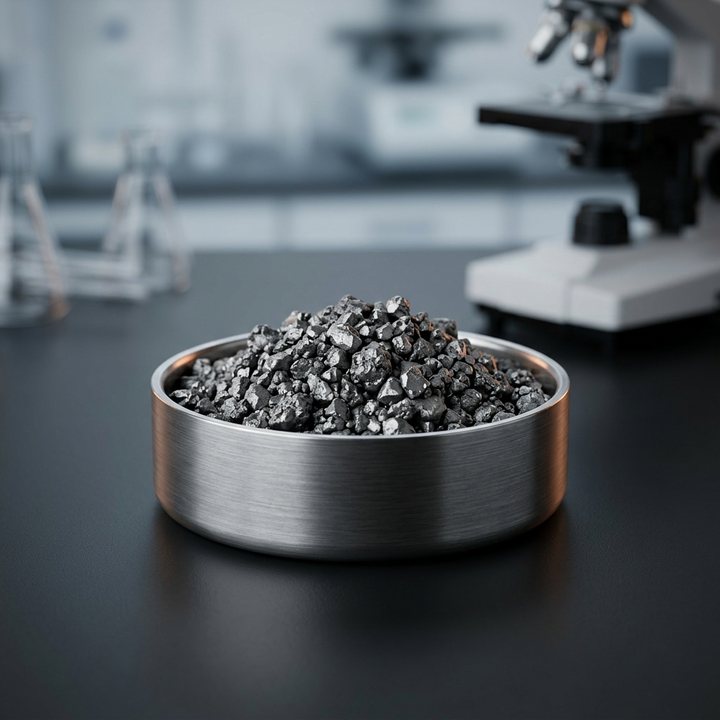
Porous sponge, irregular
Apparent density
2.2-2.6 g/cm³
Green strength
Highest among iron powders
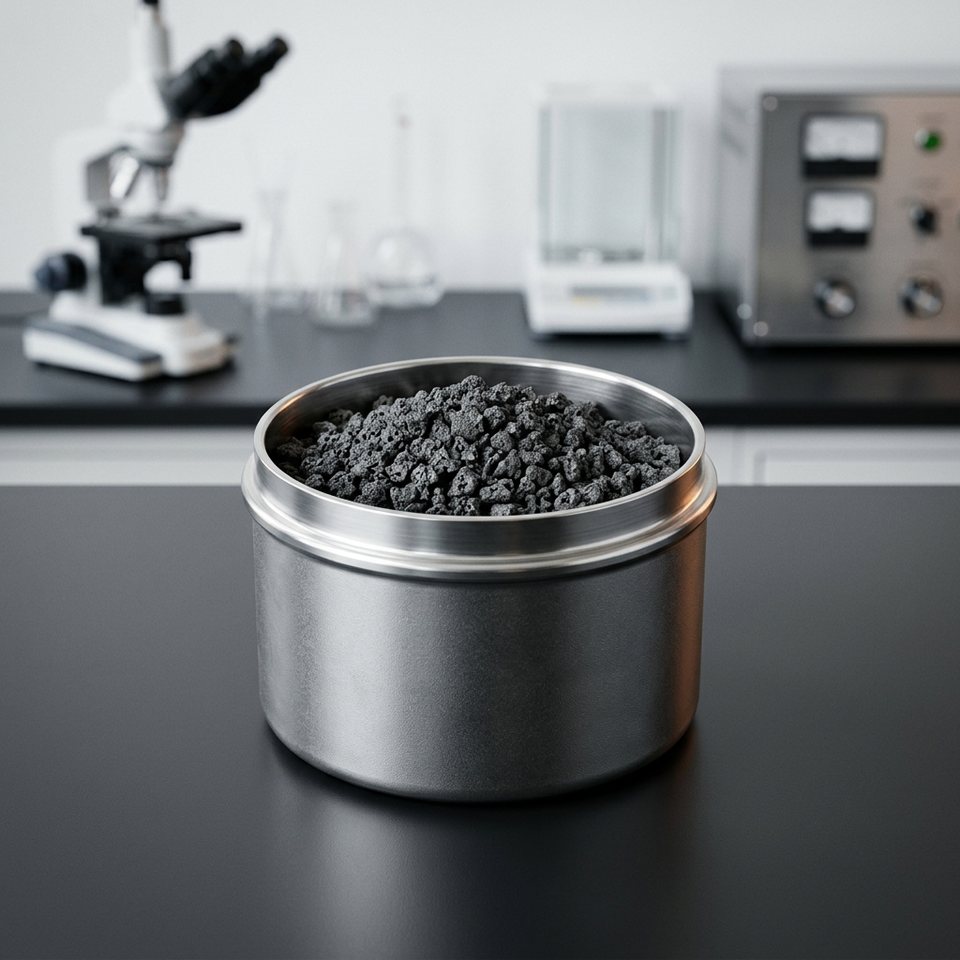
Reduced (Sponge) Iron Powder metal powder product sample

QUICK ANSWER

Performance Defined by Material and Process.

Sponge iron powder is produced by reducing iron ore or mill scale with solid or gas reductants, then milling the porous sponge into powder. Its porous, high-surface-area particles give the highest green strength of any iron powder and excellent oil retention, making it the classic grade for self-lubricating bearings, low-density structural parts, friction materials, welding electrodes, and chemical reactivity applications.

The sponge structure is the product: each particle is a tiny porous granule that mechanically interlocks on pressing (exceptional green strength at low compacting pressure), sinters actively (high surface area drives neck growth), and retains oil in its pore network (the original self-lubricating bearing material). It trades compressibility for these properties — you cannot press it as dense as water atomized iron — but in its application niches, nothing performs better per dollar.

MATERIAL DATA

Chemistry and Technical Performance.

Lot-level controls focus on the chemistry, particle characteristics, and process values that influence manufacturing consistency and finished-part performance.

Chemical Composition

TYPICAL
ElementContentPerformance Role
Iron (Fe)> 97.5 wt%Base metal in porous sponge form
Oxygen (O)0.3-0.8 wt%Higher than atomized grades — internal oxides in the sponge structure
Carbon (C)0.02-0.10 wt%Residual from the reduction process
Acid insolubles< 0.4 wt%Ore-derived residue — grade dependent
Metallic iron> 94 wt%Active fraction for chemical and welding uses

Technical Specifications

BASE GRADE
Particle size
45-250 µm standard cuts
Morphology
Porous sponge, irregular
Apparent density
2.2-2.6 g/cm³
Green strength
Highest among iron powders
Oil absorption
High — bearing-grade porosity
Sintering
1120 °C standard PM cycle

Final limits can be aligned with the agreed purchase specification.

APPLICATIONS

Developed for Demanding Industrial Applications.

01

Self-lubricating bearings are the signature application

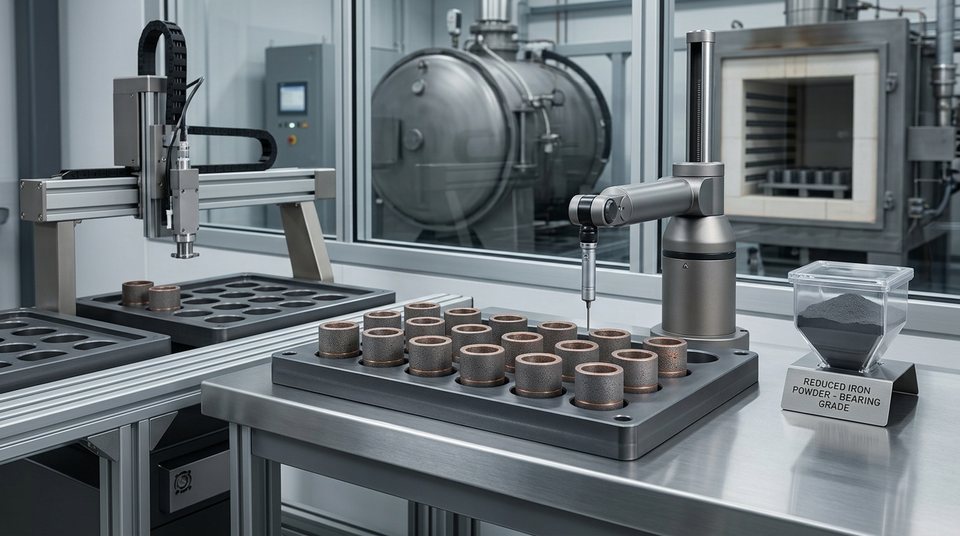
Self-lubricating bearings are the signature application: sponge iron, often blended with copper, presses and sinters into porous bearing blanks that are vacuum-impregnated with oil — the sleeve bearings in every fan, appliance motor, and power tool. The sponge powder's pore network becomes the oil reservoir, and its green strength allows the low pressing densities (5.8-6.4 g/cm³) that maximize connected porosity. Bearing makers buy on green strength and pore-structure consistency.

02

Additional Applications

The diversified second market spans friction materials (brake and clutch formulations use sponge iron as a structural filler), welding electrode coatings (where its chemistry and reactivity stabilize the arc), oxygen absorbers and warmers (Category 11 chemistry), and chemical iron applications. Enamelling-grade ground sponge iron and iron-fortification grades serve further niches — all valuing the same porous reactivity that defines the product.

Reduced (Sponge) Iron Powder industrial application detail

PRESS & SINTER (PM) POWDERS

CUSTOM SUPPLY

A Supply Specification Built Around Your Process.

We supply reduced sponge iron powder in standard PM cuts with certified green strength and apparent density, plus high-purity chemical grades with certified metallic iron content. Custom size distributions, copper-blended bearing premixes, and friction-grade activated powders are available. Not export-controlled.

01

We supply reduced sponge iron powder in standard PM cuts with certified green strength and apparent density, plus high-purity chemical grades with certified metallic iron content.

02

Custom size distributions, copper-blended bearing premixes, and friction-grade activated powders are available.

MATERIAL COMPARISON

Compare Materials Against the Production Requirement.

Sponge Iron vs Water Atomized Iron

Comparison PointThis ProductWater Atomized Iron
Green strengthHighest — porous interlockGood — dense irregular
CompressibilityLower — 6.4-6.9 g/cm³ practicalHigher — 6.8-7.2 g/cm³
Oil retention (bearings)ExcellentModerate
Chemical reactivityHigh surface areaLower
CostLowest iron powderLow
Best useBearings, friction, chemistryStructural parts, gears

TECHNICAL FAQ

Technical Questions About This Grade.

Need a different chemistry, particle range, or processing route? Our material team can review the requirement and supply window.

Why choose sponge iron for self-lubricating bearings?

Its internal porosity becomes part of the bearing's oil reservoir, and its green strength allows low-density pressing that maximizes connected porosity. The result is higher oil content and longer service life than atomized-powder bearings at the same press settings.

Is sponge iron suitable for structural parts?

For low-to-moderate density parts (6.4-6.9 g/cm³) where strength requirements are modest, yes — it is the economical choice. Above that density range, water atomized or pre-alloyed grades are the better route.

What welding electrode grade do you offer?

High-purity reduced iron with certified metallic content and controlled carbon/sulfur for coating formulations — the standard iron powder of the electrode industry.

How does lot consistency run on green strength?

We certify green strength per lot at a reference compaction pressure and hold distribution within agreed windows — the parameter bearing makers depend on for unattended pressing.

Is sponge iron export-controlled?

No. Reduced iron powders are unrestricted commodities.

REQUEST THIS GRADE

Turn Your Production Requirement Into a Powder Specification.

Share your target chemistry, particle size, process, annual volume, and destination. Our powder specialists will confirm the closest production grade and documentation package.

Talk to a Powder Specialist
Send Inquiry